
Study on the Relationship Between Dietary Habits and Cardiorespiratory Endurance in Adolescents
Zhiqiang Liu1, Jianbo Yu2,3, Yumeng Li2,3, Xiuming Yu1, Xiangyu Liu2,3, Xi Peng2,3, Han Wang2,3, Haohua Yu2,3*
1College of Economics and Management, Shanghai Institute of Technology, Shanghai, China
2Key Laboratory of Adolescent Health Assessment and Exercise Intervention, Ministry of Education, East China Normal University, Shanghai, China
3College of Physical Education and Health, East China Normal University, Shanghai, China
*Correspondence to: Haohua Yu, Key Laboratory of Adolescent Health Assessment and Exercise Intervention, Ministry of Education, East China Normal University, 500 Dongchuan Road, Minhang District, Shanghai 200241, China; E-mail: yuhaohua3011@163.com
DOI: 10.53964/phe.2024002
Abstract
Objective: This study aims to investigate the relationship between dietary habits and cardiorespiratory endurance in adolescents, providing reference recommendations to improve the physical health of adolescents in China.
Methods: From September to December 2023, a total of 6,741 adolescents aged 13-18 years were selected as participants using the lottery sampling method in Shanghai, Suzhou, Taiyuan, Wuyuan, Xingyi, and Urumqi. Tests on dietary habits and 20-meter shuttle run tests (20m SRT) were conducted. Variance analysis and linear hierarchical regression were employed to examine the relationship between dietary habits and cardiorespiratory endurance across different genders and age groups.
Results: Adolescents’ 20m SRT results peaked at the age of 16, with averages of 50.86 and 37.74 laps for males and females, respectively. Beyond age 16, the decline in females’ performance was significantly steeper compared to males. Among dietary habits, “weekly breakfast frequency” and “weekly milk consumption frequency” were identified as positive factors associated with “high cardiorespiratory endurance levels.” Linear regression analysis showed a positive correlation for both factors(B=2.72 and 0.95, P<0.01).
Conclusion: There is a significant association between adolescents’ dietary habits and their cardiorespiratory endurance.Specifically, adolescents who regularly consume breakfast and milk demonstrate superior cardiorespiratory endurance. Therefore, fostering healthy dietary habits is critical to enhancing overall physical fitness in adolescents.
Keywords: dietary habits, cardiorespiratory endurance, regression analysis, adolescents
1 INTRODUCTION
Cardiorespiratory endurance is a key indicator of physical health in adolescents and is closely related to their physical and mental development[1]. However, over the past four decades, there has been a significant decline in adolescents’ cardiorespiratory health levels[2]. While improvements in muscular fitness and cardiorespiratory endurance have been observed among Chinese students, these levels remain relatively low[3]. Contributing factors include physical activity, sedentary behavior, obesity, dietary habits, and socioeconomic conditions[4]. Regular and balanced diets combined with consistent physical activity are critical for health, reducing the risk of various diseases[5,6].
Chinese adolescents’ dietary habits have undergone significant changes, with unhealthy diets becoming increasingly prevalent. For instance, over half of adolescents consume sugary beverages[7], and their intake of recommended fruits and vegetables remains insufficient[8]. Poor dietary habits negatively affect physical fitness, emphasizing the urgent need for improvement. International studies have shown that healthy dietary habits, such as regular breakfast consumption[8] and high vegetable intake[9], are positively associated with adolescents’ cardiorespiratory endurance and are crucial for improving physical health.
Building on this research background and the foundations of domestic and international studies, this paper explores the relationship between dietary habits and physical fitness among Chinese adolescents. By assessing the dietary habits and cardiorespiratory endurance of different adolescent groups, this study focuses on the correlation between dietary habits and cardiorespiratory endurance. The findings aim to guide improvements in dietary practices, encourage adolescents to enhance physical activity, standardize dietary behaviors, and promote the development of adolescent physical health.
2 MATERIALS AND METHODS
2.1 Participants
This study employed a stratified cluster random sampling method to select adolescents aged 13-18 years from seven cities in China: Shanghai, Suzhou (Jiangsu Province), Taizhou (Zhejiang Province), Chizhou (Anhui Province), Shangrao (Jiangxi Province), Xingyi (Guizhou Province), and Harbin (Heilongjiang Province). Following data collection and the exclusion of invalid responses, a total of 6,741 participants were included in the study, comprising 3,395 males and 3,346 females. Among them, 3,619 participants (aged 13-15 years) were from middle schools, and 3,122 participants (aged 16-18 years) were from high schools. Before conducting the study, informed consent was obtained from both students and their guardians, and the study was approved by the Ethics Committee of Human Experimentation at East China Normal University (Approval No. HR761-2022).
2.2 Methods
2.2.1 Dietary Habits
The study utilized the Children and Adolescents Physical Health Evaluation System Questionnaire to assess participants’ dietary habits and physical fitness. Surveys were conducted in the designated regions (e.g., Shanghai, Anhui Province), where questionnaires were distributed and collected. Before distribution, detailed instructions on completing the questionnaire were provided, and the testing personnel maintained order at the survey sites to ensure the validity of responses.
The questionnaire gathered information on participants’ basic demographics (e.g., date of birth, gender, educational level), dietary habits, and physical fitness test results. Dietary habits were assessed using 18 items, including “breakfast consumption,” “milk consumption,” “vegetable consumption,” and “sugary beverage consumption.” Weekly frequencies were categorized as “0 days,” “1-2 days,” “3-4 days,” “5-6 days,” and “7 days,” and were further classified into three groups: “≤2 times,” “3-4 times,” and “5-7 times” for analysis.
2.2.2 Cardiorespiratory Endurance Test
The 20-meter shuttle run test (20m SRT) is recognized as the most effective field-based measure of cardiorespiratory endurance in children and adolescents and is widely used globally[10]. In this study, participants performed the 20m SRT, running back and forth between two 20-meter lines at a pace dictated by audio signals, which increased in speed at each stage. The test concluded when a participant either reached voluntary exhaustion or failed to reach the line twice consecutively before the audio signal. The total number of completed laps was recorded as the final score.
2.3 Quality Control
The research team comprised trained and certified teachers and graduate students, who conducted surveys in schools across different provinces. Prior to the survey, students were briefed on the purpose, significance, and requirements of the study using pre-prepared instructions. Anonymized responses were collected immediately after distribution, and investigators addressed any questions during the process. Returned questionnaires were reviewed for completeness, and participants were asked to correct any errors or omissions to ensure data validity.
2.4 Statistical Methods
SPSS 25.0 was used for data analysis. Descriptive statistics were employed to analyze participants’ cardiorespiratory endurance and executive function characteristics. Categorical variables were described using frequencies, while continuous variables were expressed as means and standard deviations (x̅±s) if normally distributed. Independent-sample t-tests and Mann-Whitney U tests were used to assess differences between groups. Pearson correlation was applied to explore relationships between cardiorespiratory endurance and executive function. A linear hierarchical regression model was utilized to analyze the relationship between dietary habits and cardiorespiratory endurance, with dietary habit indicators as independent variables and gender (1=male, 2=female), age (13-18 years), and 20m SRT results as dependent variables. P<0.05 was considered statistically significant.
3 RESULTS
3.1 Basic Characteristics of Dietary Habits by Gender and Age
Table 1 summarizes the weekly breakfast consumption frequency by gender and age. Adolescents aged 13-18 predominantly consumed breakfast “5-7 times” per week. Males at age 13 had the highest rate (85.7%), while females at age 17 had a rate of 77.2%, generally lower than other age groups. Overall, there was a significant correlation between breakfast frequency and gender/age (P<0.01).
Table 1. Detection Rates of Weekly Breakfast Consumption Frequency Among Adolescents Aged 13-18 (N=6741)
Age |
N |
Male N% |
N |
Female N% |
||||
≤2 Times |
3~4 Times |
5~7 Times |
≤2 Times |
3~4 Times |
5~7 Times |
|||
13 |
622 |
41 (6.6) |
48 (7.7) |
533 (85.7) |
643 |
51 (7.9) |
52 (8.1) |
540 (84.0) |
14 |
631 |
68 (10.8) |
50 (7.9) |
513 (81.3) |
624 |
52 (8.3) |
61 (9.8) |
511 (81.9) |
15 |
562 |
69 (12.3) |
63 (11.2) |
430 (76.5) |
537 |
54 (10.1) |
59 (11.0) |
424 (79.0) |
16 |
654 |
54 (8.3) |
70 (10.7) |
530 (81.0) |
646 |
44 (6.8) |
69 (10.7) |
533 (82.5) |
17 |
592 |
54 (9.1) |
71 (12.0) |
467 (78.9) |
580 |
40 (6.9) |
92 (15.9) |
448 (77.2) |
18 |
334 |
38 (11.4) |
26 (7.8) |
270 (80.8) |
316 |
21 (6.6) |
22 (7.0) |
273 (86.4) |
Total |
3,395 |
324 (9.5) |
328 (9.7) |
2,743 (80.8) |
3,346 |
262 (7.8) |
355 (10.6) |
2,729 (81.6) |
Statistical Value |
2 |
28.007 |
2 |
32.280 |
||||
P |
P<0.01 |
P |
P<0.001 |
|||||
Table 2 presents weekly milk consumption frequency. Males had a higher rate of consuming milk “5-7 times” per week (50.0%) compared to females (39.0%). The highest rate was observed among 14-year-old males (55.6%). Conversely, females consuming milk “≤2 times” per week showed high rates at ages 15 and 17 (43.0% and 46.2%, respectively). Significant correlations were observed between milk consumption frequency and gender/age (P<0.001).
Table 2. Detection Rates of Weekly Milk Consumption Frequency Among Adolescents Aged 13-18 (N=6741)
Age |
N |
Male N% |
N |
Female N% |
||||
≤2 Times |
3~4 Times |
5~7 Times |
≤2 Times |
3~4 Times |
5~7 Times |
|||
13 |
622 |
174 (28.0) |
105 (16.9) |
343 (55.1) |
643 |
208 (32.3) |
127 (19.8) |
308 (47.9) |
14 |
631 |
166 (26.3) |
114 (18.1) |
351 (55.6) |
624 |
215 (34.5) |
121 (19.4) |
288 (46.2) |
15 |
562 |
160 (28.5) |
118 (21.0) |
284 (50.5) |
537 |
231 (43.0) |
115 (21.4) |
191 (35.6) |
16 |
654 |
194 (29.7) |
153 (23.4) |
307 (46.9) |
646 |
261 (40.4) |
145 (22.4) |
240 (37.2) |
17 |
592 |
222 (37.5) |
126 (21.3) |
244 (41.2) |
580 |
268 (46.2) |
143 (24.7) |
169 (29.1) |
18 |
334 |
81 (24.3) |
84 (25.1) |
169 (50.6) |
316 |
101 (32.0) |
107 (33.9) |
108 (34.2) |
Total |
3,395 |
997 (29.4) |
700 (20.6) |
1,698 (50.0) |
3,346 |
1,284 (38.4) |
758 (22.7) |
1,304 (39.0) |
Statistical Value |
2 |
48.746 |
2 |
89.008 |
||||
P |
P<0.001 |
P |
P<0.001 |
|||||
Table 3 shows the weekly vegetable consumption frequency. No notable differences were found between genders in the “5-7 times” group (60.4% for males and 62.9% for females). By age, both genders reached the highest rates at 18 years (63.8% for males and 59.2% for females). Significant correlations between vegetable consumption frequency and gender/age were identified (P<0.05).
Table 3. Detection Rates of Weekly Vegetable Consumption Frequency Among Adolescents Aged 13-18 (N=6741)
Age |
N |
Male N% |
N |
Female N% |
||||
≤2 Times |
3~4 Times |
5~7 Times |
≤2 Times |
3~4 Times |
5~7 Times |
|||
13 |
622 |
110 (17.7) |
128 (20.6) |
384 (61.7) |
643 |
93 (14.5) |
125 (19.4) |
425 (66.1) |
14 |
631 |
96 (15.2) |
145 (23.0) |
390 (61.8) |
624 |
61 (9.8) |
122 (19.6) |
441 (70.7) |
15 |
562 |
84 (14.9) |
121 (21.5) |
357 (63.5) |
537 |
61 (11.4) |
135 (25.1) |
341 (63.5) |
16 |
654 |
98 (15.0) |
167 (25.5) |
389 (59.5) |
646 |
98 (15.2) |
181 (28) |
367 (56.8) |
17 |
592 |
116 (19.6) |
160 (27.0) |
316 (53.4) |
580 |
84 (14.5) |
154 (26.6) |
342 (59.0) |
18 |
334 |
44 (13.2) |
77 (23.1) |
213 (63.8) |
316 |
44 (13.9) |
85 (26.9) |
187 (59.2) |
Total |
3,395 |
548 (16.1) |
798 (23.5) |
2,049 (60.4) |
3,346 |
441 (13.2) |
802 (24.0) |
2,103 (62.9) |
Statistical Value |
2 |
22.917 |
2 |
41.527 |
||||
P |
P<0.05 |
P |
P<0.001 |
|||||
Table 4 illustrates the weekly consumption frequency of sugary beverages. There were no substantial gender differences in the “≤2 times” group (46.5% for males and 46.7% for females). The lowest rate for males was at age 16 (46.5%), compared to the highest at age 13 (61.4%). Females peaked at age 14 (62.5%). Significant correlations were found between sugary beverage consumption frequency and gender/age (P<0.05).
Table 4. Detection Rates of Weekly Sugary Drink Consumption Frequency Among Adolescents Aged 13-18 (N=6741)
Age |
N |
Male N% |
N |
Female N% |
||||
≤2 Times |
3~4 Times |
5~7 Times |
≤2 Times |
3~4 Times |
5~7 Times |
|||
13 |
622 |
382 (61.4) |
143 (23) |
97 (15.6) |
643 |
387 (60.2) |
173 (26.9) |
83 (12.9) |
14 |
631 |
367 (58.2) |
157 (24.9) |
107 (17.0) |
624 |
390 (62.5) |
160 (25.6) |
74 (11.9) |
15 |
562 |
281 (50.0) |
172 (30.6) |
109 (19.4) |
537 |
286 (53.3) |
175 (32.6) |
76 (14.2) |
16 |
654 |
304 (46.5) |
232 (35.5) |
118 (18.0) |
646 |
302 (46.7) |
234 (36.2) |
110 (17.0) |
17 |
592 |
313 (52.9) |
182 (30.7) |
97 (16.4) |
580 |
333 (57.4) |
179 (30.9) |
68 (11.7) |
18 |
334 |
177 (53.0) |
87 (26.0) |
70 (21.0) |
316 |
180 (57.0) |
79 (25.0) |
57 (18.0) |
Total |
3,395 |
1,824 (53.7) |
973 (28.7) |
598 (17.6) |
3,346 |
1,878 (56.1) |
1,000 (29.9) |
468 (14.0) |
Statistical Value |
2 |
45.558 |
2 |
48.566 |
||||
P |
P<0.001 |
P |
P<0.001 |
|||||
3.2 Basic Characteristics of Adolescents’ Cardiopulmonary Endurance
The survey results show that the mean 20m SRT score for adolescents is 40.17±19.35 laps. Overall, the trend indicates an increase followed by a decrease with age. Both male and female adolescents reach their peak 20m SRT at the age of 16, with males achieving 50.86±21.17 laps and females 37.74±16.39 laps. After the age of 16, the decline in performance is more pronounced in females than in males. See Figure 1.
|
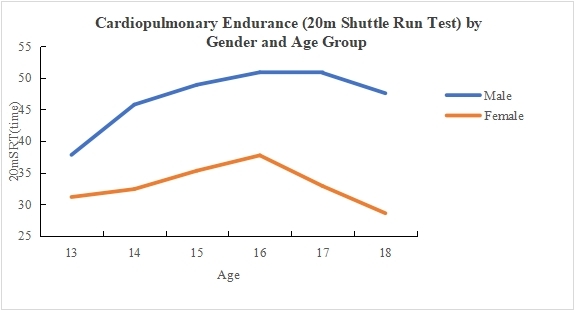
Figure 1. Cardiopulmonary Endurance (20m SRT) by Gender and Age Group.
3.3 Correlation Analysis of Dietary Habits and Cardiopulmonary Endurance in Adolescents by Gender and Academic Level
Table 5 shows that in terms of “weekly breakfast consumption frequency,” the highest cardiopulmonary endurance test scores for both boys and girls were observed in the “5-7 times” group, with values of 48.14 for boys and 33.82 for girls. For boys, the lowest and highest values in middle school were found in the “≤2 times” group (37.03) and the “5-7 times” group (45.58), respectively. In high school, the highest test score was found in the “5-7 times” group, with a value of 51.12. For girls, the lowest cardiopulmonary endurance test score in middle school was found in the “≤2 times” group (29.15), while the highest was in the “5-7 times” group (33.48).
Table 5. Comparison of Weekly Breakfast Consumption Frequency Groups and Cardiopulmonary Endurance (20m Shuttle Run) in Adolescents(N=6741)
Gender |
Academic level |
N |
≤2 Times |
N |
3~4 Times |
N |
5~7 Times |
F |
P |
Mean±SD |
Mean±SD |
Mean±SD |
|||||||
Male |
Middle School |
178 |
37.03±17.33 |
161 |
37.30±17.89 |
1,476 |
45.58±22.51 |
20.786 |
0.000** |
High School |
146 |
44.94±17.01 |
167 |
47.11±17.45 |
1,267 |
51.12±20.65 |
8.36 |
0.000** |
|
Total |
324 |
40.60±17.60 |
328 |
42.29±18.31 |
2,743 |
48.14±21.84 |
26.856 |
0.000** |
|
Female |
Middle School |
157 |
29.15±13.44 |
172 |
30.63±12.85 |
1,475 |
33.48±13.74 |
9.631 |
0.000** |
High School |
105 |
32.97±12.20 |
183 |
33.46±14.05 |
1,254 |
34.22±15.08 |
0.504 |
0.604 |
|
Total |
262 |
30.68±13.07 |
355 |
32.09±13.54 |
2,729 |
33.82±14.37 |
7.503 |
0.001** |
Notes: *P<0.05, **P<0.01
Table 6 shows that for the dietary habit of “weekly milk consumption,” among boys, the lowest test score in middle school was found in the “≤2 times” group (40.48), while the highest value was in the “5-7 times” group (45.99). In high school, the highest cardiopulmonary endurance score was also found in the “5-7 times” group (51.90). Among girls, the highest values in both middle and high school were observed in the “5-7 times” group, with scores of 33.58 and 34.42, respectively.
Table 6. Comparison of Weekly Milk Consumption Frequency Groups and Cardiopulmonary Endurance (20m Shuttle Run) in Adolescents (N=6741)
Gender |
Academic level |
N |
≤2 Times |
N |
3~4 Times |
N |
5~7 Times |
F |
P |
Mean±SD |
Mean±SD |
Mean±SD |
|||||||
Male |
Middle School |
500 |
40.48±19.54 |
337 |
43.47±21.42 |
978 |
45.99±23.00 |
10.676 |
0.000** |
High School |
497 |
48.58±19.74 |
363 |
48.73±18.70 |
720 |
51.90±20.93 |
5.169 |
0.006** |
|
Total |
997 |
44.52±20.04 |
700 |
46.20±20.21 |
1698 |
48.49±22.33 |
11.422 |
0.000** |
|
Female |
Middle School |
654 |
31.85±13.85 |
363 |
32.96±12.13 |
787 |
33.58±14.21 |
2.882 |
0.056 |
High School |
630 |
34.69±15.40 |
395 |
32.53±14.52 |
517 |
34.42±14.13 |
2.833 |
0.059 |
|
Total |
1284 |
33.24±14.69 |
758 |
32.74±13.42 |
1304 |
33.91±14.18 |
1.749 |
0.174 |
Notes: *P<0.05, **P<0.01.
Table 7 shows that for “weekly vegetable consumption frequency,” the cardiopulmonary endurance scores of middle school boys increased with frequency, with the highest value of 44.97 found in the “5-7 times” group.
Table 7. Comparison of Weekly Vegetable Consumption Frequency Groups and Cardiopulmonary Endurance (20m Shuttle Run) in Adolescents (N=6741)
Gender |
Academic level |
N |
≤2 Times |
N |
3~4 Times |
N |
5~7 Times |
F |
P |
Mean±SD |
Mean±SD |
Mean±SD |
|||||||
Male |
Middle School |
290 |
40.46±19.61 |
394 |
43.85±22.85 |
1,131 |
44.97±22.07 |
4.92 |
0.007** |
High School |
258 |
50.47±19.30 |
404 |
49.93±20.02 |
918 |
50.12±20.40 |
0.056 |
0.945 |
|
Total |
548 |
45.17±20.08 |
798 |
46.93±21.66 |
2,049 |
47.27±21.49 |
2.116 |
0.121 |
|
Female |
Middle School |
215 |
31.35±13.07 |
382 |
33.20±14.02 |
1,207 |
32.98±13.70 |
1.46 |
0.232 |
High School |
226 |
33.80±15.37 |
420 |
34.45±15.80 |
896 |
33.92±14.13 |
0.224 |
0.799 |
|
Total |
441 |
32.61±14.33 |
802 |
33.86±14.98 |
2,103 |
33.38±13.89 |
1.102 |
0.332 |
Notes: *P<0.05, **P<0.01.
Table 8 shows that for “weekly sugary drink consumption frequency,” the highest value for middle school boys was found in the “≤2 times” group (44.62), while the lowest score was found in the “5-7 times” group (42.07). For middle school girls, the lowest score was found in the “5-7 times” group (31.25).
Table 8. Comparison of Weekly Sugar-Sweetened Beverage Consumption Frequency Groups and Cardiopulmonary Endurance (20m Shuttle Run) in Adolescents (N=6741)
Gender |
Academic level |
N |
≤2 Times |
N |
3~4 Times |
N |
5~7 Times |
F |
P |
Mean±SD |
Mean±SD |
Mean±SD |
|||||||
Male |
Middle School |
1,030 |
44.62±22.66 |
472 |
43.95±20.61 |
313 |
42.07±21.31 |
1.625 |
0.197 |
High School |
794 |
49.60±19.97 |
501 |
50.85±21.30 |
285 |
50.30±18.32 |
0.61 |
0.544 |
|
Total |
1,824 |
46.79±21.66 |
973 |
47.51±21.24 |
598 |
45.99±20.35 |
0.953 |
0.386 |
|
Female |
Middle School |
1,063 |
32.98±13.86 |
508 |
33.25±13.91 |
233 |
31.25±12.36 |
1.853 |
0.157 |
High School |
815 |
33.14±14.53 |
492 |
35.44±15.23 |
235 |
34.25±14.48 |
3.771 |
0.023* |
|
Total |
1,878 |
33.05±14.15 |
1,000 |
34.33±14.61 |
468 |
32.76±13.54 |
3.19 |
0.041* |
Notes: *P<0.05, **P<0.01.
3.4 Linear Regression Analysis of Adolescents’ Dietary Habits and Cardiopulmonary Endurance
A linear regression analysis was conducted with the 20m shuttle run as the dependent variable, controlling for gender and age, while different dietary habits were considered as independent variables. The results presented in Table 9 show that both “weekly breakfast consumption frequency” and “weekly milk consumption frequency” are significant factors influencing shuttle run performance. For each unit increase in breakfast frequency and milk consumption frequency, shuttle run performance is expected to increase by 2.72 and 0.95 units, respectively (P<0.01). Therefore, an increase in the frequency of breakfast and milk consumption is expected to improve shuttle run performance. However, no statistically significant relationship was found between “weekly vegetable consumption frequency” and “weekly sugar-sweetened beverage consumption frequency” and cardiopulmonary endurance. Thus, milk consumption and breakfast frequency can be considered protective factors for cardiopulmonary endurance.
Table 9. Linear Regression Analysis of Adolescent Dietary Habits and Cardiopulmonary Endurance (20m Shuttle Run) (n=6741)
Constant and Independent Variables |
Cardiopulmonary Endurance |
||
Standard Error |
t-value |
B coefficient 95% Confidence Interval (CI) |
|
(Constant) |
2.578 |
12.077 |
31.14(26.08~36.19)** |
Age |
0.136 |
9.224 |
1.25(0.99~1.52)** |
Gender |
0.441 |
-30.162 |
-13.3(-14.17~-12.44)** |
Breakfast Frequency |
0.371 |
7.336 |
2.72(2~3.45)** |
Milk Frequency |
0.259 |
3.649 |
0.95(0.44~1.45)** |
Vegetable Frequency |
0.305 |
0.364 |
0.11(-0.49~0.71) |
Sugary Beverage Frequency |
0.296 |
0.316 |
0.09(-0.49~0.68) |
Notes: * indicates P<0.05, ** indicates P<0.01.
4 ANALYSIS AND DISCUSSION
The results of this study indicate that there are significant differences in cardiovascular endurance among adolescents of different ages. The 20m SRT scores for boys are consistently higher than those for girls across all age groups, which is consistent with previous research findings[12-14]. The 20m SRT scores for adolescents between the ages of 13 and 16 show an increasing trend with age, but begin to decline between the ages of 17 and 18. Possible reasons for this trend include: (1) After puberty, increased testosterone levels in boys promote the improvement of cardiovascular endurance, while in girls, increased estrogen levels lead to an increase in body fat, and the effects of menstruation slow down the development of muscle tissue, causing girls to have lower cardiovascular endurance levels compared to boys[15]. (2) The academic pressures faced by adolescents as they age may also be an important factor contributing to the decline in 20m SRT scores. Students aged 17-18 are under considerable pressure to prepare for college entrance exams, which often leads to more sedentary activities, less time spent on moderate to vigorous physical activities, and a corresponding decline in cardiovascular endurance. Relevant studies have shown that the quality of physical education courses in China is inadequate and does not meet the physical activity needs of adolescents[16]. (3) The differences in cardiovascular endurance between boys and girls may also be attributed to the fact that girls, after reaching sexual maturity, engage in fewer moderate to vigorous physical activities compared to boys. Research indicates that the decline in the time spent on moderate to vigorous physical activities is most significant during puberty, and this decline is more pronounced among girls than boys[13,17,18].
This study also analyzed the relationship between dietary habits, including “eating breakfast” and “drinking milk,” and cardiovascular endurance. The results are consistent with previous studies. Concerning breakfast habits, not only the frequency of eating but also the quality and types of food consumed are important. A good breakfast can improve students’ learning efficiency and cognitive ability, and to some extent, help prevent overweight and obesity. Early research by Sun Pu[19] showed that skipping breakfast is detrimental to weight control and promotes obesity, while Feye’s study[20] found that skipping breakfast is significantly associated with poorer academic performance, as students who skip breakfast tend to underperform at school. In this study, adolescents generally displayed good breakfast habits, especially high school students, whose breakfast habits were better than those of middle school students. This phenomenon may be related to the increased academic pressure high school students face, which leads parents to pay more attention to ensuring their children consume enough energy and nutrition to cope with the demands of their studies.
Regarding the habit of drinking milk, the study found that cardiovascular endurance improved with the frequency of milk consumption in both boys and girls, whether in middle school or high school. Milk, being rich in protein and calcium, plays a significant role in enhancing the physical condition of adolescents during puberty. The whey protein in milk helps in muscle synthesis and repair[21], which can effectively increase muscle mass and improve muscle strength. Calcium is beneficial for bone health and promotes growth, while calcium deficiency can affect neuromuscular coordination[22], which in turn impacts performance during physical activities. Many studies have shown that drinking milk after exercise helps alleviate fatigue and promotes muscle recovery and growth. To better develop physical fitness, adolescents should develop the habit of drinking milk, which can effectively improve their cardiovascular endurance.
The study found a relationship between the frequency of “eating vegetables” and cardiovascular endurance in middle school boys, as well as a relationship between “drinking sugary beverages” and cardiovascular endurance in girls. For middle school boys, the frequency of eating vegetables was positively correlated with cardiovascular endurance, which is consistent with previous research[23]. This may be because vegetable intake helps prevent overweight and obesity, reducing the incidence of metabolic syndrome, which in turn improves physical fitness levels. In girls, there was a significant correlation between the frequency of drinking sugary beverages and cardiovascular endurance, while no such correlation was found in boys. This finding is consistent with another study[24], which indicated that compared to Chinese boys, girls’ cardiovascular endurance is more susceptible to the effects of sugary beverage consumption. However, the percentage of girls who drink sugary beverages 5-7 times a week is lower than that of boys. This may be because girls tend to associate drinking healthy beverages with maintaining a good body shape, and are more likely to choose plain water or pure fruit juice over sugary drinks[25].
5 CONCLUSION
In conclusion, the analysis reveals that there is a significant relationship between adolescents’ dietary habits and their physical fitness, particularly cardiovascular endurance. Adolescents who frequently eat breakfast and drink milk tend to have better cardiovascular endurance. Therefore, improving adolescents’ dietary habits is crucial for enhancing their physical fitness levels. The formation of dietary habits is a complex process influenced by both personal and environmental factors. To improve adolescents’ dietary habits, there needs to be a concerted effort from individuals, families, schools, and society, with the aim of promoting healthy eating habits to foster the comprehensive development of adolescents’ physical fitness.
Acknowledgements
Not applicable.
Conflicts of Interest
The authors declared no conflict of interest.
Author Contribution
The authors contributed to the manuscript and approved the final version.
Abbreviation List
20m SRT, 20-meter shuttle run tests
References
[1] Avitsland A, Leibinger E, Haugen T et al. The association between physical fitness and mental health in Norwegian adolescents. BMC Public Health, 2020; 20: 776.[DOI]
[2] Vanhelst J, Beghin L, Drumez E et al. School time is associated with cardiorespiratory fitness in adolescents: The HELENA study. J Sports Sci, 2021; 39: 2068-2072.[DOI]
[3] Department of Physical Health and Arts Education Ministry of Education. Release report of the Eighth National Survey on Student Physical Fitness and Health. Chinese J School Health, 2021; 42: 1281-1282.
[4] Raghuveer G, Hartz J, Lubans DR et al. Cardiorespiratory Fitness in Youth: An Important Marker of Health: A Scientific Statement From the American Heart Association. Circulation, 2020; 142: e101-e118.[DOI]
[5] Ekelund U, Brown WJ, Steene-Johannessen J et al. Do the associations of sedentary behaviour with cardiovascular disease mortality and cancer mortality differ by physical activity level? A systematic review and harmonised meta-analysis of data from 850 060 participants. Brit J Sport Med, 2019; 53: 886-894.[DOI]
[6] Owen N, Healy GN, Dempsey PC et al. Sedentary Behavior and Public Health: Integrating the Evidence and Identifying Potential Solutions. Annu Rev Publ Health, 2020; 41: 265-287.[DOI]
[7] Gui ZH, Zhu YN, Cai L et al. Sugar-Sweetened Beverage Consumption and Risks of Obesity and Hypertension in Chinese Children and Adolescents: A National Cross-Sectional Analysis. Nutrients, 2017; 9: 1302.[DOI]
[8] Cuenca-Garcia M, Ruiz JR, Ortega FB et al. Association of breakfast consumption with objectively measured and self-reported physical activity, sedentary time and physical fitness in European adolescents: The HELENA (Healthy Lifestyle in Europe by Nutrition in Adolescence) Study. Public Health Nutr, 2014; 17: 2226-2236.[DOI]
[9] Howe AS, Skidmore PM, Parnell WR et al. Cardiorespiratory fitness is positively associated with a healthy dietary pattern in New Zealand adolescents. Public Health Nutr, 2016; 19: 1279-1287.[DOI]
[11] Yang X, Yin X, Ji L et al. Differences in Cardiorespiratory Fitness between Chinese and Japanese Children and Adolescents. Int J Environ Res Public Health, 2019; 16: 2316.[DOI]
[13] Ramirez-Velez R, Palacios-Lopez A, Humberto PD et al. Normative reference values for the 20 m shuttle-run test in a population-based sample of school-aged youth in Bogota, Colombia: the FUPRECOL study. Am J Hum Biol, 2017; 29: e22902.[DOI]
[14] Wang RR. Physiology of Sport and Exercise. People’s Sports Publishing House: Beijing, China, 2002.
[16] Sigfusdottir ID, Asgeirsdottir BB, Sigurdsson JF et al. Physical activity buffers the effects of family conflict on depressed mood: a study on adolescent girls and boys. J Adolesc, 2011; 34: 895-902.[DOI]
[18] Sun P. Measures to Avoid Adolescent’s Obesity. J Shenyang Sport U, 2003; 2003: 92-93.
[19] Feye D, Gobena T, Brewis A et al. Adolescent breakfast skipping is associated with poorer academic performance: A school-based study from Hidhabu Abote District, Ethiopia. J Health Popul Nutr, 2023; 42: 79.[DOI]
[21] Xu T, Zhang L. Student Nutrition and Physical Fitness. J Shanghai U Sport, 2002; 2002: 48-50.
[23] Denton SJ, Trenell MI, Plotz T et al. cardiorespiratory fitness is associated with hard and light intensity physical activity but not time spent sedentary in 10-14 year old schoolchildren: The HAPPY study. PLoS One, 2013; 8: e61073.[DOI]
[24] Rageliene T, Gronhoj A. The influence of peers’ and siblings’ on children’s and adolescents’ healthy eating behavior. A systematic literature review. Appetite, 2020; 148: 104592.[DOI]
[25] Makinen M, Puukko-Viertomies LR, Lindberg N et al. Body dissatisfaction and body mass in girls and boys transitioning from early to mid-adolescence: Additional role of self-esteem and eating habits. BMC Psychiatry, 2012; 12: 35.[DOI]
Copyright © 2024 The Author(s). This open-access article is licensed under a Creative Commons Attribution 4.0 International License (https://creativecommons.org/licenses/by/4.0), which permits unrestricted use, sharing, adaptation, distribution, and reproduction in any medium, provided the original work is properly cited.


 Copyright ©