
Green Supply Chain Management Implementation in Turkey: Drivers, Outcomes and Sustainability
Muhammed Kürşad Özlen1
1Department of Business Administration, Global Humanistic University, Anguilla, UK
*Correspondence to: Muhammed Kürşad Özlen, PhD, Associate Professor, Department of Business Administration, Global Humanistic University, La Puerta Business Center Coral Estate, Rif St. Marie Curaçao, Willemstad, Curaçao; Email: kursadozlen@yahoo.com
DOI: 10.53964/mem.2024017
Abstract
Objective: Since one of the most argued and researched concern in supply chain research and practice is pros and cons of green understanding in supply chains and in their sustainability, this study aims to explore the drivers and outcomes of green understanding of Turkish companies and their supply chain sustainability. The scarcity of green research, especially in Turkey, takes the attention of this study.
Methods: The data is collected from Turkish companies, a part of supply chains located in Turkey from different industries, through a structured interview developed as a result of the derived points from the literature.
Results: The results suggest that (1) while laws, customers, government and global influencers are externally effective, corporate culture internally drives green supply chain management (GSCM) practices; (2) quality is the most apperant outcome of GSCM practices; and (3) environmental sustainability is a clear consequence of GSCM practices in terms of sustainability.
Conclusion: For increasing forces in adopting green practices, the results suggest building suitable organizational culture. The results also imply that GSCM practices increase firm competitiveness and economic performance.
Keywords: green supply chain management, drivers, benefits, sustainability
1 INTRODUCTION
Industry 4.0 forces organizations become “open systems” since they need to be more dynamic, constantly changing and dependent on wider external environments[1].
Besides the growing interest on green supply chain management (GSCM), its management is problemetic especially in developing countries[2]. Moreover, developing countries do not eagerly want to employ it in their operations because of some negative effects[3]. GSCM research needs to be enriched in developing countries[4].
Since GSCM is less explored in emerging economies, the literature for those economies should be strengthened. In this study, we explore the drivers and outcomes of GSCM adoption of Turkish companies regarding their supply chain sustainability. The scarcity of research, especially in Turkey, takes our attention to run this research. Besides the green approach in the dimensions of supply chains such as logistics is analyzed in Turkey[5], we haven’t identified a comprehensive research on Turkish supply chains.
We will explore the following research questions:
RQ1: What factors influence the adoption of GSCM in Turkey?
RQ2: In what ways do the subject companies enhance their performance? and
RQ3: Which sustainability aspects of the investigated firms are improved after adopting GSCM?
It is expected that this research will contribute to the understanding of (1) Turkish firms while managing their supply chains; and (2) researchers in the context of developing countries. We assume that this research will be beneficial for the government and company management to see the necessary points regarding the employment of green understanding in supply chains.
We expect that the findings and implications of the study will be beneficial to the regional economy and research. Moreover, this work is original in that it asks the interviewees from Turkish companies to present their idea regarding the employment of GSCM.
In the rest of the paper, we provide the literature regarding GSCM, GSCM drivers, GSCM effect on company performance and sustainability performance. We also present the methodology section and the obtained results from interviewing Turkish manufacturing companies. Finally, we conclude the paper with the discussion of the findings.
1.1 GSCM
GSCM targets to reduce waste and to improve ecosystem quality, eco-efficiency, and material recycling process[6]. GSCM practically aims to achieve significant profits by leveraging environmental efficiency through technology, new equipments, supplier training programs, and allocation of employees[7,8].
Companies adopt different GSCM practices, depending upon their characteristics[6]. The most common practices include green purchasing, internal environmental management practices, eco-design, customer collaboration on environmental concerns and end of life product management[9,10]. Companies need to work collaboratively with their suppliers to enhance the benefits of GSCM[6].
A research by Gong et al analyse Web of Science’s citation database from 2007-2018 and identify that: (1) GSCM research is exponentially increasing, especially after 2013; (2) more recently, GSCM research mainly focuses on green production and innovation, GSCM theory and method, and sustainable supply chain environment and performance[11].
According to Carter and Rogers, GSCM systematically coordinates key inter-organisational business processes to improve the long-term economic performance of the company and its supply chains through strategic, transparent integration and achievement of organisational social environment, and economic goals[12].
The literature generally investigates one or some of different aspects of GSCM in a single study such as understanding product life cycle and the location of the organization in order to determine their GSCM orientation and practices[13]. While some studies evaluate GSCM with different dimensions[14], we consider GSCM as a single construct.
1.2 GSCM Drivers
The increasing interest on environmental and ecological concerns such as industrial pollution, exhausting natural resources, global warming, and carbon emissions continuously influences the evolution of logistics and supply chain management[15].
Especially the companies that cause environmental problems have had to review their production processes and supply chains[14]. Rising pressure of governments, customers and environmental organisations on firms causes adopting green understanding in their supply chains. We call this approach as GSCM through which companies can succeed on environmental transformation and contribute to a more equitable and sustainable economy[16,17].
Emerging circular economy encourages using resources efficiently to extract maximum value and also drives GSCM which includes practices regarding purchasing, manufacturing, distribution, consumption and recycling of resources and end-of-life-management of products[17]. So, GSCM includes all eco-friendly supply chain practices from purchasing the materials to the end of product’s life cycle[18,19]. Therefore, we expect to achieve enhanced economic performance and financial savings through GSCM with suppliers, customers and other supply chain partners.
Companies care about their environmental impacts as a result of pressures from customers, regulators and competitors[3,19-22].
Regulatory forces directly influence GSCM practices adoption[13] since there is no way out for the companies which want to exist without punishment in that environment. Company motivation changes from one country to another. While Japanese companies implement GSCM practices mainly due to domestic pressure, Chinese companies feel international pressure as the main influencer[13,23,24]. Regulatory bodies, mostly in developing countries, greatly promote green practices[13,25].
Customer and market demands and their growing eco-friendly expectations are also among the main drivers of adopting GSCM[3]. Many US consumers made purchasing decisions by considering eco-friendly products and are willing to pay more for them[26]. Therefore, customers and regulatory bodies force the companies to set and adopt environmental strategies[27,28].
The influencing factors of GSCM are also called as pressures; or drivers[21]. For example, manufacturing companies feel the pressures of the society, customer and government bodies to adopt green practices[29]. The drivers for environmental concerns include legal pressure, consumer awareness, human resources, top management and company inter-function collaborations[30]. The literature reports that government policies and regulations, global competitiveness, and customers are among the most influential drivers[21]. Zhu et al. identify that institutional pressures impact the adoption of internal GSCM practices[9] too. In another study, the force of regulative pressure, market pressure, supplier pressure and internal pressures are important for GSCM adoption[19].
Some other reasons of adopting GSCM initiatives include financial reasons, stakeholder and customer demands, competitive advantage, environmental and social groups, and reputation loss[27,31,32].
1.3 Organizational Culture and Green Practices
Beside the literature strongly suggests the strong impact of corporate culture on GSCM adoption to increase performance and sustainability[33], the literature fairly investigates and provides evidence about the influence of cultural factors[15].
Organizational culture is a great enabler of green suppliers[34]. Besides various dimensions of organizational culture[35,36] it is also considered as a single variable[37].
Moreover, management support and commitment are suggested in managing GSCM practices and resources[38,39].
1.4 GSCM and Performance
Companies are not sure about whether implementing GSCM worthy or not since it is not an easy task; and it requires substantial resource and commitment[13]. Though GSCM leads to enhanced environmental performance (EP), reduced costs and lessened disruption and reputational risk, the results are still not clear[19].
Although adopting GSCM is costly, the literature reports its positive impact on firm performance too[40,41]. The literature presents mixed results about the impact of GSCM on performance: (1) Positive relationships[19,42,43]; (2) negative relationships[44] and (3) no relationship[29]. The applied contexts (e.g. national regulations and industry type and market) may provide different results[45]. Some works also report the indirect effect of GSCM on performance. For example, GSCM influences firm performance through green innovation[46].
Firm performance is a multidimensional concept which has three indicators regarding the growth rate of company profits: Production, finance, and marketing[13]. GSCM can help companies in (1) reducing raw material costs by using recycled materials which will increase profits and advance firm performance[13]; (2) developing competitive advantage and financial performance in the long term[47] and (3) improving supply chain efficiency and competitiveness[48].
The literature reports that customers in 1995 can pay 13 percent more for eco-friendly products[49]. Some practices such as green marketing and consumer segmentation are useful in reaching customer cooperation on environmental concerns in order to integrate environmental aspects into the supply chain[50]. Companies have various corporate motivations to adopt GSCM such as economic benefits and improving brand image and name[13] as well as their environment-friendly image and competitive capability[43]. Therefore, companies aim to improve their environmental image and customer satisfaction, besides the increase in economic performance[51] through active engagement with customers[9].
In their study, Abdallah and Al-Ghwayeen identify positive influence of GSCM on EP and operational performance but negative impact on business performance[52]. The literature provides mixed results regarding the impact of GSCM on performance whether environmental, financial or operational[23,53]. Therefore, new results, especially from the industry professionals, are extremely important in clarifying the issue.
Researchers consider business performance from different perspectives including (1) effectiveness, efficiency and adaptability[54]; (2) complexity, lifestyle, and competitive advantage[55]; (3) financial indicators (i.e. total sales and growth rate of sales), non-financial indicators (i.e. market share and stock age) and employee productivity[56]; and mostly (4) profitability, increase of market share, sales growth rate, and customer satisfaction[57-60]. For example the impact of GSCM practices on SC performance in automotive industry is determined by quality, customer satisfaction, and efficiency[61].
Because of mixed outcomes, more investigation is suggested on the impact of GSCM[23,43,62-64].
1.5 GSCM and Sustainability
United Nations General Assembly suggests sustainability for both the future and the present capability of the firms[65]. It has three dimensions including the activities about the social and environmental impacts of a company while supporting its financial infrastructure. However, companies may not consider sustainability because of its long-term nature. The literature is weak in examining sustainability of supply chain management especially for emerging economies.
GSCM is suggested in enhancing organizational sustainability[64,66-68]. GSCM practices have impact on the three dimensions of sustainability (economic, environmental and social)[41]. While the literature mainly focuses on economic performance and EP, it fairly investigates the social performance[14].
The literature reports different results about GSCM impact on ecological–economic performances and business sustainability[69,70] besides the well supported effect on EP[71].
EP considers the environmental impact (released hazardous waste, air, water and soil) of organizational activities (production, transportation, procurement and the product)[72]. GSCM practices reduce the consumption of wastes and harmful substances, the incidence of environmental accidents and improve community health[53].
Green policy commencement significantly and directly influences the environment[73-75] and economic performance[42,76].
The literature reports positive effect of GSCM on EP[41,42,64,77,78] and on cost performance[41,64,79]. The GSCM also improves environmental efficiency, reduces costs and saves money[19,42,80].
Economic performance is about the manufacturing capability in reducing costs of purchased materials, energy, waste, and danger of environmental accidents[64].
The scholars have different opinions about the costs associated with GSCM practices. Some agree that they have no impact on costs such as Bowen et al., while others state that they have negative effect on financial performance[76].
Regarding the economic performance, Hart suggests the positive impact of GSCM on economic performance in two ways (1) direct gain by reducing waste and energy costs and (2) indirect benefits by enhanced customer loyalty and corporate reputation[81,82]. The literature, in general, suggests the positive impact on economic performance[26,42,45,83]. GSCM practices also improve the efficiency of resources related to economic performance[26,42,45,83].
Social performance is about considering and taking necessary actions about social responsibility of the firm including social projects, well-being of all stakeholders and equal opportunities for all personnel[14]. Social performance is not well studied by the scholars.
The literature also suggests various impacts of each dimension on the other dimensions. Choudhary and Sangwan identify that the adoption of green practices improves environmental and operational performances but reduces economic performance[85]. Gopal and Thakkar find that EP and social performance positively influence economic performance[86]. According to Azevedo et al., there is a connection between EP and economic performance[61]. EP enhances economic performance[87] and the environment image and sales/profits over the long term[13]. The literature also provides contradictory results regarding environmental management and economic performance[88,89].
Therefore, we assume that after GSCM in their respective supply chains, companies become sustainable in three aspects of sustainability (economic, environmental and social).
1.6 GSCM Literature in Turkey
Given that supply chain literature in developing countries is weak in considering eco-approaches in business[5,90,91] Turkish literature is also weak in studying green practices regarding supply chain sustainability and only evaluates some aspects of the issue such as green supplier selection and green performance[5,90,92]. While preparing literature review, we observe few studies regarding GSCM conducted in Turkey.
Koca and Mathi̇Yazhagan search the barriers regarding the social dimension in Turkey and identify that (1) stakeholders’ negative influence, (2) lack of culture without engagement and support, and (3) ignoring the rights of stakeholders are the most important barriers[21]. They state that there are no studies concerning the barriers of the social dimension of supply chain sustainability in Turkey and most research concentrates on the barriers of GSCM in the environmental dimension of supply chain sustainability in Turkey. In another research, Behdioglu and Koca identify that the barriers encountered during the GSCM initiatives in the Turkish automotive industry are implementation costs, lack of information, insufficient environmental awareness[93]. According to Kiris and Borekci, while drivers in sustainable port systems focus on environmental sustainability issues, barriers focus on economic sustainability issues[94].
Since publishing sustainability reports regarding supply chain sustainability is not mandatory in Turkey, few companies prepare this report[95].
Yılmaz et al. analyse the attitude of departmental managers towards eco-labels in sustainable tourism chains in Turkey and identify that (1) managers’ attitude towards eco-labels change according to their personal and professional characteristics; and (2) sustainable management and operation activities of the hotels change significantly according to their eco-labeled certification[96].
In another Turkish research, Yurdakul and Kazan identify that eco-innovation directly influences pollution prevention, resource saving and recycling; it has indirect positive impact on cost reduction and therefore on economic performance[65].
In terms of public disclosure of environmental information and its effect on financial performance, Kalash identify weak impact of environmental disclosure on the financial performance of Turkish firms. He reports that the literature weak in studying environmental disclosure impact on financial performance in Turkey[97].
2 MATHERIALS AND METHODS
We preferred a structured interview as the data collection method in this study. We used the points appeared at the end of the literature review while developing the interview questions. Since the interviewees speak Turkish, Turkish is the chosen language of communication. The interview includes sections to see the respondents’ idea about (1) GSCM adoption in their companies, (2) the influential forces for adopting GSCM, (3) the impact of GSCM on company performance and (4) on sustainability.
We choose convenient sampling while determining the target companies from different industries and visit the companies, in Turkey, from various supply chains. We do not consider subject companies regarding the nature of their supply chains (global, regional, or local supply chains) or regarding their industries.
The interview does not aim to identify the types of applied GSCM practices. We target the companies which have more than 10 employees. All managers who might know GSCM and their supply chains are in the determined group.
Interviewing is completed by face-to-face conversations. We do not explain interview questions to the interviewees in order to prevent biasing. Anonymity of the interviewees and the companies are guaranteed to boost their contribution and willingness. Interviews are recorded by using mobile phones. Each interview is completed around half an hour. We found proper to use percentage frequency distribution of the responses while envisioning the findings by (1) counting the positive answers and (2) calculating their percentages. Percentage frequency distribution provides concise display of the data[69] and timely and reliable information about the situation.
3 RESULT AND DISCUSSION
3.1 Demographics
After the interview period, we got 79 interviews with company representatives from 79 different Turkish manufacturing companies. They operate in various industries in 23 different Turkish cities. The average age of interviewees is 39.26 and they are generally male (68/79). The majority of the interviewees have bachelor degree (1 PhD degree; 14 master degree; 50 undergraduate degree; and 14 other). They are experienced enough to know their working environment (with the average of 14.51 years).
There are 24 limited companies, 53 stock joint companies, one governmental institution and one half-governmental institution in the sample space (Figure 1). All of them are manufacturers.
|
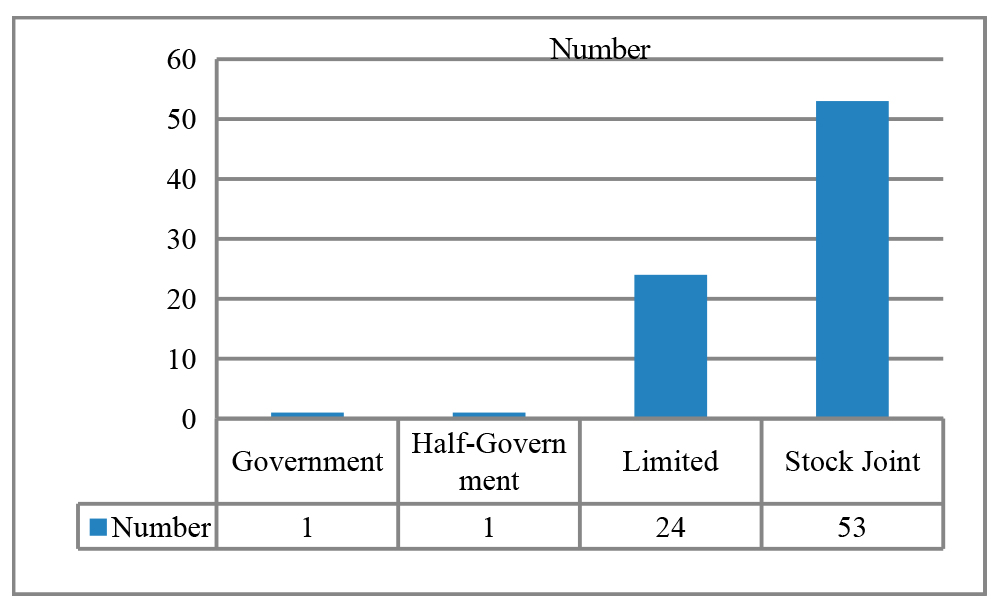
Figure 1. Interviewed Companies.
We generally reach to the companies with more than 10 employees (Figure 2). There are 4 companies with less than 10 employees. While the sample mainly consists of SMEs (77%), it also includes some large companies (23%).
|
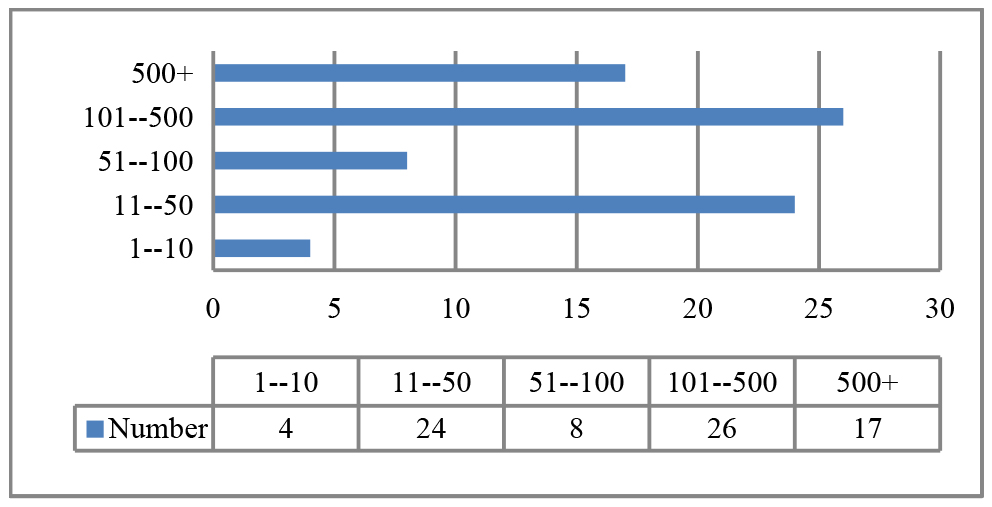
Figure 2. Interviewed Companies’ Size.
3.2 GSCM Implementation
Results of the interviews provide that 8 of the companies do not implement GSCM practices due to their incapabilities (Table 1). However, they state their positive intentions to implement them when they become able to. Some of their comments are below: “…We cannot apply GSCM practices by our own decision and capabilities. Regional authority and supply chain partners are influential in applying them.” “…Since it is a big cost for our company, we cannot afford it.”
Table 1. GSCM Implementation
GSCM Implementation |
Number |
Implemented |
66 |
Half implemented |
5 |
Does not exist |
8 |
The companies mainly adopted GSCM and most of them state their willingness to improve their positions and practices. “…We are applying green practices in our supply chain and want to enhance it by using railways instead of highways.” “…We aim to reach sustainability of our business by adopting green practices.” “…We believe that classical ways and old methods will leave their position to green understanding by the time. New generation and new business understanding will require this adoption. It is the future’s prerequisite.” “…We regularly meet with our suppliers and revise our methods. We also arrange seminars in order to train ourselves and our partners.” “…We must adopt GSCM practices to sell our product.”
3.3 Drivers of GSCM
According to the interviewees’ comments, we observe that the most agreed driver is the laws (81%) followed by customers (62%), government (61%), global influencers (61%) and corporate culture (58%) (Table 2). They moderately agree that suppliers, market and competitors are influential in adopting green practices. It is interesting to see that they fairly agree that shareholders drive the adoption of green practices. The reason for that may be the cost factor of adopting green practices. They may have resistance to employ GSCM because of cost related difficulties.
Table 2. Drivers of GSCM
Drivers of GSCM |
Number |
Percentage |
Corporate Culture |
46 |
0,58 |
Suppliers |
37 |
0,47 |
Government |
48 |
0,61 |
Laws |
64 |
0,81 |
Market |
37 |
0,47 |
Customers |
49 |
0,62 |
Shareholders |
25 |
0,32 |
Global Influencers |
48 |
0,61 |
Competitors |
37 |
0,47 |
One interviewee says that “…Since we work with international partners and they strictly follow Green practices, we must employ them in our supply chain. Moreover, we need to be more responsible to the environment.”
We may conclude that despite the weak intensions of company shareholders, Turkish companies employ GSCM practices due to the external forces (laws, government, customers, and global influencers) and they are capable of adopting them with the help of their corporate culture (Table 2).
3.4 Benefits of GSCM
As a result of interviews, we see that the quality (62%) is the most agreed performance outcome after GSCM implementation. The interviwees also believe that supplier relationships (44%) and market share (44%) are increased by GSCM (Table 3). One third of the interviwees approve that customer relationships, efficiency and innovativeness increase as a result of GSCM understanding.
Table 3. Outcomes of GSCM Practices
Outcomes |
Number |
Percentage |
Cost Reduction |
20 |
0,25 |
Customer Relationships |
26 |
0,33 |
Efficiency |
26 |
0,33 |
Effectiveness |
16 |
0,20 |
Asset Increase |
11 |
0,14 |
Quality |
49 |
0,62 |
Time Management |
15 |
0,19 |
Innovativeness |
25 |
0,32 |
Price Management |
19 |
0,24 |
Flexibility |
11 |
0,14 |
Supplier Relationships |
35 |
0,44 |
Market Share |
35 |
0,44 |
Collaborations |
14 |
0,18 |
They fairly consider collaborations and flexibility as the outcomes of GSCM. This may be because of suppliers’ unwillingness for GSCM. Another reason for that may be they could not be flexible enough to adapt their mechanisms for GSCM practices.
They also seem to disagree to the rest of the possible outcomes such as cost reduction, asset increase, time management, and price management. Some of the interviewees’ comments are below: “…Despite GSCM practices increase the costs, we need to be sensitive to the environment.” “…Even though it is a cost for our business, in the long run, it will reduce the costs. Moreover, it is a direct investment for customer relationships.” “…GSCM Practices are useful for our company since we can get maximum benefits from our waste products.” “…It increases our share in the market.”
3.5 Supply Chain Sustainability
Sustainable supply chain management (SSCM) integrates economic, social, and environmental concerns into the supply chain practices[15]. In line with the literature, the interviewees believe that they achieve environmental sustainability after applying GSCM practices (Table 4).
Table 4. Sustainability after GSCM
Sustainability Dimensions |
Number |
Percentage |
Economic Sustainability |
35 |
0,44 |
Environmental Sustainability |
48 |
0,61 |
Social Sustainability |
29 |
0,37 |
They also agree that their companies have economic sustainability as a result of GSCM practices. However, social sustainability seems to have a low level of agreement (Table 4).
One of the interviewees says that “…GSCM practices provide benefits in the long term.”
We could assume that companies achieve benefits as a result of GSCM practices in the long term even though it seems costly in the short term. Therefore, they can sustain their business (economic sustainability).
In terms of social sustainability of the firm, an interviewee comments that “…GSCM Practices help to increase our social image.” “…GSCM increases our costs. However, it is our responsibility to the environment and social life.”
3.6 Suggested Effective GSCM Model
Based on the findings of the study, we can propose relationships among the identified variables. Future research may consider this model to provide stronger clues about the relationships (Figure 3).
|
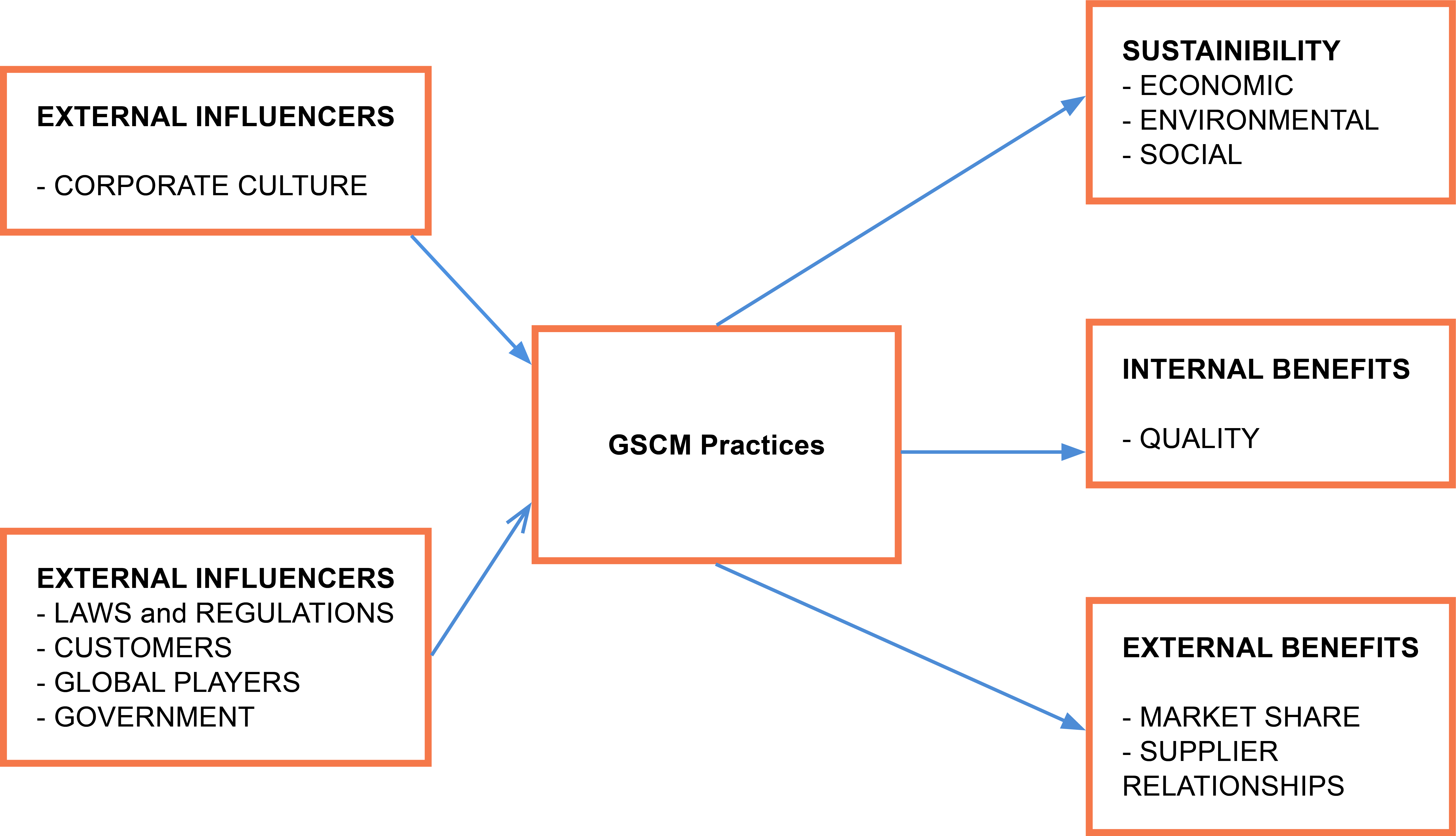
Figure 3. Proposed Research Model.
4 CONCLUSION
This study explores the drivers and outcomes of GSCM practices in Turkish companies regarding their supply chain sustainability. We mainly identify that (1) while external drivers are laws, customers, government and global influencers, corporate culture is the main internal driver of GSCM practices; (2) achieving quality is the most apperant outcome which followed by increased supplier relationships and market share; and (3) regarding sustainability, environmental sustainability is a clear result of GSCM practices.
The results confirm the increasing trend for GSCM practices around the world. This trend forces organization adopt green understanding[98]. In order to facilitate the adoption, governments support them by simplifying the process with established laws and regulations. As Zhu et al recommended, governments should improve the public awareness and make future legislations transparent to the organizations[13].
Besides this, organizations can accelarate the adoption by building suitable organizational culture as suggested by the results. They may organize events for their employees and explain the environmental, operative and economic advantages of green practices. As the literature advises, they may invest on technological upgradation, environmental-friendly raw materials/resources and personnel training[13].
The literature reports that GSCM practices minimize costs (manufacturing, material and distribution, logistics and warehouse) by improving the product quality. Scholars recommend that GSCM enhances operational capabilities without decreasing customer satisfaction and product quality[61]. According to our results, Turkish companies perceive that the quality can be achieved through GSCM practices too. However, they believe that it is costly. The literature also suggests that GSCM initiatives improve firm competitiveness and economic performance[98] as identified by our study.
According to the results, we may imply that GSCM practices increase organizational comfort regarding their manufacturing conditions since customers, one of the external stakeholders, have strong wish to understand the conditions[99].
Given that the literature reports mixed results regarding GSCM use and its effect on percormance, this study clarifies the issue more for Turkish literature[5,21,100,101]. We see that Turkish companies such as Arkas Holding and Paşabahçe have implemented green practices in their logistics and they have improved their performance. However, they have not implemented green practices in their supply chains yet. Arkas Holding has taken significant steps in green logistics[101]. The company uses Euro 5 standard vehicles for land transportation and practices fuel-saving techniques by operating ships at economical speeds. Additionally, Arkas Holding has implemented projects like the Arkas Forest and green IT initiatives to further its commitment to environmental sustainability[101]. On the other hand, Paşabahçe focuses on energy efficiency and reducing greenhouse gas emissions. By optimizing air-fuel ratios in furnaces and consolidating fans, the company has achieved substantial energy savings and reduced natural gas consumption by 20%. They have also developed industrial water cooling systems to cut down on electricity usage.
This study is among the few studies regarding the use of GSCM practices in Turkey. Therefore, we expect that this research will be beneficial especially for Turkish academic research and industry. Since Turkish literature is weak on this point, we did not analyse the issue in depth and preferred to view the generic picture. Therefore, we did not consider specific industries or specific members (e.g. suppliers, producers, etc.) of supply chains. We took a big initial step so that future studies may explore further issues based on the findings of this study.
Acknowledgements
Not applicable.
Conflicts of Interest
The authors declared no conflict of interest.
Author Contribution
Özlen MK was responsible for the collection, compilation and summary of all data for articles.
Abbreviation List
EP, Environmental performance
GSCM, Green supply chain management
References
[1] Shehadeh R, Al-Zu’bi Z, Abdallah A et al. Investigating critical factors affecting the operational excellence of service firms in Jordan. J Manag Res, 2016; 8: 18-49.[DOI]
[2] Tang A, Lai K, Cheng T. Environmental governance of enterprises and their economic upshot through corporate reputation and customer satisfaction. Bus Strateg Environ, 2012; 21: 401-411.[DOI]
[3] Ahmed W, Ahmed W, Najmi A. Developing and analyzing framework for understanding the effects of GSCM on green and economic performance: perspective of a developing country. Manage Environ Qual Int J, 2018; 29: 740-758.[DOI]
[4] Seuring S, Müller M. From a literature review to a conceptual framework for sustainable supply chain management. J Clean Prod, 2008; 16: 1699-1710.[DOI]
[5] Laosirihongthong T, Adebanjo D, Choon Tan K. Green supply chain management practices and performance. Ind Manage Data Syst, 2013; 113: 1088-1109.[DOI]
[6] Zhu Q, Sarkis J, Lai K. Choosing the right approach to green your supply chains. Mod Supply Chain Res Appl, 2019; 1: 54-67.[DOI]
[7] Drohomeretski E, Da Costa S, De Lima E. Green supply chain management: Drivers, barriers and practices within the Brazilian automotive industry. J Manuf Technol Mana, 2014; 25: 1105-1134.[DOI]
[8] Srivastava S. Green supply-chain management: A state-of‐the-art literature review. Int J Manag Rev, 2007; 9: 53-80.[DOI]
[9] Zhu Q, Sarkis J, Geng Y. Green supply chain management in China: pressures, practices and performance. Int J Oper Prod Man, 2005; 25: 449-468.[DOI]
[10] Fahimnia B, Sarkis J, Davarzani H. Green supply chain management: A review and bibliometric analysis. Int J Prod Econ, 2015; 162: 101-114.[DOI]
[11] Gong R, Xue J, Zhao L et al. A Bibliometric Analysis of Green Supply Chain Management Based on the Web of Science (WOS) Platform. Sustain, 2019; 11: 3459.[DOI]
[12] Carter C, Rogers D. A framework of sustainable supply chain management: Moving toward new theory. Int J Phys Distr Log, 2008; 38: 360-387.[DOI]
[13] Zhu Q, Sarkis J, Lai K. Examining the effects of green supply chain management practices and their mediations on performance improvements. Int J Prod Res, 2012; 50: 1377-1394.[DOI]
[14] Çankaya S, Sezen B. Effects of green supply chain management practices on sustainability performance. J Manuf Technol Mana, 2019; 30: 98-121.[DOI]
[15] Elbaz J, Iddik S. Culture and green supply chain management (GSCM): A systematic literature review and a proposal of a model. Manag Environ Qual, 2020; 31: 483-504.[DOI]
[16] Soni R, Soni B. Evolution of Supply Chain Management: Ethical Issues for Leaders. Compet Forum, 2019; 17: 240-247.[DOI]
[17] Bag S, Gupta S, Kumar S et al. Role of technological dimensions of green supply chain management practices on firm performance. J Enterp Inf Manag, 2020; 34: 1-27.[DOI]
[18] Kim I, Min H. Measuring supply chain efficiency from a green perspective. Manag Res Rev, 2011; 34: 1169-1189.[DOI]
[19] Zand F, Yaghoubi S, Sadjadi S. Impacts of government direct limitation on pricing, greening activities and recycling management in an online to offline closed loop supply chain. J Clean Prod, 2019; 215: 1327-1340.[DOI]
[20] Giri R, Mondal S, Maiti M. Government intervention on a competing supply chain with two green manufacturers and a retailer. Comput Ind Eng, 2019; 128: 104-121.[DOI]
[21] Koca G, Mathi̇Yazhagan K. An Assessment of the Barriers to Social Dimension of SSCM Practice Implementation Using Fuzzy DEMATEL Approach: A Case from Turkey. Ege Acad Rev, 2020; 20: 75-89.[DOI]
[22] Zhu Q, Sarkis J, Lai K. Institutional-based antecedents and performance outcomes of internal and external green supply chain management practices. J Purch Supply Manag, 2013; 19: 106-117.[DOI]
[23] Zhu Q, Qu Y, Geng Y et al. A comparison of regulatory awareness and green supply chain management practices among Chinese and Japanese manufacturers. Bus Strateg Environ, 2017; 26: 18-30.[DOI]
[24] Panigyrakis G, Theodoridis P. Internal marketing impact on business performance in a retail context. Int J Retail Distrib, 2009; 37: 600-628.[DOI]
[25] Rao P, Holt D. Do green supply chains lead to competitiveness and economic performance? Int J Oper Prod Man, 2005; 25: 898-916.[DOI]
[26] Delmas M, Toffel M. Organizational responses to environmental demands: Opening the black box. Strategic Manage J, 2008; 29: 1027-1055.[DOI]
[27] Schmidt C, Foerstl K, Schaltenbrand B. The supply chain position paradox: Green practices and firm performance. J Supply Chain Manag, 2017; 53: 3-25.[DOI]
[28] Sarkis J. Supply chain management and environmentally conscious design and manufacturing. Int J Env Consci Des Manuf, 1995; 4: 43-52.
[29] Mersin K. Green logistics and green logistics practices in our country. Accessed 12 August 2024. Available at:[Web]
[30] Govindan K, Khodaverdi R, Jafarian A. A fuzzy multi criteria approach for measuring sustainability performance of a supplier based on triple bottom line approach. J Clean Prod, 2013; 47: 345-354.[DOI]
[31] Varangis P, Crossley R, Primo Brago C. Introduction: Is there a commercial case for tropical timber certification? In: Eco-Labelling and International Trade. Publisher: Palgrave Macmillan, London, 1997; 228-250.
[32] Walker H, Di Sisto L, McBain D. Drivers and barriers to environmental supply chain management practices: lessons from the public and private sectors. J Purch Supply Manag, 2008; 14: 69-85.[DOI]
[33] Ozcelik F, Ozturk B. A Research On Barriers To Sustainable Supply Chain Management and Sustainable Supplier Selection Criteria. Dokuz Eylul Univer J, 2014; 16: 259-279.
[34] Bag S, Gupta S, Telukdarie A. Importance of innovation and flexibility in configuring supply network sustainability. Benchmarking, 2018; 25: 3951-3985.[DOI]
[35] Baird K, Su S, Tung A. Organizational culture and environmental activity management. Bus Strateg Environ, 2017; 27: 403-414.[DOI]
[36] Bae H, Grant D. Investigating effects of organisational culture and learning on environmental collaboration and performance of Korean exporting firms. Int J Logist-Res App, 2018; 21: 1-17.[DOI]
[37] Abdul-Rashid S, Sakundarini N, Ariffin R et al. “Drivers for the adoption of sustainable manufacturing practices: A Malaysia perspective”. Int J Precis Eng Man, 2017; 18: 1619-1631.[DOI]
[38] Zsidisin G, Siferd S. Environmental purchasing: a framework for theory development. Eur J Purch Supply Manag, 2001; 7: 61-73.[DOI]
[39] Govindan K, Muduli K, Devika K et al. Investigation of the influential strength of factors on adoption of green supply chain management practices: An Indian mining scenario. Resour Conserv Recy, 2016; 107: 185-194.[DOI]
[40] Choi D, Hwang T. The impact of green supply chain management practices on firm performance: the role of collaborative capability. Oper Manage Res, 2015; 8: 69-83.[DOI]
[41] Geng R, Mansouri S, Aktas E. The relationship between green supply chain management and performance: A meta-analysis of empirical evidences in Asian emerging economies. Int J Prod Econ, 2017; 183: 245-258.[DOI]
[42] Rao P. Greening the supply chain: a new initiative in South East Asia. Int J Oper Prod Man, 2002; 22: 632-655.[DOI]
[43] Green K, Jr Zelbst P, Meacham J et al. Green supply chain management practices: Impact on performance. Supply Chain Manag, 2012; 17: 290-305.[DOI]
[44] Eltayeb T, Zailani S. Going green through green supply chain initiatives towards environmental sustainability. Oper Supply Chain Ma, 2009; 2: 93-110.[DOI]
[45] Yurdakul M, Kazan H. Effects of Eco-Innovation on Economic and Environmental Performance: Evidence from Turkey’s Manufacturing Companies. Sustain, 2020; 12: 3167.[DOI]
[46] Morrison A, Teixeira R. Small business performance: a tourism sector focus. J Small Bus Enterp D, 2004; 11: 166-173.[DOI]
[47] Khan S, Qianli D. Impact Of Green Supply Chain Management Practices on Firms’ Performance: An Empirical Study From the Perspective of Pakistan. Environ Sci Pollut R, 2017; 24: 16829-16844.[DOI]
[48] Gardas B, Raut R, Jagtap A et al. Exploring the key performance indicators of green supply chain management in agro-industry. J Model Manag, 2019; 14: 260-283.[DOI]
[49] Vanalle R, Ganga G, Godinho Filho M et al. Green supply chain management: An investigation of pressures, practices, and performance within the Brazilian automotive supply chain. J Clean Prod, 2017; 100: 250-259.[DOI]
[50] Ginsberg J, Bloom P. Choosing the right green marketing strategy. Mit Sloan Manage Rev, 2004; 46: 79-84.
[51] Sugandini D, Muafi M, Susilowati C e al. Green Supply Chain Management and Green Marketing Strategy on Green Purchase Intention : SMEs Cases. Int J Ind Eng Manage, 2020; 13: 79-92.[DOI]
[52] Abdallah A, Al-Ghwayeen W. Green supply chain management and business performance: The mediating roles of environmental and operational performances. Bus Process Manag J, 2019; 26: 489-512.[DOI]
[53] Eltayeb T, Zailani S, Ramayah T. Green supply chain initiatives among certified companies in Malaysia and environmental sustainability: Investigating the outcomes. Resour Conserv Recy, 2011; 55: 495-506.[DOI]
[54] Ke Q, Isaac D, Dalton P. The determinants of business performance of estate agency in England and Wales. Prop Manag, 2008; 26: 255-272.[DOI]
[55] Molina Azorin J, Claver-cortes E, Lopez-Gamero M et al. Green management and financial performance: a literature review. Manage Decis, 2009; 47: 1080-1100.[DOI]
[56] Packalen S. Culture and sustainability. Corp Soc Resp Env Ma, 2010; 17: 118-121.[DOI]
[57] Kim S. Effects of supply chain management practices, integration and competition capability on performance. Supply Chain Manag, 2006; 11; 241-248.[DOI]
[58] Green K, Jr Whitten D, Inman R. The impact of logistics performance on organizational performance in a supply chain context. Supply Chain Manag, 2008; 13: 317-327.[DOI]
[59] Sharma V, Chandna P, Bhardwaj A. Green supply chain management related performance indicators in agro industry: A review. J Clean Prod, 2017; 141: 1194-1208.[DOI]
[60] Abu Nimeh H, Abdallah A, Sweis R. Lean supply chain management practices and performance: empirical evidence from manufacturing companies. Int J Inf Syst Suppl, 2018; 7: 1-15.
[61] Azevedo S, Carvalho H, Machado V. The influence of green practices on supply chain performance: a case study approach. Transport Res E-Log, 2011; 47: 850-871.[DOI]
[62] Hazen B, Cegielski C, Hanna J. Diffusion of green supply chain management. Int J Logist Manag, 2011; 22: 373-389.[DOI]
[63] Mitra S, Datta P. Adoption of green supply chain management practices and their impact on performance: an exploratory study of Indian manufacturing firms. Int J Prod Res, 2014; 52: 2085-2107.[DOI]
[64] Zhu Q, Geng Y, Sarkis J et al. Evaluating green supply chain management among Chinese manufacturers from the ecological modernization perspective. Transport Res E-Log, 2011; 47: 808-821.[DOI]
[65] The World Commission on Environment and Development. Our Common Future. Accessed 14 August 2024. Available at:[Web]
[66] Gunasekaran A, Gallear D. Special issue on sustainable development of manufacturing and services. Int J Prod Econ, 2012; 1: 1-6.[DOI]
[67] Khan F, Ahmed W, Najmi A. Understanding consumers’ behavior intentions towards dealing with the plastic waste: perspective of a developing country. Resour Conserv Recy, 2019; 142: 49-58.[DOI]
[68] Khan F, Ahmed W, Najmi A et al. Managing plastic waste disposal by assessing consumers’ recycling behavior: the case of a densely populated developing country. Environ Sci Pollut R, 2019; 26: 1-13.[DOI]
[69] Shafique M, Asghar M, Rahman H. The impact of green supply chain management practices on performance: moderating role of institutional pressure with mediating effect of green innovation. Bus Manage Ed, 2017; 15: 91-108.[DOI]
[70] Wu G, Ding J, Chen P. The effects of GSCM drivers and institutional pressures on GSCM practices in China Taiwan Region’s textile and apparel industry. Int J Prod Econ, 2012; 135: 618-636.[DOI]
[71] Bjorklund M, Sallnäs U, Abrahamsson M. Performance Measurement in the Greening of Supply Chains. Int J Inf Syst Suppl, 2012; 17: 29-39.[DOI]
[72] Azapagic A. Systems approach to corporate sustainability a general management framework. Process Saf Environ, 2003; 81: 303-316.[DOI]
[73] Florida R. The environment and the new industrial revolution. Calif Manage Rev, 1996; 38: 80-115.[DOI]
[74] Handfiled R, Walton S, Sorufe R. Applying environmental criteria to supplier assessment: a study of the application of the analytical hierarchy process. Eur J Oper Res, 2002; 41: 70-87.[DOI]
[75] Samanlioglu F, Burnaz A, Diş B et al. An Integrated Fuzzy Best-Worst-TOPSIS Method for Evaluation of Hotel Website and Digital Solutions Provider Firms. Adv Fuzzy Syst, 2020; 1: 1-10.[DOI]
[76] Bowen F, Cousins P, Lamming R et al. The role of supply management capabilities in green supply. Prod Oper Manag, 2001; 10: 174-189.[DOI]
[77] Rivera J. Institutional pressures and voluntary environmental behavior in developing countries: evidence from the Costa Rican hotel industry. Soc Natur Resour, 2004; 17: 779-797.[DOI]
[78] Russo M, Fouts P. A resource-based perspective on corporate environmental performance and profitability. Acad Manage J, 1997; 40: 534-559.[DOI]
[79] Plambeck E, Lee H, Yatsko P. Improving environmental performance in your Chinese supply chain. Mit Sloan Manage Rev, 2012; 53: 43-51.
[80] Darnall N, Jolley G, Handfield R. Environmental management systems and green supply chain management: complements for sustainability? Bus Strateg Environ, 2008; 17: 30-45.[DOI]
[81] Hart S. A natural-resource-based view of the firm. Acad Manage Rev, 1995; 20: 986-1014.[DOI]
[82] Sarkis J, Gonzalez-Torre P, Adenso-Diaz B. Stakeholder pressure and the adoption of environmental practices: The mediating effect of training. J Oper Manage, 2010; 28: 163-176.[DOI]
[83] Sugandini D, Muafi M, Susilowati C et al. Green Supply Chain Management and Green Marketing Strategy on Green Purchase Intention : SMEs Cases. Int J Ind Eng Manage, 2020; 13: 79-92.[DOI]
[84] Teixeira A, Jabbour C, de Sousa Jabbour A et al. Green training and green supply chain management: evidence from Brazilian firms. J Clean Prod, 2016; 116: 170-176.[DOI]
[85] Choudhary K, Sangwan K. Adoption of green practices throughout the supply chain: An empirical investigation. Benchmarking, 2019;26: 1650-1675.[DOI]
[86] Gopal P, Thakkar J. Sustainable supply chain practices: an empirical investigation on Indian automobile industry. Prod Plan Control, 2016; 27: 49-64.[DOI]
[87] Cordeiro J, Sarkis P. Environmental proactivism and firm performance: evidence from security analyst forecasts. Bus Strateg Environ, 1997; 6: 104-114.[DOI]
[88] King A, Lenox M. Exploring the locus of profitable pollution reduction. Manage Sci, 2002; 48: 289-299.[DOI]
[89] Pullman M, Maloni M, Carter C. Food for thought: social versus environmental sustainability practices and performance outcomes. J Supply Chain Manag, 2009; 45: 38-54.[DOI]
[90] Acer A, Karagoz-Taskin I. Environmentally Conscious and Green Consumer: A Research for University Students. Ömer Halisdemir Univ J Fac Econ Admin Sci, 2020; 13: 260-276.[DOI]
[91] United Nations General Assembly, Report of the World Commission on Environment and Development: Our Common Future. Development and International Cooperation, General Assembly, 1987 Annex to Document A/42/427.
[92] Sadia S, Kaur R, Ersoz F et al. Evaluation of the effectiveness of green practices in manufacturing sector using CHAID analysis. J Remanufacturing, 2019; 9: 3-27.[DOI]
[93] Behdioglu S, Koca G. Green Supply Chain Initiatives in Turkish Automotive Main Industry. J Strateg Res Soc Sci, 2017; 3: 177-188.
[94] Kiris S, Borekci D. Drivers and barriers for sustainable port management: a triple bottom line approach. Istanb Gelisim U J Soc Sci, 2018; 5: 192-220.[DOI]
[95] Novitasari M, Agustia D. Green supply chain management and firm performance: The mediating effect of green innovation. J Ind Eng Manage, 2021; 14: 391.[DOI]
[96] Yılmaz Y, Üngüren E, Kaçmaz Y. Determination of Managers’ Attitudes Towards Eco-Labeling Applied in the Context of Sustainable Tourism and Evaluation of the Effects of Eco-Labeling on Accommodation Enterprises. Sustain, 2019; 11: 5069.[DOI]
[97] Kalash İ. Environmental Disclosure: Determinants and Effects on Financial Performance? An Empirical Evidence from Turkey. Sosyoekonomi, 2020; 28: 95-115.[DOI]
[98] Akhtar P. Drivers of Green Supply Chain Initiatives and their Impact on Economic Performance of Firms: Evidence from Pakistan’s Manufacturing Sector. J Competitiveness, 2019; 11: 5-18.[DOI]
[99] González-Benito J, González-Benito Ó. The role of stakeholder pressure and managerial values in the implementation of environmental logistics practices. Int J Prod Res, 2006; 44: 1353-1373.[DOI]
[100] Desticioğlu B. Green Supply Chain Management and Sample Applications. J Nav Sci Eng, 2021; 17: 283-308.
[101] Arkas Holding. Green Logistics Practices in Turkey and the World - Logistics Science. Accessed 14 August 2024. Available at:[Web]
Copyright © 2024 The Author. This open-access article is licensed under a Creative Commons Attribution 4.0 International License (https://creativecommons.org/licenses/by/4.0), which permits unrestricted use, sharing, adaptation, distribution, and reproduction in any medium, provided the original work is properly cited.



 Copyright ©