
Can Health Literacy in Patients with Chronic Atrophic Gastritis Improve the Ability to Identify Rumors? A Cross-sectional Study
Yunshan Li1, Youjing Wang2#, Jia Liu1#, Bojunhao Feng3, Baojun Suo4, Yibo Wu5,6*
1School of Public Health, Sun Yat-sen University, Guangzhou, Hebei Province, China
2School of Public Health, Huazhong University of Science and Technology, Wuhan, Hubei Province, China
3Faculty of Medicine, Macau University of Science and Technology, Macau, China
4Department of Gastroenterology, Peking University Third Hospital, Beijing, China
5School of Public Health, Peking University, Beijing, China
6Key Research Base of Philosophy and Social Sciences in Shaanxi Province, Health Culture Research Center of Shaanxi, Xi'an, Shaanxi Province, China
#The second authorship is equally shared between Youjing Wang and Jia Liu.
Abstract
Objective: To examine the connection between rumor recognition and health literacy in people with chronic atrophic gastritis (CAG).
Methods: In this study, a cross-sectional design was employed. From May 6, 2020 to January 24, 2021, a total of 10 hospitals in each of the 5 major administrative regions of East China, North China, Central China, South China, and Northwest China were used as survey sites, and researchers were recruited to intercept CAG patients for questionnaire surveys through convenience sampling. We collected data using a self-designed questionnaire based on the functional, communicative, and critical health literacy and anti-rumor platforms. The t-test, analysis of variance, Pearson correlation analysis, and multiple stepwise linear regression analysis were all performed using SPSS 26.0.
Results: A total number 602 valid samples were obtained in this study. CAG patients had a health literacy score of 51.07±11.03. For patients with CAG, the rumor recognition ability score was 8.44±2.95, with a mean correct rate of 52.8%. There were statistical differences in the ability to read rumors among patients with atrophic gastritis by place of residence (P<0.01), age (P<0.001), nation (P<0.001), marital status (P<0.05), and level of health literacy (P<0.001). Patients had a weak positive link between health literacy and rumor recognition, according to Pearson correlation analysis (r=0.236, P<0.01). After adjusting for the nation, marital status, residence, and age, multiple stepwise linear regression analysis revealed that the capacity of patients to read rumors increased with increasing levels of functional health literacy (β=0.136, P<0.001) and critical health literacy (β=0.195, P<0.001).
Conclusion: This study found CAG patients had lower rumor recognition, and that critical health literacy had a stronger positive effect on their rumor recognition after adjusting for demographic correlations. The use of targeted interventions is recommended to increase critical health literacy and lessen the harmful effects of rumors.
Keywords: chronic diseases, health literacy, rumor recognition, disinformation
Chronic atrophic gastritis (CAG) is a common chronic inflammatory disease of the digestive system, characterized by repeated damage to the epithelium of the gastric mucosa, leading to atrophy and reduction in the number of intrinsic gastric glands, with or without intestinal epithelial metaplasia, and is recognized by the World Health Organization as a precancerous lesion[1]. Epidemiological data show that the prevalence of CAG increases with age, and about 0.1% to 0.25% of CAG may progress to gastric cancer[2]. The development of CAG is significantly related to the level of disease awareness, psychological status, and health behavior of the individual[3].
The internet has gradually become the primary source for people to obtain health information. It is worth noting that the health information widely disseminated on the internet is not always credible health knowledge, but also contains some health rumors, which may cause patients to misunderstand important information related to CAG and delay the diagnosis or treatment[4]. Some effective measures to limit the negative impacts of health rumors have been suggested in previous literature, these include strengthening relevant law enforcement agencies, disseminating facts to counterrumors, and improving the public's ability to identify the accuracy of various information, i.e. rumor recognition ability[5].
Studies have shown that health literacy can assist the public in recognizing the falsity of health rumors and avoiding their consequences[6]. Health literacy is widely considered to represent “the degree to which individuals have the capacity to obtain, process, and understand basic health information and services needed to make appropriate health decisions[7].” Nutbeam[8] gave an insight into the meaning of health literacy, noting that it can be classified into three levels: functional health literacy, communicative health literacy, and critical health literacy. Functional health literacy is defined as having adequate literacy skills that can be used effectively in daily life; communicative health literacy is considered to be a more advanced cognitive and literacy skill related to social skills, acquiring and applying the information to manage health conditions; critical health literacy is also an advanced cognitive skill related to social skills, which is noted as being able to use critical thinking to analyze health information and apply it to daily life[8]. Previous studies have shown that improving health literacy is important for improving health outcomes in patients with chronic diseases such as diabetes[9], cardiovascular disease[10], and chronic obstructive pulmonary disease[11]. CAG is also a chronic disease related to an individual’s behavior and lifestyle[12]. Individuals with higher health literacy are more likely to establish healthy behaviors and lifestyles[13]. However, there still is a lack of knowledge about whether health literacy is effective in helping people with CAG to identify CAG-related health rumors and which level of health literacy is most important for people with CAG to be able to distinguish rumors. We hypothesize that for people with CAG, rumor recognition can be improved by promoting health literacy, which in turn increases prevention and control of the disease, and that critical health literacy is most closely related to rumor-recognition skills. Patients with CAG were recruited for this study in order to better understand the relationship between rumor recognition and health literacy in patients with CAG, and to provide a basis for improving patients' ability to recognize rumors, adopt healthy behaviors and lifestyles, and delay or prevent the progression of CAG.
2.1 Sample
The study population consisted of patients with CAG. Inclusion criteria: (a) Patients who met the endoscopic and histopathological diagnostic criteria for CAG in the Chronic Gastritis Primary Care Guidelines (2019)[14]; (b) Patients who were willing to cooperate with the investigation and sign the informed consent form. Exclusion criteria: (a) Patients with cognitive or psychiatric disorders; (b) Patients with serious diseases of the heart, liver, kidney, and other organs.
2.2 Procedure
This study is a cross-sectional study, using a convenience sampling method, 1-2 provinces (autonomous regions and municipalities directly under the central government) were selected in 5 major administrative regions of China: Shandong Province in East China, Beijing and Shanxi Province in North China, Henan Province and Hubei Province in Central China, Guangdong Province in South China, Shaanxi Province, and Xinjiang Province in Northwest China. A total of two hospitals were selected from each city in each of the selected provinces, so that there were two hospitals in each administrative region where surveyors could be recruited for training and to distribute survey questionnaires. The investigators received standardized training, and after self-introduction and clarification of the study objectives, CAG patients who had just received medical checkups or consultation services were randomly intercepted at each survey site using an electronic version of the questionnaire to conduct the survey. The investigators obtained the patients' consent and signed an informed consent form prior to the survey, using a standardized instructional language, which was filled in by the investigators after questioning them individually. The questionnaires were checked on site and any gaps were then communicated with the patient to fill in the gaps. After the questionnaires were collected, logic checks and data screening was carried out to remove questionnaires with an answer time of <120s and those with inconsistent logic. The study subjects gave informed consent and the study was approved by the ethics committee (JKWH-2020-10). A total of 680 questionnaires were distributed and 652 questionnaires were collected between May 6, 2020 and January 24, 2021, with a return rate of 95.9%, and the final analysis included 602 questionnaires with a validity rate of 88.5%. Details are shown in Figure 1.
|
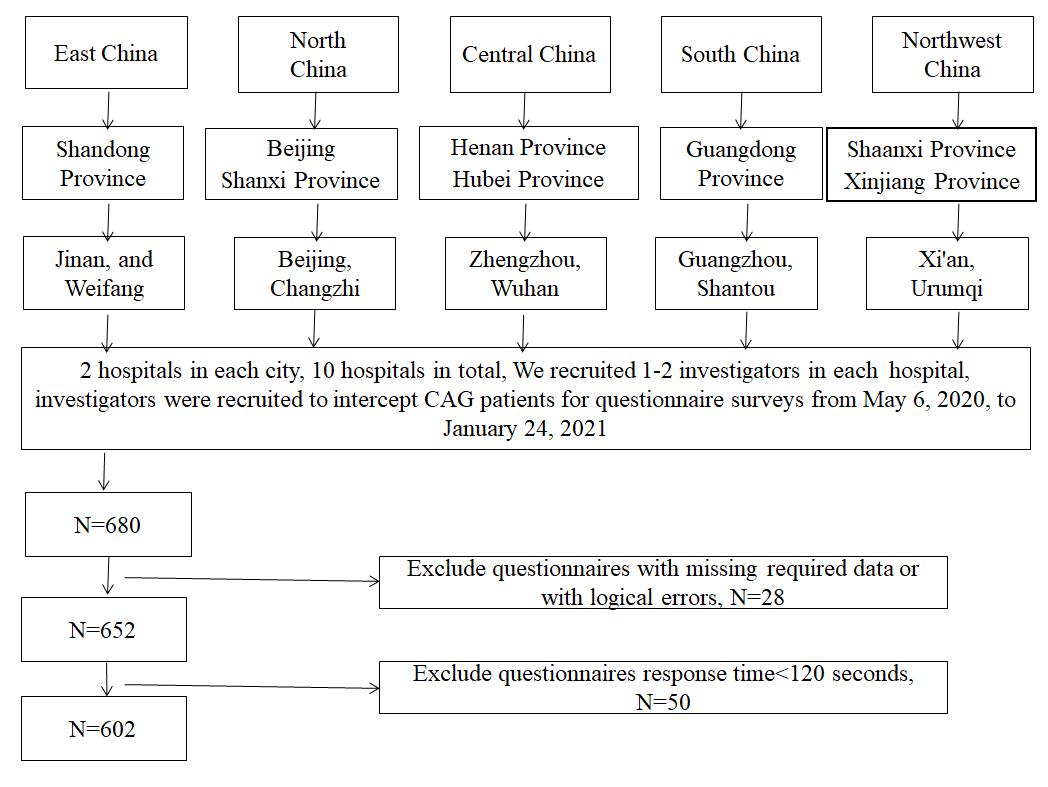
Figure 1. Procedure.
2.3.1 General Demographic and Sociological Characteristics
This section covers gender, residence, age, occupation, educational background, ethnic group, marital status, per capita monthly household income, smoking status, and alcohol consumption.
2.3.2 Functional, Communicative, and Critical Health Literacy
Referring to the scale developed by Ishikawa et al.[15] in Japan and Chineseized and revised by Zhang et al.[16] to measure the health literacy of patients with chronic diseases, the health literacy of CAG patients was assessed in 3 dimensions: functional health literacy, communicative health literacy, and critical health literacy. This part has 14 items on a 5-point Likert scale with a total score of 14 to 70, with higher scores representing better health literacy, whereas functional health literacy is reverse scored. The internal consistency of Cronbach's alpha coefficient in this section was 0.906, the validated factor analysis scale and the intrinsic structural fit was good, the χ2/df was 1.977<3. The goodness of fit index, modified goodness of fit index, normative fit index, Tucker-Lewis index, value-added fit index, and comparative fit index all met the criteria of 0.9 or above, and the root mean squared error of approximation was 0.040<0.08.
2.3.3 Rumor Recognition Ability
This section refers to the Tencent news truthfulness platform (https://vp.fact.qq.com/home), the China internet joint anti-rumor platform (https://www.piyao.org.cn/), and the "WeChat anti-rumor assistant" app (https://developers.weixin.qq.com/community/develop/doc/000ecea2f382087239c87d8505140c). Based on an extensive literature review, the initial rumor database was initially determined by three members of the group, and four experts from clinical medicine (gastroenterology), evidence-based medicine, communication science, and public health were consulted. 2 iterations determined that the final survey would include the categories of causes (5 questions), treatment (5 questions), and cancer of atrophic gastritis (6 questions), with entries 2, 3, 4, 5, 6, 7, 9, 14, and 15 being true information and entries 1, 8, 10, 11, 12, 13, and 16 being health rumors, with correct answers scoring 1 point and incorrect or ambiguous answers recorded as 0 points. The total score is 0 to 16, with a Cronbach's alpha coefficient of 0.661. This meant that the higher the score, the higher the rumor recognition ability.
2.4 Statistical Analysis
The data was normally distributed by the one-sample non-parametric Kolmogorov-Smirnov normality test, so the measurement data was expressed as mean±standard deviation (SD), independent samples t-test were used to compare two groups, and an analysis of variance was used to compare multiple groups; the count data was expressed as a composition ratio. The relationship between rumor recognition ability and health literacy of CAG patients was analyzed by Pearson correlation analysis. Two variables can be considered strongly correlated if |r|≥0.7, moderately correlated if 0.4≤|r|<0.7, weakly corelated if 0.2≤|r|<0.4, and very weakly corelated if |r|<0.2. Rumor recognition ability was used as the dependent variable, health literacy in each dimension was used as the independent variable, and demographic and sociological variables with statistically significant differences in the analysis of variance were included as control variables, with Fintroduced=0.05 and Fexcluded=0.1, and multiple stepwise linear regression analysis was performed with a test level of α=0.05. All of the above data was statistically analyzed by SPSS 26.0.
3.1 Social and Demographic Characteristics of the Survey Respondents
Of the 602 participants, 64.5% were male, 78.2% were urban residents, and 84.2% had spouses. Age, education, ethnicity, per capita monthly household income, smoking status, and drinking status were dominated by 41-50 years old (36.9%). Other demographics included bachelor's degree (24.5%), Han nationality (86.9%), RMB 4000-6000/month (21.9%), never smoked (46.2%), and drinking <3 times/week (36.4%), and the proportions were basically the same for each occupation (Table 1).
Table 1. Participant Demographic and Sociological Characteristics
Variables |
Variable Categories |
n |
% |
Gender |
Male |
388 |
64.5 |
|
Female |
214 |
35.5 |
Residence |
Cities and towns |
471 |
78.2 |
|
Rural |
131 |
21.8 |
Age |
≤40 |
157 |
26.1 |
|
41-50 |
222 |
36.9 |
|
51-60 |
122 |
20.3 |
|
61-70 |
71 |
11.8 |
|
≥71 |
30 |
5.0 |
Occupation |
Civil servants and career staff |
96 |
15.9 |
|
Agriculture, forestry, animal husbandry, fishery and water conservancy workers |
99 |
16.4 |
|
Other employees and nonemployees |
93 |
15.4 |
|
Business and service personnel |
82 |
13.6 |
|
Operators of production and transport equipment and related personnel |
106 |
17.6 |
|
medical personnel |
50 |
8.3 |
|
Professional and technical personnel (excluding medical personnel) |
76 |
12.6 |
Educational background |
Primary school and below |
35 |
5.8 |
|
Junior high school |
94 |
15.6 |
|
High school |
186 |
30.9 |
|
Undergraduate |
258 |
42.9 |
|
Doctor’s/ Master’s |
29 |
4.8 |
Nation |
Han nationality |
523 |
86.9 |
|
Other nationalities |
79 |
13.1 |
Marital status |
Single/Divorced/Widowed spouse |
95 |
15.8 |
|
Married |
507 |
84.2 |
Monthly per capita household income |
<4000 yuan |
102 |
16.9 |
|
4000-6000 yuan |
132 |
21.9 |
|
6000-8000 yuan |
91 |
15.1 |
|
8000-10000 yuan |
110 |
18.3 |
|
10000-12000 yuan |
77 |
12.8 |
|
≥12000 yuan |
90 |
15 |
Smoke |
Never smoke |
278 |
46.2 |
|
Quit smoking |
209 |
34.7 |
|
Smoking <60 cigarettes/week |
80 |
13.3 |
|
Smoking ≥60 cigarettes/week |
35 |
5.8 |
Drink |
Never drink |
178 |
29.6 |
|
Quit drinking |
171 |
28.4 |
|
Drink<3 times/week |
219 |
36.4 |
|
Drink≥3 times/week |
34 |
5.6 |
3.2 Current Status of Health Literacy and Rumor Recognition Ability among CAG Patients
Based on the participants' health literacy scores, "lowest score" to "mean-SD " (0-40.04) was assessed as low health literacy, "mean-SD " to "mean±SD" (40.04-62.10) as medium health literacy, "mean±SD" to "highest score" (62.10-70) as high health literacy. The CAG patients were divided into three groups high (11.5%), medium (72.9%), and low (15.6%) health literacy, with health literacy scores of (66.08±2.19), (51.23±5.96), and (29.65±7.86) for the three groups respectively.
The mean health literacy score of the participants was 51.07 (total 70) and the mean functional, communicative, and critical health literacy scores were 16.97 (total 25), 19.08 (total 25), and 15.02 (total 20) respectively, as shown in Figure 2.
|
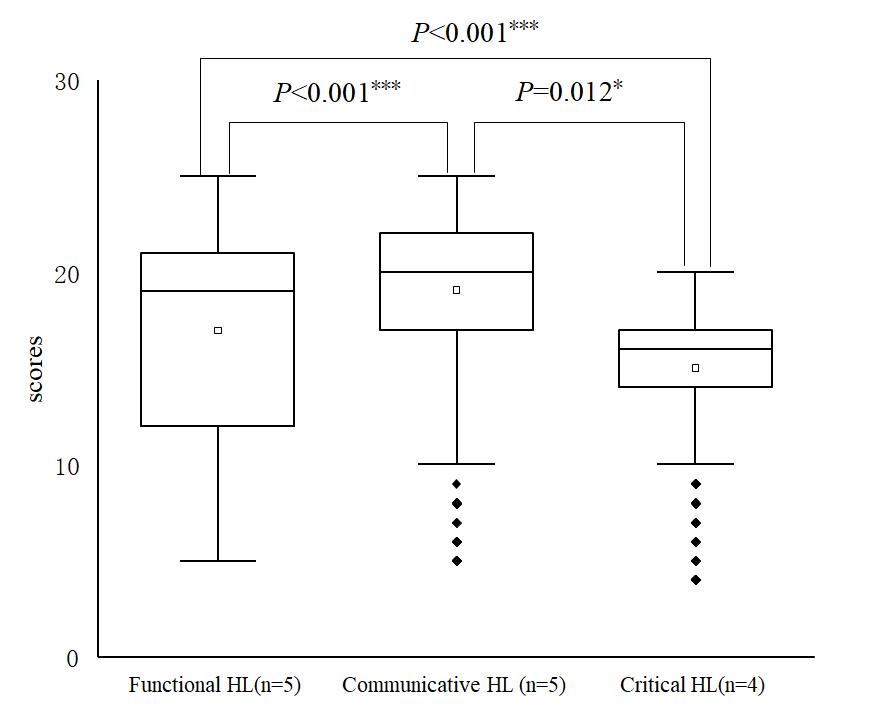
Figure 2. Functional, Communicative, and Critical Health Literacy Scores of the Participants.
The CAG patients scored 8.44±2.95 (total 16) in terms of rumor recognition ability and classified rumors into three categories according to their contents, namely causative, therapeutic, and cancerous, with an average score per question (score/number of questions) of 0.73±0.30, 0.38±0.20, 0.48±0.22, as shown in Figure 3. The t-tests for each dimension of health literacy and rumor recognition were statistically different between the two comparisons (P<0.001, P=0.012), with a test level of α=0.05.
|
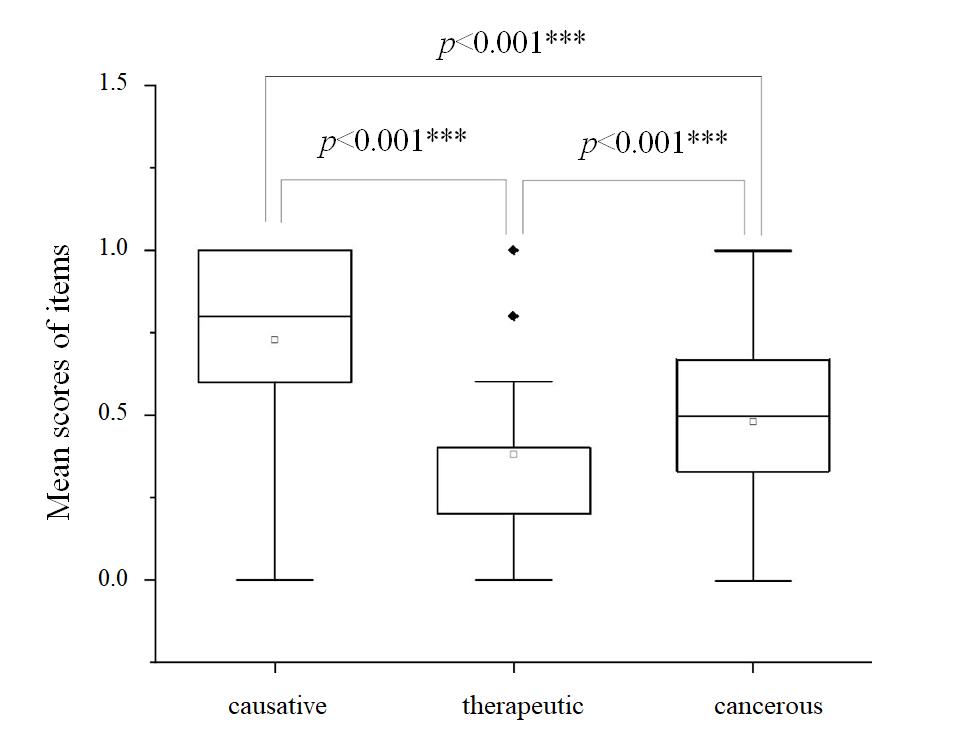
Figure 3. Causative, Therapeutic, and Cancerous Scores of CAG Patients.
3.3 Comparison of Rumor-recognition Ability among Patients with Different Characteristics of CAG
A univariate analysis was conducted using rumor recognition ability as the dependent variable and general demographic information as the independent variable. The results showed that there were statistical differences in the rumor recognition ability of CAG patients by residence (P<0.01), age (P<0.001), nation (P<0.001), marital status (P<0.05), and level of health literacy (P<0.001), as proven in Table 2.
Table 2. Comparison of the Ability of CAG Patients to Identify Rumors (mean±SD)
|
Ability to recognize rumors |
t/F |
P |
Gender |
|
-0.273 |
0.785 |
Male |
8.46±2.79 |
|
|
Female |
8.39±3.22 |
|
|
Residence |
|
-2.963 |
0.003** |
Cities and towns |
8.63±2.82 |
|
|
Rural |
7.75±3.28 |
|
|
Age |
|
7.343 |
<0.001*** |
≤40 |
7.83±3.07 |
|
|
41-50 |
8.16±2.72 |
|
|
51-60 |
9.40±2.96 |
|
|
61-70 |
8.44±2.98 |
|
|
≥71 |
9.80±2.51 |
|
|
Occupation |
|
1.739 |
0.110 |
Civil servants and career staff |
8.99±2.89 |
|
|
Agriculture, forestry, animal husbandry, fishery and water conservancy workers |
7.92±2.97 |
|
|
Other employees and nonemployees |
8.25±3.31 |
|
|
Business and service personnel |
8.22±3.00 |
|
|
Operators of production and transport equipment and related personnel |
8.32±2.72 |
|
|
medical personnel |
8.50±2.48 |
|
|
Professional and technical personnel (excluding medical personnel) |
9.01±2.96 |
|
|
Educational background |
|
1.115 |
0.348 |
Primary school and below |
8.77±2.85 |
|
|
Junior high school |
7.91±2.89 |
|
|
High school |
8.44±2.94 |
|
|
Undergraduate |
8.53±2.99 |
|
|
Doctor’s/ Master’s |
8.93±2.81 |
|
|
Nation |
|
5.149 |
<0.001*** |
Han nationality |
8.68±2.86 |
|
|
Other nationalities |
6.82±3.01 |
|
|
Marital status |
|
-2.223 |
0.028* |
Single/Divorced/Widowed spouse |
7.81±3.02 |
|
|
Married |
8.56±2.92 |
|
|
Monthly per capita household income |
|
0.992 |
0.422 |
<4000yuan |
7.96±3.29 |
|
|
4000-6000 yuan |
8.46±3.11 |
|
|
6000-8000 yuan |
8.76±2.67 |
|
|
8000-10000 yuan |
8.70±2.75 |
|
|
10000-12000 yuan |
8.25±2.86 |
|
|
≥12000 yuan |
8.47±2.85 |
|
|
Smoke |
|
-0.815 |
0.416 |
No |
8.39±2.97 |
|
|
Yes |
8.63±2.84 |
|
|
Drink |
|
-0.423 |
0.673 |
No |
8.40±2.98 |
|
|
Yes |
8.50±2.91 |
|
|
Health Literacy |
|
21.070 |
<0.001*** |
High health literacy |
10.06±2.61 |
|
|
Medium health literacy |
8.19±2.81 |
|
|
Low health literacy |
7.83±3.46 |
|
|
Notes: *P<0.05, **P<0.01, ***P<0.001
3.4 Correlation between Health Literacy and Rumor Recognition Skills of CAG Patients
Pearson correlation analysis indicated that the ability to identify rumors showed a weak positive correlation with health literacy and scores on each dimension in CAG patients (P<0.001), where the ability to identify rumors had the weakest correlation with functional health literacy (r=0.145) and the strongest with health literacy (r=0.236). Details are shown in Table 3.
Table 3. Correlation between Rumor Recognition Ability and Health Literacy
|
RR |
FHL |
CHL1 |
CHL2 |
HL |
|||||
r |
p |
r |
p |
r |
p |
r |
p |
r |
p |
|
RR |
1 |
|
|
|
|
|
|
|
|
|
FHL |
0.145 |
<0.01 |
1 |
|
|
|
|
|
|
|
CHL1 |
0.224 |
<0.01 |
0.403 |
<0.01 |
1 |
|
|
|
|
|
CHL2 |
0.223 |
<0.01 |
0.330 |
<0.01 |
0.772 |
<0.01 |
1 |
|
|
|
HL |
0.236 |
<0.01 |
0.780 |
<0.01 |
0.857 |
<0.01 |
0.798 |
<0.01 |
1 |
|
Notes: RR: rumor recognition ability; FHL: Functional health literacy; CHL1: Communicative health literacy; CHL2: Critical health literacy; HL: Health literacy.
3.5 Analysis of Factors Influencing the Ability of CAG Patients to Identify Rumors
To analyze the factors influencing the ability to identify rumors, demographic and sociological variables (nation, marital status, residence, age) with statistical differences in the analysis of variance were included as control variables, and each dimension of health literacy was used as an independent variable. Unordered categorical variables (ethnic group, marital status, residence, age) were set as dummy variables, i.e., Han nationality, no spouse, rural area, 40 years and below. The results were obtained through multiple stepwise linear regression analysis by setting the reference group, assigning values to the other groups, introducing F=0.05 and excluding F=0.1 variables, and listing the results in Table 4 below.
Table 4. Analysis of Factors Influencing the Ability of CAG Patients to Identify Rumors
Independent Variable |
Non-standardized Coefficient |
Standardized |
t |
P |
||
β |
SE |
95%CI |
β |
|||
(Constant) |
3.772 |
0.637 |
[2.522, 5.022] |
|
5.926 |
<0.001 |
Han nationality |
|
|
|
|
|
|
Other nationalities |
-1.768 |
0.339 |
[-2.434, -1.101] |
-0.203 |
-5.21 |
<0.001 |
Single/Divorced/Widowed spouse |
|
|
|
|
|
|
Married |
0.196 |
0.324 |
[-0.440, 0.833] |
0.024 |
0.605 |
0.545 |
Cities and towns |
|
|
|
|
|
|
Rural |
0.335 |
0.275 |
[-0.205, 0.876] |
0.047 |
1.218 |
0.224 |
≤40 |
|
|
|
|
|
|
41-50 |
0.304 |
0.299 |
[-0.283, 0.891] |
0.05 |
1.016 |
0.310 |
51-60 |
1.696 |
0.345 |
[1.019, 2.373] |
0.232 |
4.923 |
<0.001 |
61-70 |
1.507 |
0.408 |
[0.704, 2.309] |
0.165 |
3.688 |
<0.001 |
≥71 |
2.834 |
0.558 |
[1.739, 3.930] |
0.209 |
5.081 |
<0.001 |
Critical health literacy |
0.166 |
0.034 |
[0.098, 0.234] |
0.195 |
4.816 |
<0.001 |
Functional health literacy |
0.071 |
0.022 |
[0.028, 0.114] |
0.136 |
3.232 |
<0.001 |
Notes: In the multi-factor analysis of unordered multicategorical variables, Han nationality, no spouse, rural area, and 40 years old and below were set as the reference groups respectively, so the β and P values for the above four groups are not available in the output.
This study’s results showed that CAG patients had an overall low score for rumor recognition, with a mean correct rate of 52.8%. The results of the study also showed that: (a) patients with CAG had a higher ability to recognize rumors of causative factors and a lower ability to recognize rumors of both cancer and treatment, probably because the treatment and cancer progression of atrophic gastritis involves more specialized clinical medical knowledge, whereas the causative factors of chronic diseases of the digestive system are closely related to healthy living and eating habits, and it is easier for patients to recognize such rumors. This has revealed the need for health authorities to combine medical knowledge to provide patients with more expert coaching on the treatment and progression of the disease to enhance their awareness of atrophic gastritis[17]; (b) Patients in urban areas have a higher ability to recognize rumors, which may be due to the higher level of overall economic and social development in urban areas, corresponding to better medical services and more reliable sources of information; (c) Patients over 50 years of age have a higher ability to recognize rumors than patients under 40 years of age, while the study of Agree et al.[18] shows that older individuals are at a disadvantage in accessing online health information, and the study of Liao and Fu[19] suggests that older individuals are less sensitive to information credibility cues than younger individuals. This may be because older people may rely more on offline information sources, and the older they are, the longer they have coexisted with diseases, and thus the richer health experience they have. Moreover, it is necessary to strengthen the provision of health information in hospitals, communities[20], and families; (d) Patients with spouses have a higher ability to recognize rumors. This may be due to the fact that patients with spouses receive more social support[21], in the sense that spouses and other relatives provide information to patients, and this therefore leads to patients paying more attention to their health because they have more social responsibilities.
The overall health literacy score of CAG patients was 51.07±11.03, with an actual score/total score of 0.730, lower than the health literacy of diabetic patients studied by scholar Lee et al[22]. The analysis may be related to the different components of the study population, the larger proportion of CAG patients with lower years of illness in this study, and the relatively low average age. The results showed that the highest communication health literacy scores were consistent with the study of Li et al.[23], possibly because the selected sample was located in hospitals with better doctor-patient communication, while the lowest functional health literacy scores differed from previous findings[24,25]. We believe this is because atrophic gastritis is still relatively unknown to the public compared to common chronic diseases such as diabetes, the related terms are more difficult to understand, and knowledge is not widely available, so we still have a long way to go for the popularization of science and health promotion of CAG. In addition, research suggested that critical thinking is an essential skill for determining whether the information is true or false[26], and that CAG patients' ability of critical thinking, judgment, analysis, and application of information also need to be strengthened. Therefore, health professionals should assist CAG patients with critical analysis of health information and provide personalized guidance to help patients raise their health literacy level.
The results of Pearson correlation analysis in this study showed that the health literacy of CAG patients was weak and positively correlated with the ability to identify rumors (r=0.236, P<0.01) and multiple linear regression analysis showed that functional health literacy (β=0.136, P<0.001) and critical health literacy (β=0.195, P<0.001) were influential factors in the ability to identify rumors after adjusting for the nation, marital status, residence, and age variables. This is supported by a recent study on health literacy and fear of COVID-19 in medical students, showing that higher levels of health literacy may protect from fear during the pandemic[27], and a study on influenza vaccine rumors in Korea, which revealed that increased health literacy may prevent people from automatically accepting health rumors as true[6]. Functional health literacy reflects the extent to which patients have difficulty reading hospital and pharmacy instructions or leaflets, and since literacy is difficult to change in a short period of time, critical health literacy is even more important in improving the rumor-reading ability of CAG patients. According to Nutbeam's conceptual model of health literacy, where critical health literacy refers to the ability of people to critically analyze health information and to use it selectively[28]. With the advancement of internet technology, the health information that patients can receive is becoming more and more complex, and it is increasingly difficult to distinguish between the scientific and non-scientific aspects of many "health sciences". Not only can health rumors lead to unnecessary fear, but they can also cause individuals to mishandle their illnesses, which can delay their treatment processes or cause other negative health consequences[29]. Several studies have shown that people with higher critical health literacy are more likely to evaluate and distinguish between low-quality and high-quality health information, and are better able to use the right health information to make the right health decisions[30,31]. Therefore, health institutions and practitioners should consider the effectiveness of critical health literacy when conducting anti-health rumor campaigns. It is important to invest in improving patients' health literacy as this will help reduce the spread of rumors and reduce health expenditures in order to control the negative impacts of health rumors[32].
Furthermore, some limitations exist in this study. Firstly, as a cross-sectional study, we could only confirm the correlation between health literacy and rumor recognition ability in CAG patients but could not determine the causal relationship between the two. Secondly, the convenience sampling method was employed to conduct the survey, which may affect the studies representativeness. In addition, the self-rating used for the health literacy test may be influenced by subjective factors.
In conclusion, CAG patients had lower levels of rumor recognition ability, and critical health literacy had a strong positive impact on their rumor recognition ability when controlling for the nation, marital status, residence, and age variables. Therefore, health care professionals should pay attention to the cultivation of critical health literacy in CAG patients, in order to enhance the rumor-recognition ability of CAG patients and reduce the harmful effects of rumors on CAG patients.
Acknowledgments
This work was supported by the Scientific Research Project of Shaanxi Provincial Education Department in 2021 - the Key Research Base Project of Philosophy and Social Sciences [Grant Number 21JZ017].
Ethical Statement
The study was conducted in accordance with the Declaration of Helsinki, and the protocol was approved by the Ethics Committee (JKWH-2020-10).
Conflicts of Interest
The authors declared no conflict of interest.
Data Availability
All data generated or analyzed during this study are included in this published article.
Copyright Permissions
Copyright © 2022 The Author(s). Published by Innovation Forever Publishing Group Limited. This open-access article is licensed under a Creative Commons Attribution 4.0 International License (https://creativecommons.org/licenses/by/4.0), which permits unrestricted use, sharing, adaptation, distribution, and reproduction in any medium, provided the original work is properly cited.
Author Contribution
Wu Y contributed to conceptualization, software, investigation, writing-review and editing, supervision, and project administration; Feng B contributed to validation and visualization; Li Y contributed to formal analysis, investigation, data curation, and writing original draft preparation; Wang Y contributed to investigation, data curation, and writing original draft preparation; Suo B contributed to investigation and supervision; Liu J contributed to investigation, data curation, and writing original draft preparation.
Abbreviation List
CAG, Chronic atrophic gastritis
SD, Standard deviation
References
[1] Muhsen K, Sinnreich R, Merom D et al. Prevalence and determinants of serological evidence of atrophic gastritis among Arab and Jewish residents of Jerusalem: A cross-sectional study. BMJ Open, 2019; 9: e024689.[DOI]
[2] de Vries AC, van Grieken NC, Looman CW et al. Gastric cancer risk in patients with premalignant gastric lesions: A nationwide cohort study in the Netherlands. Gastroenterology, 2008; 134: 945-952.[DOI]
[3] Endo K, Nakada H, Kadota Y et al. Risk factors for atrophic gastritis in the Japanese young and middle-aged: A study using double-contrast upper gastrointestinal barium X-ray radiography. Jpn J Radiol, 2018; 36: 706-711.[DOI]
[4] Zhang Z, Zhang Z, Li H. Predictors of the authenticity of Internet health rumours. Health Info Libr J, 2015; 32: 195-205.[DOI]
[5] Zhang Z, Zhang Z, Li H. Research on the prevention and control of the internet rumor from the perspective of the self-Media. J Comput Netw Commun, 2019; 7: 1-7.[DOI]
[6] Oh HJ, Lee H. When do people verify and share health rumors on social media? The effects of message importance, health anxiety, and health literacy. J Health Commun, 2019; 24: 837-847.[DOI]
[7] Kindig DA, Allison M. Health literacy: A Prescription to end confusion. National Academies Press: Washington, USA, 2004.
[8] Nutbeam D. Health literacy as a public health goal: A challenge for contemporary health education and communication strategies into the 21st century. Health Promot Int, 2000; 15: 259-267.[DOI]
[9] de Abreu IR, Baía C, Silva JM et al. LitKDM2 study: The impact of health literacy and knowledge about the disease on the metabolic control of type 2 diabetes mellitus. Acta Diabetol, 2022; 59: 819-825.[DOI]
[10] Hussein SH, Albatineh AN, Almajran A et al. Association of health literacy and other risk factors with glycemic control among patients with type 2 diabetes in Kuwait: A cross-sectional study. Prim Care Diabetes, 2021; 15: 571-577.[DOI]
[11] Kanejima Y, Shimogai T, Kitamura M et al. Impact of health literacy in patients with cardiovascular diseases: A systematic review and meta-analysis. Patient Educ Couns, 2022; 105: 1793-1800.[DOI]
[12] Wang W, Qiao L, Dong W et al. Differences in the association between modifiable lifestyle factors and gastric precancerous lesions among Mongolians and Han Chinese. Front Oncol, 2022; 12: 798829.[DOI]
[13] Mai J, Yibo W, Ling Z et al. Health literacy and personality traits in two types of family structure-A cross-sectional study in China. Front Psychol, 2022; 13: 835909.[DOI]
[14] Chinese Medical Association, Chinese Medical Association Publishing House, Chinese Society Of Gastroenterology et al. Guidelines for primary diagnosis and treatment of chronic gastritis (2019) [In Chinese]. Chinese J Gen Pra, 2020; 19: 768-775.[DOI]
[15] Ishikawa H, Takeuchi T, Yano E. Measuring functional, communicative, and critical health literacy among diabetic patients. Diabetes Care, 2008; 31: 874-879.[DOI]
[16] Zhang X, Di H, Li X et al. Analysis of Sinicization, reliability and validity of functional communication and critical health nutrition scale. Chinese J Mod Nurs, 2018; 24: 2136-2140.[DOI]
[17] Schulz PJ, Pessina A, Hartung U et al. Effects of objective and subjective health literacy on patients’ accurate judgment of health information and decision-making ability: Survey study. J Med Internet Res, 2021; 23: e20457.[DOI]
[18] Agree EM, King AC, Castro CM et al. “It’s got to be on this page”: Age and cognitive style in a study of online health information seeking. J Med Internet Res, 2015; 17: e79.[DOI]
[19] Liao QV, Fu WT. Age differences in credibility judgments of online health information. ACM Trans Comput-Hum Interact, 2014; 21: 2.[DOI]
[20] Tong Y, Wang H, Zhu K et al. Satisfaction with community health education among residents in China: Results from a structural equation model. Front Public Health, 2022; 10: 905952.[DOI]
[21] Bíró É, Vincze F, Mátyás G et al. Recursive path model for health literacy: The effect of social support and geographical residence. Front Public Health, 2021; 9: 724995.[DOI]
[22] Lee YJ, Shin SJ, Wang RH et al. Pathways of empowerment perceptions, health literacy, self-efficacy, and self-care behaviors to glycemic control in patients with type 2 diabetes mellitus. Patient Educ Couns, 2016; 99: 287-294.[DOI]
[23] Li N, Huang J, Zhou P et al. Analysis of diabetes health literacy level and influencing factors among hospitalized patients with type 2 diabetes mellitus [in Chinese]. J Jinan Univ Nat Sci Med Edit, 2021; 42: 71-79.[DOI]
[24] Inoue M, Takahashi M, Kai I. Impact of communicative and critical health literacy on understanding of diabetes care and self-efficacy in diabetes management: A cross-sectional study of primary care in Japan. BMC Fam Pract, 2013; 14: 40.[DOI]
[25] Heijmans M, Waverijn G, Rademakers J et al. Functional, communicative and critical health literacy of chronic disease patients and their importance for self-management. Patient Educ Couns, 2015; 98: 41-48.[DOI]
[26] Machete P, Turpin M. The use of critical thinking to identify fake news: A systematic literature review. Responsible Des Implement Use Inform Commun Tech, 2020; 12067: 235-246.[DOI]
[27] Nguyen HC, Nguyen MH, Do BN et al. People with suspected COVID-19 symptoms were more likely depressed and had lower health-related quality of life: The potential benefit of health literacy. J Clin Med, 2020; 9: E965.[DOI]
[28] Nutbeam D. Health promotion glossary. Health Promot, 1986; 1: 113-127.[DOI]
[29] DeWalt DA, Berkman ND, Sheridan S et al. Literacy and health outcomes. J Gen Intern Med, 2004; 19: 1228-1239.[DOI]
[30] Chen X, Hay JL, Waters EA et al. Health literacy and use and trust in health information. J Health Commun, 2018; 23: 724-734.[DOI]
[31] Okan O, Bollweg TM, Berens EM et al. Coronavirus-related health literacy: A cross-sectional study in adults during the COVID-19 infodemic in Germany. Int J Environ Res Public Health, 2020; 17: 5503.[DOI]
[32] Palumbo R. Examining the impacts of health literacy on healthcare costs. An evidence synthesis. Health Serv Manage Res, 2017; 30: 197-212.[DOI]
[33] Bao Y, Wang C, Xu H et al. Effects of a health intervention for pulmonary tuberculosis self-management based on the integrated theory of health behavior change: Randomized controlled trial. JMIR Public Health Surveill, 2022; 8: e34277.[DOI]
[34] Kripalani S, Weiss BD. Teaching about health literacy and clear communication. J Gen Intern Med, 2006; 21: 888-890.[DOI]
[35] Xu X, Wu Y. Preliminary expert consensus on the scientific evaluation standard of health works for public. Food Ther Health Care, 2020; 2: 1-11.
[36] Lanius C, Weber R, MacKenzie WI. Use of bot and content flags to limit the spread of misinformation among social networks: A behavior and attitude survey. Soc Netw Anal Min, 2021; 11: 32.[DOI]



 Copyright ©