
Nursing Interventions in Patients with Urinary Incontinence Evidence-Based Practices: A Systematic Review
Yesim Bagci1*, Gulcin Avsar1
1Department of Medical Services and Techniques, Erzincan Binali Yıldırım University, Erzincan, Turkey
*Correspondence to: Yesim Bagci, Department of Medical Services and Techniques, Erzincan Binali Yıldırım University-Yalnızbag Campus, Rectorate Building, Erzincan 24002,Turkey; Email: yesim.bagci@erzincan.edu.tr
Abstract
Objective: Urinary incontinence (UI) causes compromised quality of life and social relations of patients. The present study was to examine the evidence levels of nursing interventions in patients with UI.
Methods: An electronic search on the databases of Cochrane, PubMed, and Google Scholar was performed using the keywords “UI”, “evidence-based practices”, and “nursing practices” with the searching language of Turkish and English from 1999 and 2020. A total of 19 studies were recruited between June 1 and September 1, 2021.
Results: The studies examined in this systematic review were examined in three groups, namely, "Lifestyle Changes", "Behavioral Treatment Methods" and "Pelvic Floor Muscle Exercises Training". Behavioral treatment approaches (bladder training) and regular application of pelvic floor muscle exercises reduced UI symptoms. Different levels of evidence-based nursing interventions are available for the management of UI.
Conclusion: In these nursing interventions, UI risk and existing UI symptoms can be minimized by adopting bladder training and pelvic floor muscle exercises.
Keywords: urinary incontinence, evidence-based practices, nursing practices
1 INTRODUCTION
According to the definition of the International Continence Society, urinary incontinence (UI) is involuntary urinary incontinence that compromises the quality of life of patients and causes social and hygienic issues[1]. Moreover, it may result in multiple psychological issues in patients, disrupts skin integrity, and causes various infections and hospitalizations[2,3].
The estimated number of UI cases worldwide is 200 million[4]. UI can be found across any age group, with a higher prevalence in women versus men[5-8]. Previous studies on the prevalence of UI mainly included female participants for analyses[5,6,8]. There may be differences in the prevalence of UI due to differences in study methods, measurement intervals, study populations, and samples. In a review of UI prevalence studies conducted in Europe, the prevalence ranged from 16.1% to 68.8% in women[5] and was 20.9%[9], 23.9%[10], and 46.3%[11] in studies conducted in different regions and at different times in Turkey. A review examining 16 descriptive/cross-sectional studies indicated the prevalence of UI was between 16.4% and 49.7%[12].
Risk factors for UI include age[6,13-16], high body mass index[6,16,17], heavy physical activity[18], pregnancy and childbirth[6,16], diabetes[6,14], chronic constipation[6,16,19], genetic differences, recurrent resistant urinary infections, neurological diseases, menopause[6,14], coughing, gynecological operation[6,19], smoking[6,15], short urethra neck in women, hormonal status, birth trauma, caffeine, alcohol, sedentary life, peripheral vascular insufficiency, lung diseases and congestive heart failure[6]. There are also other types of incontinence, such as stress, urge, reflex, functional, mixed, postural and total incontinence[1]. It has been reported that 42.9% of Turkish women had stress type, 29.8% had a mixed type and 27.3% had an impingement type[20].
The goal in the treatment of UI is to prevent incontinence[13]. UI treatment mainly includes non-pharmacological, pharmacological, and surgical interventions. Non-pharmacological methods can alleviate the symptoms of UI, and pharmacological and surgical treatments are adopted for patients with unsatisfactory outcomes after non-pharmacological interventions. Non-pharmacological interventions feature low medical costs, effective outcomes, easy operation, and no side effects and enhance the quality of life of patients[13].
Nursing care should be performed as per the most valid scientific knowledge available. Accordingly, mastery and awareness of the importance of evidence-based practices are essential for the nursing staff to deliver better nursing[21]. The use of evidence-based practices enables the scientificity of nursing practices and the improvement of care outcomes by increasing the quality of nursing[22]. Nurses have important responsibilities in the implementation of interventions aimed at preventing UI, reducing symptoms, care and treatment, and increasing the quality of life by reducing the complaints of the patient[23]. The familiarity of nurses who provide health services to UI patients with treatment and care methods positively influences the outcome of care[24].
1.1 Aim
UI causes compromised quality of life and social relations of patients. The present study was to examine the evidence levels of nursing interventions in patients with UI.
1.2 Ethical Considerations
This systematic review followed the international research standards of the World Medical Association Helsinki Declaration (2008). Due to the nature of the study (systematic review), ethics committee approval was not required.
2 MATERIALS AND METHODS
2.1 Design
Studies that met the inclusion criteria between 1999 and 2020 were searched using the "Cochrane", "PubMed" and "Google Scholar" databases. An electronic search on the databases of Cochrane, PubMed, and Google Scholar was performed using the keywords “UI”, “evidence-based practices”, and “nursing practices” with the searching language of Turkish and English from 1999 and 2020. A total of 19 studies were recruited between June 1 and September 1, 2021. The study was methodologically organized according to the PRISMA 2020 notification checklist (Figure 1).
|
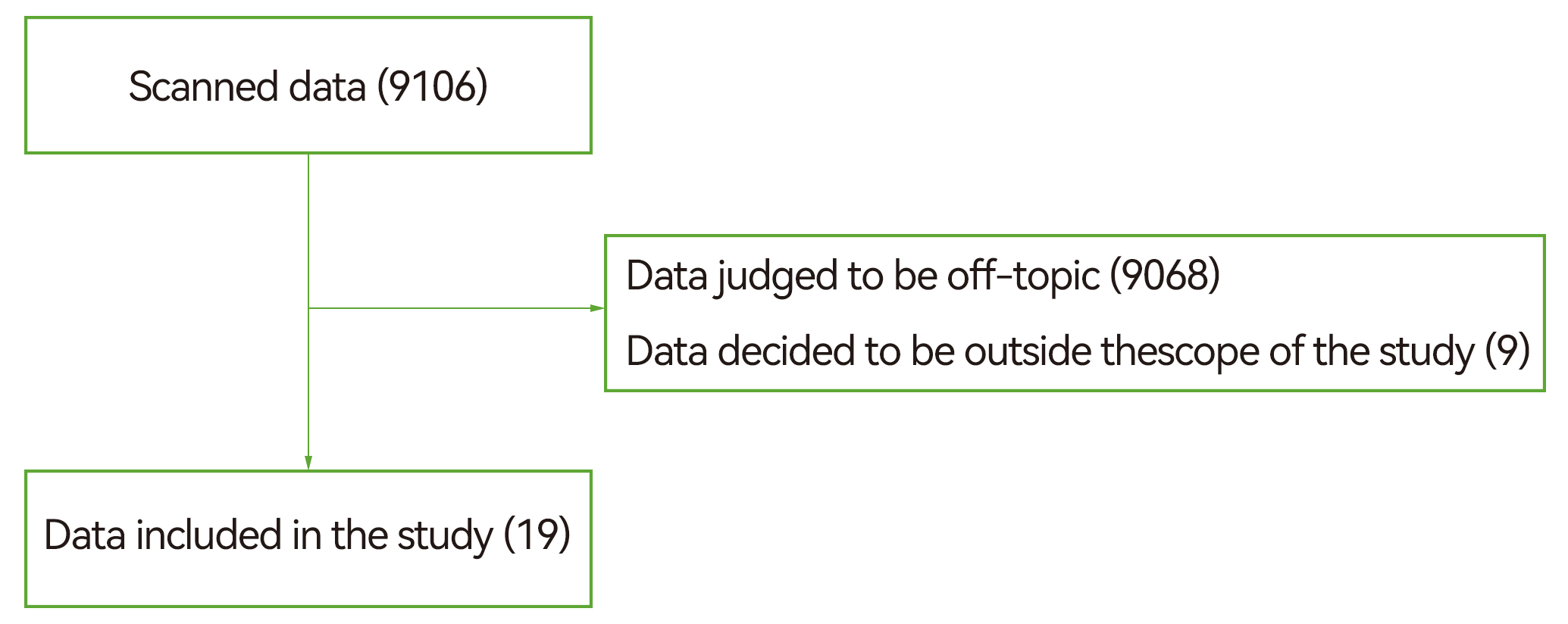
Figure 1. PRISMA Flow Diagram.
The search resulted in 9106 data. Data containing one or more keywords in the title and abstract were examined, and articles or other publications, such as compilations, books, and conference proceedings books, that were not relevant to the study population were excluded. The remaining 28 studies were reassessed for eligibility, and 19 studies were determined to be eligible for the systematic review.
2.2 Data Sources and Search Strategies
In this review, “Cochrane”, “PubMed”, and “Google Scholar” databases were used. In the search, studies with the keywords “Based nursing practice, Incontinence, Nursing, Nursing care, Practice evidence, Systematic Review, Treatment” and published between 1999-2020 were examined between June and September 2021.
2.3 Inclusion and Exclusion Criteria
Inclusion criteria: quasi-experimental studies, meta-analysis studies, randomized controlled studies conducted between 1999 and 2020 with samples of patients with UI examining the effects of non-pharmacological care approaches (lifestyle changes, behavioral treatment approaches, and pelvic floor muscle exercise (PFME) training) on patients with UI, systematic reviews, randomized single-blind controlled trials, prospective randomized controlled trials (all the trails were published in Turkish and English). Exclusion criteria: studies with UI risk factors; with inaccessible full text; with questionnaires at the time of study attempt (intervention). The search resulted in 19 eligible studies.
2.4 Evaluation of Methodological Quality
The methodological quality of the evaluated articles was evaluated by two authors according to the classification of evidence levels accepted by the Joanna Briggs Institute[25] (Table 1).
Table 1. Joanna Briggs Institute Evidence Level Classification
Evidence Level |
Type of Evidence |
I |
Evidence from systematic reviews of Randomized Controlled Trials (RCTs), meta-analysis |
II |
Evidence from at least one well-designed RCT |
III |
Evidence from non-randomized, well-designed controlled trials |
IV |
Evidence from well-designed cohort or case-control studies by multiple centers/groups |
V |
Evidence from multiple time series with or without intervention. Impressive results of uncontrolled experimental studies |
IV |
Opinions of respected authorities based on clinical experience, descriptive studies, or expert committee reports |
3 RESULTS
Of the studies included in the systematic review, there was 1 quasi-experiment, 3 meta-analyses, 10 randomized controlled trials (1 prospective randomized controlled trial, 1 randomized single-blind controlled trial), and 5 systematic research designs. There were 3 published in 2008, 3 in 2012, 3 in 2019…, and the others were carried out in 1999, 2000, 2007, 2010, 2015, and 2018.
The studies examined in this systematic review were divided into three groups “Lifestyle Changes” (Table 2), “Behavioral Treatment Methods” (Table 3), and “PFME Training” (Table 4).
Table 2. Studies on Lifestyle Changes (n=6)
Study |
Type of Study |
Sample |
Intervention-Objective |
Results-Conclusion |
Level of Evidence |
Tomlinson et al.[26], 1999. |
Quasi-experimental study |
>41 women over 55 years of age |
Objective: To investigate the effect of fluid intake and caffeine consumption on urinary incontinence in elderly women.
Intervention: 2-4 weeks of self-monitoring Bladder training for 4-8 weeks
12th week, pelvic floor exercise training was given and applied. (The first evaluations of the participants were made by health history-questionnaire, physical evaluation, pad test, bladder diary.)
In addition, caffeinated and non-caffeinated beverages were consumed for 2-4 weeks, and corresponding training was performed. |
While restriction in caffeine consumption caused a decrease in incontinence periods, it was concluded that the increase in fluid consumption resulted in no effects. |
Level of Evidence III.3 |
Greer et al.[27], 2008. |
Meta-analysis |
20 articles consisting of human observational studies, randomized studies, and review articles. |
Objective: To examine the effect of obesity on the outcomes of surgical treatment of pelvic floor disorders and the effect of weight loss on UI symptoms. |
It was determined that the frequency of incontinence decreased by 50% in 10 women who lost 5% or more of their weight. |
Level of Evidence I |
Subak et al.[28], 2009. |
Randomized controlled study |
338 women aged 30 and over (226 women in the experimental group, 112 women in the control group) |
Objective: To evaluate the effect of diet, exercise and behavior change education programs on weight loss in incontinence frequency in obese women with incontinence.
Intervention: A diet, exercise and behavior change training program was implemented for 6 months. |
Weight loss was 8.2% in the experimental group and 1.8% in the control group, and when 24-hour involuntary urine loss was measured, a decrease of 45% in the experimental group and 34% in the control group was observed. |
Level of Evidence II |
Fozzatti et al.[29], 2012. |
Randomized controlled study |
488 women aged 20 to 45 (244 women who go to gyms and do high-impact exercise, and 244 women who go to the gym and do non-high-impact exercise) |
Objective: To evaluate the prevalence of stress urinary incontinence in those who go to gym and do high-impact exercisers and to correlate it with those who go to gym and do non-high-impact exercisers.
Intervention: 244 women in the study group were given high-impact exercises (such as lifting weights, jumping), and 244 women in the control group were given non-high-impact exercises (such as running, swimming, stretching). |
Women who perform high-impact exercises have a higher incidence of urinary incontinence symptoms than women who do not perform any high-impact exercise, regardless of exercise methods. |
Level of Evidence II |
Vissers et al.[30], 2014. |
Meta-analysis |
6 randomized and nonrandomized studies (2,352 total subjects in intervention groups) |
Objective: To review the impact of non-surgical weight loss interventions on urinary incontinence in overweight women. |
A weight loss of 8.0% was found to cause a 47% reduction in UI. It has been determined that non-surgical weight loss in overweight women is effective in reducing urinary incontinence. |
Level of Evidence I |
Wells et al.[31], 2014. |
Randomized controlled study |
14 women aged >18 years and older with a history of caffeine use (11 women who completed the study) |
Objective: To investigate the effect of drinking caffeinated versus decaffeinated liquids on overactive bladder (OAB) symptoms in women.
Intervention: 14 days of exercise, 14 days of caffeinated beverage consumption, 14 days of decaffeinated beverage consumption were applied. |
It was concluded that reduction of caffeine consumption could mitigate the symptoms of overactive bladder. |
Level of Evidence II |
Table 3. Studies on Behavioral Treatment Methods (n=3)
Study |
Type of Study |
Sample |
Intervention-Objective |
Results-Conclusion |
Level of Evidence |
Eustice et al.[32], 2000 |
Systematic compilation |
9 studies (674 elderly individuals) |
Objective: To evaluate the effects of voluntary voiding for the treatment of UI in adults. |
It has been determined that bladder training initiates the desire to void, which decreases UI over time. |
Level of Evidence I |
Subak et al.[33], 2002
|
Randomized controlled study |
Women aged >55 years (77 women in the intervention group, 75 women in the control group) |
Objective: To evaluate the effect of a low-intensity behavioral therapy program on urinary incontinence in elderly women.
Intervention: The intervention group received six weekly training sessions on bladder training and followed individualized voiding programs. No intervention was made in the control group, but urine diaries were kept for 6 weeks. |
UI decreased by 50% in the intervention group and by 15% in the control group. Low-intensity behavioral therapy intervention for urinary incontinence has been effective. |
Level of Evidence II |
Roe et al.[34], 2007 |
Meta-analysis |
4 systematic reviews |
Objective: To evaluate the effect of bladder training and voiding programs on the treatment of UI. |
Evidence on the effectiveness of bladder training is limited and long-term follow-up studies are needed. |
Level of Evidence I |
Table 4. Studies on Pelvic Floor Muscle Exercise Training (n=10)
Study |
Type of Study |
Sample |
Intervention-Objective |
Results-Conclusion |
Level of Evidence |
Hay-Smith et al.[35], 2008 |
Systematic compilation |
Randomized and quasi-randomized controlled trials (16 studies involving 6,181 women) |
Objective: To determine the effect of pelvic floor muscle training on incontinence compared to normal antenatal and postnatal care. |
It has been concluded that pelvic floor muscle exercise (PFME) prevents UI in the late pregnancy and postpartum period. |
Level of Evidence I |
Ng et al.[36], 2008 |
Randomized controlled study |
88 women with mixed type UI (44 women who applied the PFME program in the study group and 44 women who did not apply the PFME program in the control group) |
Objective: To evaluate the nursing intervention to increase the effectiveness of home-based pelvic floor muscle exercise in the treatment of mixed urinary incontinence.
Intervention: 44 women in the study group applied PFME at home according to the instructions and measurements were made in the 3rd and 6th months after the exercises. |
At the end of 6 months, it was concluded that there was a significant decrease in frequent urination, nocturia, urge type UI and stress UI, and an increase in quality of life. |
Level of Evidence II |
Dinc et al.[37], 2009 |
Randomized controlled study |
Study 80 pregnant (study group, 40 subjects; control group, 40 subjects) |
Objective: To determine the effectiveness of PFME on UI during pregnancy and postpartum period.
Intervention: The study group was trained by the researcher on how to do the PFME. Pelvic floor muscle strength and urinary complaints of both groups were evaluated at 36-38 weeks of pregnancy and 6-8 weeks postpartum. |
It was concluded that there was a decrease in UI in the study group during pregnancy and in the postpartum period, and pelvic floor muscle strength increased more. It has been concluded that PFME is effective in increasing pelvic floor muscle strength and therefore in the treatment of urinary incontinence. |
Level of Evidence II |
Ko et al.[38], 2010 |
Randomized controlled study |
300 women at 16-24 weeks of pregnancy receiving regular antenatal care (150 women in the intervention group, 150 women in the control group) |
Objective: To evaluate the effect of antenatal PFME in the prevention and treatment of urinary incontinence during pregnancy and postpartum period. Intervention: The women in the intervention group were trained on using the pelvic floor muscles correctly and followed the PFME training course. The exercises were repeated twice daily at home with additional training in groups for 45 minutes once a week by a physiotherapist and continued over a 12-week period. |
It has been concluded that PFME administered during pregnancy is effective in the treatment and prevention of urinary incontinence during pregnancy and postpartum. |
Level of Evidence II |
Kim et al.[39], 2012 |
Randomized, single-blind controlled study |
18 women aged 18 to 35 years with postpartum urinary incontinence |
Objective: To investigate the effect of supervised and unsupervised PFME in which trunk stabilization is used in the treatment of postpartum urinary incontinence and compare the results. Intervention: Participants were given PFME in various positions, supine, prone, sitting, and standing, by a physiotherapist or a trainer who received PFME training for 8 weeks. |
It was concluded that PFME provided therapeutic benefits of the treatment of postpartum UI. |
Level of Evidence II |
Hay- Smith et al.[40], 2012 |
Systematic compilation |
Randomized and quasi-randomized controlled studies (21 studies involving 1490 women) |
Objective: To compare the effects of different approaches to PFME training for women with UI. |
It has been determined that the rate of recovery reporting is higher in women who have PFME who are supervised by health professionals compared to women who are not supervised. |
Level of Evidence I |
Celiker Tosun et al.[41], 2015 |
Prospective randomized controlled study |
130 cases with stress and mixed UI |
Objective: To determine whether urinary incontinence symptoms can be reduced with PFME training, and whether UI can be completely eliminated by strengthening the pelvic floor muscle up to grade 5 on the Oxford scale.
Intervention: All participants were randomly assigned to either the PFME training group or the control group. A 12-week home-based exercise program was administered individually prescribed by the PFME training group. |
It has been shown that PFME training is effective in reducing stress and mixed urinary incontinence symptoms and increasing pelvic floor muscle strength. |
Level of Evidence II |
Doumalin et al.[42], 2018 . |
Systematic compilation |
Randomized and quasi-randomized controlled trials (31 trials involving 1817 women) |
Objective: To evaluate the effects of PFME compared to other treatments and practices for women with UI. |
It was concluded that PFME improved UI and quality of life of women compared to other treatments and practices. |
Level of Evidence I |
Woodley et al.[43], 2020 |
Systematic compilation |
Randomized and quasi-randomized controlled trials (46 studies involving 10,832 women) |
Objective: To evaluate the effects of PFME for the prevention or treatment of urinary and fecal incontinence in pregnant or postpartum women. |
It has been concluded that a structured PFME program in the early stages of pregnancy can reduce the risk of UI in the late pregnancy and postpartum period. |
Level of Evidence I |
Sigurdardottir et al.[44], 2020 |
Randomized controlled study |
84 women with UI who gave birth (intervention group 41, control group 43) |
Objective: To examine the effects of individualized PFME training with a physiotherapist on urinary and anal incontinence and related disorders, as well as pelvic floor muscle strength and endurance in the early postpartum period.
Intervention: In the 6th week after birth, a questionnaire containing data on pelvic floor discomfort was applied to the participants in the electronic environment and all participants were informed about the use of pelvic floor muscles. 12 sessions of PFME of 45-60 minutes were applied to the intervention group. One year after birth, the first questionnaire given to the participants was applied again. |
It has been concluded that postpartum pelvic floor muscle exercise training reduces the rate of UI and accordingly, postpartum PFME training reduces the rate of urinary incontinence and related discomfort at the 6th month postpartum and increases muscle strength and endurance. |
Level of Evidence II |
4 DISCUSSION
Education about lifestyle changes for patients can prevent UI and minimize the symptoms of UI, with low medical costs, easy operation, and few side effects[14].
Under lifestyle changes to alleviate UI, there are recommendations such as weight loss, diet modification, constipation prevention, exercise, smoking prevention, and regulation of fluid and caffeine consumption. In the book published by the European Association of Urology in 2019, especially for adults, it is stated that for bowel management in UI patients, weight loss in overweight and obese patients, reduction of caffeine intake, and smoking cessation in smokers is a strong recommendation, but regulation of the type and amount of fluid intake is considered ineffective to prevent UI[45].
Studies on lifestyle changes (Table 2) suggested that weight loss contributes to the alleviation of UI[27-30]. Obesity is one of the important risk factors for UI. Every five unit increase in body-mass index increases the risk of UI by 20-70%[17]. Studies have indicated that the intra-abdominal pressure increases with weight gain, and the intra-bladder pressure increases with its effect, possibly resulting in involuntary UI. High daily intake of caffeine has been reported to increase the risk and symptoms of UI, but increased fluid consumption produces no change in the duration of UI[26,31]. Adequate and balanced food consumption contributes to preventing or reducing UI given that weight gain is a risk factor for UI. A study with a high level of evidence reported that short-term physical exercise reduces UI, while heavy physical exercise increases the risk of UI[29]. It is known that behaviors such as heavy physical exercise and heavy lifting exert pressure on the pelvic floor by increasing intra-abdominal pressure and therefore cause insufficiency of the pelvic floor muscles[46]. Balanced and controlled exercise can reduce the risk of UI, as it strengthens the muscles, especially the pelvic floor muscles and bladder muscles.
Bladder training is another method to prevent UI and reduce its symptoms. Bladder training is a training program that allows individuals to learn independent voiding behaviors, especially in the treatment of impulsive and mixed-type UI[20]. The aim of bladder training is to reduce overactive bladder by controlling urinary urgency and decreasing the frequency of voiding, thereby preventing UI by increasing bladder capacity[47]. The European Association of Urology, in its book published especially for adults in 2019, stated that teaching timed voiding and urgency to UI patients with cognitive impairment, and recommending bladder exercise as a first-line treatment to patients with mixed type UI are considered strong recommendations[45]. Three studies on this topic were examined (Table 3), and two concluded that bladder training initiates the desire to void and the desire to void decreases UI over time[35,36]. However, a meta-analysis study by Roe et al.[34] suggested limited evidence of bladder training. Two of the studies mentioned that bladder training is effective in the prevention and treatment of UI.
PFME is an exercise that increases the urethral closure pressure by causing voluntary contraction of the muscle groups in the pelvis (periurethral and perivaginal muscles) and enhances the support of the pelvic visceral structures[46,48,49]. Pelvic floor muscle exercise enables the pelvic floor muscle groups to strengthen and perform better functions[20,50]. Pelvic floor muscle exercise has been proven to reduce symptoms and improve quality of life in patients with stress and mixed UI[36,42]. It has been stated in a document published by the European Association of Urology in 2019 that women with stress or mixed type UI (including the elderly and those who gave birth) should be offered supervised intensive PFME for at least three months as a first-line treatment[45]. Ten studies on PFME training were reviewed (Table 4), and it was concluded that the controlled and supervised PFME performed by health professionals was more effective in the management of UI than others[40], and PFME increased the pelvic muscle strength of the patients[37,41,44] with high treatment efficiency in the treatment of UI[36,37,41,42] and increased individuals’ quality of life[36,42]. In addition, studies have reported that PFME during pregnancy contributes to the treatment of UI both during pregnancy[35,37,38,41,43,44] and in the postpartum period[37,39,43,44]. As a result, PFME plays a great role in the prevention and treatment of UI.
5 CONCLUSION
Nurses play an important role in the prevention and reduction of UI. There are evidence-based nursing interventions with different levels of evidence that are available in the treatment of UI. The level of evidence for the practices and interventions reviewed in this article is high, and UI symptoms are mostly reduced with lifestyle changes. Further investigations are needed for the results of these applications compared to other treatment methods (medical and surgical). These methods (lifestyle changes, behavioral treatment methods, and PFME training) are strongly encouraged for patients given their features of low costs, easy operations, no side effects, and well-established treatment efficiency.
5.1 Strengths and Limitations of the Study
The strengths of the study are its broad screening and the selection of quasi-experimental, randomized controlled and meta-analytic studies. The limitations of the study were that only three databases were searched and only two language studies were attained.
Acknowledgements
Not applicable.
Ethical Statement
Not applicable.
Conflicts of Interest
No conflict of interest was declared between the authors.
Data Availability
All data generated or analyzed during this study are included in this published article.
Copyright Permissions
Copyright © 2022 The Author(s). Published by Innovation Forever Publishing Group Limited. This open-access article is licensed under a Creative Commons Attribution 4.0 International License (https://creativecommons.org/licenses/by/4.0), which permits unrestricted use, sharing, adaptation, distribution, and reproduction in any medium, provided the original work is properly cited.
Author Contribution
Bagci Y contributed to literature search. Bagci Y and Avsar G both contributed to study design, manuscript writing, article evaluation, study supervision, and critical revisions for important intellectual content
Abbreviation List
PFME, Pelvic floor muscle exercise
UI, Urinary incontinence
References
[1] ICS. The International Continence Society 2017. Accessed May 22, 2021. Available at:[Web]
[2] Senturan L. Urinary System Applications. Prin Prac Nurs Care, 2014; 545-568.
[3] Craven RF, Hirnle C, Jansen S. Nutrition, 7th ed. Palme Publishing: Ankara, Turkey, 2015.
[4] Andac T, Can Gurkan O, Demirci N. Evidence-based complementary and alternative therapies in urinary incontinence. Kocaeli Univ J Health Sci, 2020; 6: 83-90.[DOI]
[5] Cerruto M, D’Elia C, Aloisi A et al. Prevalence, incidence and obstetric factors’ impact on female urinary incontinence in Europe: A systematic review. Urol Int, 2012; 3: 1-9.[DOI]
[6] Terzi H, Terzi R, Kale A. Frequency of urinary incontinence and affecting factors in women over 18 years of age. Aegean Med J, 2013; 52: 15-19.
[7] Gungor Ugurlucan F, Comba C, Emegil S et al. Thoughts and attitudes toward urinary incontinence in Turkey. J Istanb Fac Med, 2016; 79: 141-146.[DOI]
[8] Dinc A, Özer NE. Investigation of urinary incontinence prevalence and risk factors in premenopausal and menopausal women. Gumushane Univ J Health Sci, 2019; 8: 1-9.
[9] Dursun P, Dogan NU, Kolusari A et al. Differences in geographical distribution and risk factors for urinary incontinence in Turkey: Analysis of 6,473 women. Urol Int, 2014; 92: 209-214.[DOI]
[10] Kocak I, Okyay P, Dundar M et al. Female urinary incontinence in the west of Turkey: Prevalence, risk factors and impact on quality of life. Eur Urol, 2005; 48: 634-641.[DOI]
[11] Onur R, Deveci SE, Rahman S et al. Prevalence and risk factors of female urinary incontinence in eastern Turkey. Int J Urol, 2009; 16: 566-569.[DOI]
[12] Basak T, Uzun S, Arslan F. Incontinence features, risk factors and quality of life in Turkish women presenting at the hospital for urinary incontinence. J Wound Ostomy Cont, 2012; 39: 84-89.[DOI]
[13] Ozcan M, Kapucu S. Nursing approach to geriatric patients with urinary incontinence. Hacettepe Univ Fac Nurs J, 2014; 101-109.
[14] Gorina Y, Schappert S, Bercovitz A et al. Prevalence of incontinence among older Americans. Vital Health Stat 3, 2014; 36: 1-33.
[15] Balık G, Guven ESG, Tekin YB et al. Lower urinary tract symptoms and urinary incontinence during pregnancy. Luts, 2016; 8: 120-124.[DOI]
[16] Yucel U, Hadımlı A, Kocak YÇ et al. The prevalence and risk factors of urinary incontinence in women 20 years and over living in Bornova. J Health Sci Prof, 2018; 5: 414-423.
[17] Ballard AC, Richter HE. The impact of obesity and weight loss on urinary and bowel incontinence symptoms in women. Am Soc Reprod Med, 2011; 19: 1.
[18] Almousa S, Van Loon AB. The prevalence of urinary incontinence in nulliparous adolescent and middle-aged women and the associated risk factors: A systematic review. Maturitas, 2018; 107: 78-83.[DOI]
[19] Kasıkcı M, Dilek K, Avsar G et al. Prevalence of urinary incontinence in older Turkish women, risk factors, and effect on activities of daily living. Arch Gerontol Geriat, 2015; 61: 217-223.[DOI]
[20] Dokmeci F, Haliloglu Peker B, Gungor Ugurlucan F et al. Urinary incontinence in women: Current management in the light of international guidelines. Ankara Univ Fac Med J, 2017; 70: 187-193.[DOI]
[21] Sendir M. Development of nursing knowledge [in Turkish]. Academy Press: Istanbul, Turkey, 2017.
[22] Private GS. Evidence-based practices in the early postpartum period. Gumushane Univ J Health Sci, 2015; 4: 482-496.
[23] Basgol Ş, Kızılkaya Beji N. An international examination of the emerging roles of continence nurses: Evaluation of the developing nursing roles at the international level. Flor Night J Nurs, 2015; 23: 224-230.
[24] Ozkan SA, Bilgic D, Beji NK. Analysis of postgraduate theses on urinary incontinence in the field of nursing in Turkey. Acıbadem Univ J Health Sci, 2019; 10: 201-210.
[25] Kocaman G. Evidence-based practice in nursing. HEMARG, 2003; 2: 61-69.
[26] Tomlinson BU, Dougherty MC, Perdergast JF et al. Dietary caffeine, fluid intake and urinary incontinence in older rural women. Int Urogynecol J Pelvic Floor Dysfunc, 1999; 10: 22-28.[DOI]
[27] Greer WJ, Richter HE, Bartolucci AA et al. Obesity and pelvic floor disorders: A review of the literature. Obstet Gynecol, 2008; 112: 341-349.[DOI]
[28] Subak LL, Wing R, West DS et al. PRIDE Investigators: Weight loss to treat urinary incontinence in overweight and obese women. N Engl J Med, 2009; 360: 481-490.[DOI]
[29] Fozzatti C, Riccetto C, Herrmann V et al. Prevalence study of stress urinary incontinence in women who perform high-impact exercises. Int Urogynecol J, 2012; 23: 1687-1691.[DOI]
[30] Vissers D, Neels H, Vermandel A et al. The effect of non-surgical weight loss interventions on urinary incontinence in overweight women: a systematic review and meta-analysis. Obes Rev, 2014; 15: 610-617.[DOI]
[31] Wells MJ, Jamieson K, Markham TC et al. The effect of caffeinated versus decaffeinated drinks on overactive bladder: A double-blind, randomized, crossover study. J Wound Ostomy Cont, 2014; 41: 371-378.[DOI]
[32] Eustice S, Roe B, Paterson J. Prompted voiding for the management of urinary incontinence in adults. Cochrane Db Syst Rev, 2000; 2: CD002113.[DOI]
[33] Subak LL, Quesenberry CP, Posner SF et al. The effect of behavioral therapy on urinary incontinence: A randomized controlled trial. Obstet Gynecol, 2002; 100: 72-78.[DOI]
[34] Roe B, Ostaszkiewicz J, Milne J et al. Systematic reviews of bladder training and voiding programmes in adults: A synopsis of findings from data analysis and outcomes using metastudy techniques. J Adv Nurs, 2007; 57: 15-31.[DOI]
[35] Hay‐Smith J, Mørkved S, Fairbrother KA et al. Pelvic floor muscle training for prevention and treatment of urinary and faecal incontinence in antenatal and postnatal women. Cochrane Database Syst Rev, 2008; 4: CD007471.[DOI]
[36] Ng SC, Lin TL, Chang SJ et al. Nursing intervention to enhance efficacy of home practice of pelvic floor muscle exercises in treating mixed urinary incontinence. Int Urogynecol J, 2008; 19: 637-642.[DOI]
[37] Dinc A, Beji Kızılkaya N, Yalcın O. Effect of pelvic floor muscle exercises in treatment and prevention of urinary incontinence during pregnancy and postpartum period. Int Urogynecol J, 2009; 20: 1223-1231.[DOI]
[38] Ko PC, Liang CC, Chang SD et al. A randomized controlled trial of antenatal pelvic floor exercises to prevent and treat urinary incontinence. Int Urogynecol J, 2011; 22: 17-22.[DOI]
[39] Kim EY, Kim SY, Oh DW. Pelvic floor muscle exercises utilizing trunk stabilization for treating postpartum urinary incontinence: Randomized controlled pilot trial of supervised versus unsupervised training. Clin Rehabil, 2012; 26: 132-141.[DOI]
[40] Hay-Smith J, Herderschee R, Dumoulin C et al. Comparison of approaches to pelvic floor muscle training for urinary incontinence in women: an abridged Cochrane systematic review. Eur J Phys Rehab Med, 2012; 48: 689-705.[DOI]
[41] Celiker Tosun O, Kaya Mutlu E, Ergenoglu AM et al. Does pelvic floor muscle training abolish symptoms of urinary incontinence? A randomized controlled trial. Clin Rehabil, 2015; 29: 525-537.[DOI]
[42] Dumoulin C, Cacciari L, Hay-Smith EC. Pelvic floor muscle training versus no treatment, or inactive control treatments, for urinary incontinence in women. Cochrane Db Syst Rev, 2018; 10: CD005654.[DOI]
[43] Woodley SJ, Lawrenson P, Boyle R et al. Pelvic floor muscle training for preventing and treating urinary and faecal incontinence in antenatal and postnatal women. Cochrane Db Syst Rev, 2020; 5: CD007471.[DOI]
[44] Sigurdardottir T, Steingrimsdottir T, Geirsson RT et al. Can postpartum pelvic floor muscle training reduce urinary and anal incontinence?: An assessor-blinded randomized controlled trial. Am J Obstet Gynecol, 2020; 222: 247.e1-247.e8.[DOI]
[45] Avrupa Uroloji Dernegi (EAU). Pocket guide. Accessed May 22, 2021. Available at:[Web]
[46] Kucukkaya B. The efficiency of pelvic floor muscle exercises and abdomen exercises in reproductive age women with stress urinary incontinence [master’s thesis]. Turkey, Trakya: Trakya University Institute of Health Sciences; 2017.
[47] Fırdolas F, Penbegul N, Daggulli M. Continative approaches in extreme active bladder treatment [in Turkish]. Turkish Urol Seminar, 2010; 1: 27-31.
[48] Yıldırım N, Askar N. Chronic pelvic floor dysfunction. Turkey Clinics J Gynecol Obst-Special Topics, 2017; 10: 210-214.
[49] Dass AK, Lo T, Khanuengkitkong S et al. Diagnosis and conservative management of female stress urinary incontinence. Gynecol Minim Invasi, 2013; 2: 48-51.[DOI]
[50] Donmez S, Kavlak O. Pelvic floor muscle exercise in pregnancy. Balıkesir J Health Sci, 2014; 3: 45-49.[DOI]



 Copyright ©