
Assessing Asphalt Binder Aging with 1H Spin-lattice NMR Relaxometry: A Comparative Study of Temperature and UV Radiation Effects
Rebecca M. Herndon1,2*, Magdy Abdelrahman1, Klaus Woelk2*
1Department of Civil Engineering, Missouri University of Science and Technology, Rolla, USA
2Department of Chemistry, Missouri University of Science and Technology, Rolla, USA
*Correspondence to: Rebecca M. Herndon, PhD, Associate Professor, Missouri University of Science and Technology, Rolla, MO 65409, USA; Email: rmhxkc@umsystem.edu;
Klaus Woelk, Missouri University of Science and Technology, Rolla, MO 65409, USA; Email: woelk@mst.edu
Abstract
Objective: Asphalt binder, a byproduct of the crude-oil refining process, is commonly used in road construction due to its favorable response to physical stresses. However, it is also susceptible to environmental aging, including temperature variations and ultraviolet (UV) radiation. Standard laboratory methods for studying asphalt binder aging primarily focus on factors like temperature, pressure, and oxygen, often neglecting the impact of UV radiation. This study employs 1H spin-lattice nuclear magnetic resonance (NMR) relaxometry to investigate the effects of UV radiation on asphalt binder aging compared to temperature-induced aging.
Methods: Primary relaxation times and ratios were derived from a bi-exponential fit of the experimental relaxation decay induced by a 200-MHz NMR magnet. NMR relaxometry analysis revealed that 90% (0.9 primary ratio) of the protons in unaged asphalt binders exhibited a characteristic primary spin-lattice relaxation time (T1) of approximately 470ms.
Results: Cold exposure did not significantly alter these parameters. Mimicked heat aging, which considered only temperature and duration, resulted in slight increases in both the primary relaxation time and ratio. In contrast, after 72h of UV exposure, binders showed variable T1 values at a significantly decreased primary ratio. This variability was summarized with the new performance parameter, the Herbaw. Further testing showed that standardized heat aging, which considered sample size and pressure, reduced both the primary relaxation time and ratio when compared to the mimicked aging.
Conclusion: These results demonstrate that UV radiation induces significant structural changes in asphalt binder, which can be effectively detected using spin-lattice NMR relaxometry. The Herbaw performance parameter was successful in describing the variability of the UV aging which greatly impacted the primary ratio, indicating oxidative stress. The Herbaw Parameter was not as successful in describing heat aging since only slight changes in the primary relaxation time were detected. While the hydrogen environments were not significantly impacted, temperature-based aging may depend on multiple mechanisms.
Keywords: asphalt binder aging, UV aging, T1 NMR relaxation, spin-lattice relaxation
1 INTRODUCTION
Asphalt binder, a crucial material in road construction, is a byproduct of the crude-oil distillation process. Crude oil, before it is extracted from underground deposits, is shielded from environmental aging factors like ultraviolet (UV) radiation and oxygen. After the distillation process, unaged asphalt binder consists of an emulsion of polar, elastic asphaltenes within a matrix of non-polar maltenes[1]. As asphalt binders age, asphaltenes undergo oxidation, leading to the aggregation of the polar asphaltene molecules. This results in a more brittle structure compared to unaged asphalt, increasing its susceptibility to cracking[2]. While the chemical aging mechanisms of asphalt are not fully understood, the industry traditionally only measures aging through physical methods, noting increases in viscosity and stiffness. To gain a deeper understanding of aging mechanisms, chemical detection methods need to be explored and new, standardized procedures established.
During the distillation process, crude oil experiences temperatures above 200℃. After production, asphalt binders experience temperatures of 135-165℃ during road construction. After construction, asphalt pavements are exposed to ambient temperatures and UV radiation throughout their service life. Currently, there are no widely accepted standards for measuring UV aging in asphalt binders.
Standard testing procedures such as those outlined in AASHTO R 28 and AASHTO T 240, subject asphalt binder samples to oxidative stress and heat in the range of 90-163℃, simulating aging from construction to approximately 7-10 years of service. Alternative, non-standard methods detect compounds like sulfoxides and carbonyl groups that result from oxidative stress[1,3-8]. However, UV radiation, a significant aging factor[9-11], is not adequately addressed by the current methods[12]. This leaves a gap in understanding how asphalt behaves under real-world conditions. For example, UV radiation can break chemical bonds, leading to additional oxidation[11,13,14]. Although several studies have investigated UV aging, results vary due to differences in methodology[15-19]. Most chemical testing involves separating or diluting the asphalt binder[15,20-27], which can destroy microstructural integrity and induce further aging[28]. Standardized testing methods can identify physical changes from UV aging, but additional heating from these testing methods can dampen evidence of this aging[12]. Thus, a thorough analysis of the UV radiation effects on asphalt binders should include an investigation of chemical structural changes using unaltered samples[29].
1H spin-lattice nuclear magnetic resonance (NMR) relaxometry (short: T1 relaxometry) has emerged as a valuable tool for asphalt characterization[12,30-32]. Unlike chemical tests that may alter the asphalt binder’s structure, T1 relaxometry provides a non-destructive means to analyze structural changes, offering a more accurate depiction of aging effects without compromising the sample’s integrity. It summarizes complex structures into relaxation times and ratios that reflect distinct local hydrogen environments due to physical and chemical factors. Changes in the microscopic structures are identified by changes in the T1 relaxation times and ratios. 1H NMR T1 relaxometry can analyze binder grades, additive homogeneity, optimum binder percentage in hot mixed asphalt, and rejuvenation mechanisms by preserving the dense chemical structure impacted by aging.
Nuclear magnetic resonance is a nondestructive analytical platform that maintains the material’s structural integrity. While traditional NMR spectroscopy provides chemical shift information, 1H NMR T1 relaxometry is more suitable for analyzing dense materials like asphalt binders, as it does not require solvents and can detect changes in the structural matrix. 1H NMR T1 relaxometry measures longitudinal spin-lattice relaxation, which is sensitive to the interaction between the material and the magnetic field, making it ideal for detecting structural changes in the binder matrix due to aging.
In summary, UV radiation impacts asphalt binder aging, but current standards do not adequately address this. Existing performance standards focus on physical properties, neglecting the potential effects of chemical changes. By utilizing NMR relaxometry to detect the impact of UV aging, this study aims to provide a more comprehensive understanding of asphalt durability, potentially leading to better maintenance practices and extended pavement life. In particular, the focus is on longitudinal spin-lattice relaxation (T1) to compare UV-induced aging with temperature-induced changes.
2 MATERIALS AND METHODS
2.1 Materials
2.1.1 Asphalt Binder
A PG 64-22 Philips 66-sourced asphalt binder, representative of those commonly found in the United States Midwest, was used for this study. The “Chocolate Covered Pretzel” method was employed for preparing the binder samples, a technique adapted for uniform sample treatment[12,31,32].
2.1.2 UV Aging Chamber
A custom-built UV aging chamber was constructed using a UV lightbulb with a wavelength of 390-400 nanometers. The chamber was equipped with reflective film to ensure uniform light distribution and featured a rotating sample holder to expose all sides of a 5mm NMR tube equally.
2.2 Aging Procedures
2.2.1 Short-Term Aging
Short term aging, normally referred to as rolling thin film oven (RTFO) aging, follows a standard procedure, ASTM D 2872. When considering just the impact of temperature, mimicked short-term aging (RTFO_mim) referenced the temperature and duration used in ASTM D 2872; the mimicked sample was aged for 85min at 163℃ in an NMR tube. While the standard aging procedure requires additional heating for sample preparation through the Chocolate Covered Pretzel method, the mimicked sample does not since the sample was aged in the NMR tube.
2.2.2 Long-Term Aging
Following short-term aging, long term aging was conducted. Long term aging, also called pressure aging vessel (PAV) aging, follows a standard procedure, AASHTO R 28. When considering just the impact of temperature, mimicked long-term aging (PAV_mim) referenced the temperature and duration used in AASHTO R 28; the mimicked sample was aged for 20h at 100℃ in an NMR tube. Like the RTFO samples, the PAV_mim samples did not require additional heat for sample preparation while the standardized samples did.
2.2.3 UV Aging
Samples were exposed to UV radiation in the custom-built aging chamber for 72h to simulate UV-induced aging as seen in other studies[12,31,32].
2.2.4 Cold Aging
To mimic cold conditions, samples were stored at -24℃ for 72h.
2.3 NMR Setup
2.3.1 Instrumentation
1H NMR measurements were performed using a single-band 5-mm 1H NMR probe in a 200 MHz wide-base Bruker DRX Avance spectrometer.
2.3.2 Pulse Sequence and Data Collection
The recently developed SIP-R NMR pulse sequence for T1 measurements was employed[33]. After the aging procedures, all samples, besides the standard procedures, were analyzed without additional heat since the aging occurred in the NMR tube. No samples required a solvent. Data acquisition involved 256 data points collected exponentially increasing (i.e., equidistant on a log scale) recovery times.
2.3.3 Signal Processing
Due to the very broad NMR signals generated by paramagnetic impurities and the solid nature of asphalt samples, magnetic field shimming was either minimized or deemed unnecessary. Mono and bi exponential fits were applied to determine T1 relaxation times, following procedures outlined in previous studies[30,32,34]. A bi exponential fit was the focus of this study as it was previously found to provide the best comparative fit[32,35]. Additionally, a bi exponential fit is needed to calculate the primary ratio and Herbaw parameter. The standard deviation of three samples was added to each graph as the error bars.
2.4 1H NMR T1 Relaxation Analysis
While chemical shift information from NMR spectra is valuable for characterizing materials, the chemical-shift anisotropy of solid asphalt binder results in broad lines that often exceed the standard 1H chemical-shift range of 12-15ppm. When asphalt binders are dissolved in organic solvents, chemical-shift analyses can reveal discernible aliphatic and aromatic regions in the spectrum. However, due to the complexity and diversity of compounds in asphalt binder, such analysis typically only identifies the main functional groups, without providing detailed structural information. This paper therefore focuses on NMR relaxometry, specifically T1 relaxation, which refers to the process by which nuclear spin states return to thermodynamic equilibrium.
The most common experiment for measuring T1 relaxation times is the inversion-recovery (IR) experiment, although many variations or alternatives are known[36]. During an inversion-recovery experiment, the nuclear-spin magnetization is inverted by a 180 radiofrequency pulse and then allowed to relax toward thermodynamic equilibrium during a relaxation delay. After the relaxation delay, the remaining magnetization is sampled with a standard 90 observe pulse. By gradually increasing the relaxation delay in a series of IR experiments, NMR signal intensities are recorded as a function of relaxation delay.
In this study, we use the recently developed SIP-R T1 relaxation method[33], which automatically compensates errors that may arise from incomplete inversion pulses or other experimental parameters. The SIP-R method also transforms the rise-to-maximum matmatical relationship of the traditional inversion-recovery experiment into a more straightforward decay-to-zero function, simplifying the analysis of relaxation times. This decay-to-zero relationship of the SIP-R method is described by Equation 1.
|

S represents the relaxation-delay-dependent signal intensity, S0 the signal intensity measured at the beginning of relaxation decay (τ=0), τ the recovery delay, and T1 the relaxation time constant. Larger τ values allow more time for the sample to relax, leading to reduced signal intensities. In a parameter optimization to match experimental data to Equation (1), τ is an independent variable while S0 and T1 are dependent variables. In practice, multiple hydrogen environments may exist, and nuclear spins often decay at different rates. Instead of the mono-exponential decay of Equation (1), a multiexponential model is needed as described by Equation (2).
|

In this equation, n represents the number of distinct relaxation time constants, and the total signal intensity, S, is the sum of intensities from each component with its corresponding T1 time constant. In this study, T1 relaxation times are evaluated using mono and bi exponential fits to the experimental SIP-R relaxation data. This approach provides comparative datasets from which a unique parameter for evaluating asphalt binder performance is further developed. It is shown that the bi-exponential analysis provides the best starting point for further analysis. From the relaxation time constants of the bi-exponential analysis, additional parameters can be calculated. Once the T1 relaxation times are determined, the primary ratio and Herbaw Parameter can also be calculated as shown by Equation (3) and Equation (4), respectively.
|

The primary ratio compares the signal intensity of the primary (i.e. most prevalent) relaxation time to the total intensity of all components. A higher primary ratio suggests a less aged binder, as it reflects the presence of mostly one distinct hydrogen environment. When more than one hydrogen environment is present, the primary ratio summarizes the highly variable faster, or rarely longer, relaxation times. From the primary ratio of Equation (3), the Herbaw Parameter was developed, which makes it possible to characterize the aging of asphalt binder. The Herbaw Parameter was introduced in a previous study[<span style="font-family:'Times New Roman'; font-size:8pt; vertical-align:super; color:#0000ff">32</span>32] and is described in Equation (4).
|

The Herbaw Parameter summarizes the binder matrix, incorporating stiffness (primary relaxation time) and oxidative stress (primary ratio). Prior studies have indicated that binder stiffness correlates directly with the primary relaxation time and is inversely proportional to the primary ratio[12,30-32].
In summary, 1H NMR T1 relaxation techniques provide a valuable, non-destructive means of assessing material properties, offering insights into the structural integrity of asphalt binders. Distinct relaxation times reflect the local hydrogen environments, with faster decay rates indicating denser, stiffer, and more aged regions. The primary ratio helps summarize these variations, while shifts in characteristic relaxation times can signal changes in bulk material properties.
3 RESULTS
Aging by temperature is a common method for evaluating and standardizing asphalt binder aging, with both hot and cold temperatures affecting binder properties. However, the impact of temperature changes on the chemical structure of asphalt binders is not fully understood. Current testing methods often rely on physical tests that alter the integrity of asphalt binder samples during analysis. This study considers the chemical impact of different aging factors separately, as summarized in Figure 1.
|
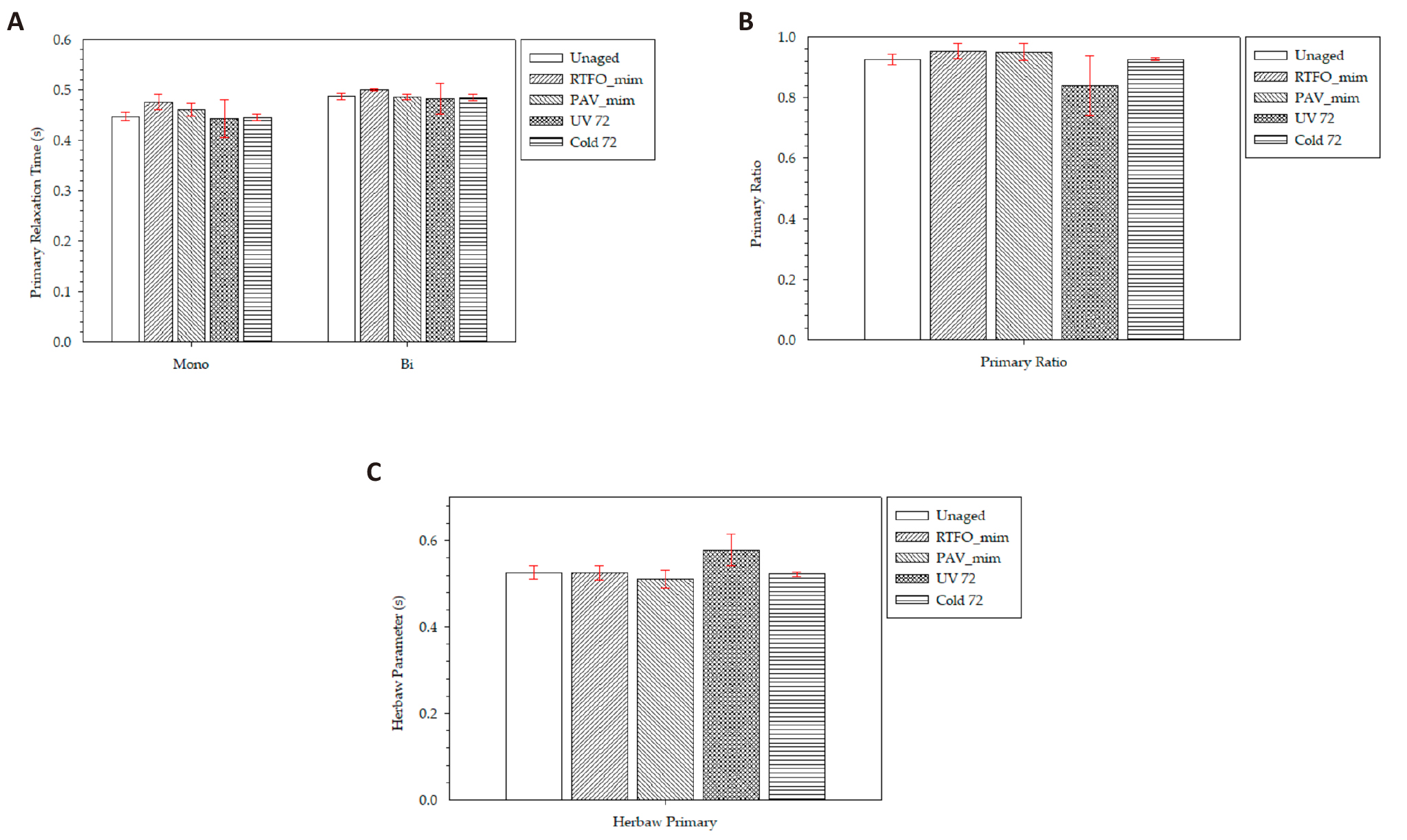
Figure 1. UV and Temperature Aging Comparison by (A) Primary Relaxation Time, (B) Primary ratio, (C) Herbaw Parameter.
3.1 Heat Aging
The effects of heat aging, including both RTFO_mim and PAV_mim treatments were analyzed using mono and bi-exponential fits. As shown in Figure 1A, both exponential fits provide small differentiations between heat-aged and unaged binders. The biexponential analysis is generally preferred for comparison as it allows for the calculation of the primary ratio when multiple relaxation times are present and must be considered. No significant differences in primary ratios are detected between the heat-aged and unaged samples as shown in Figure 1B. This indicates that new, distinct hydrogen environments are not being formed due to heat aging.
3.2 Cold Aging
In contrast, cold aging did not result in noticeable structural changes to the asphalt binder. This lack of structural impact was consistent across all types of analysis shown in Figure 1. Cold aging alone did not create permanent changes to the binder matrix.
3.3 UV Aging
UV aging introduces new oxidized environments, which are best differentiated using the primary ratio of Equation (3), as shown in Figure 1B. UV aging typically results in a noticeable decrease in the primary ratio due to the formation of new oxidative species. These new environments have corresponding relaxation times that are highly variable. Instead of determining the specifics of these small, variable environments, their significance is demonstrated by the changes seen in the primary relaxation time and ratio. The primary relaxation time and ratio are used to summarize the complex differences in chemical environments to attain a meaningful comparison. This variation is summarized using the Herbaw.
3.4 Herbaw Parameter
To effectively differentiate oxidative stress, the Herbaw Parameter, as summarized in Figure 1C, is used as a new performance metric. While mono-exponential analysis might suffice for detecting changes in stiffness, oxidative aging affects both the primary relaxation time and the primary ratio. Therefore, the Herbaw parameter, which incorporates both aspects, provides a clearer indication of oxidative aging.
3.5 Implied Impact of Sample Size and Pressure on Aging
Comparisons were made between the mimicked (RTFO_mim and PAV_mim) and standardized heat-aged samples as shown in Figure 2. The standardized heat-aged samples (RTFO and PAV) adopted the standardized heat and duration, that the mimicked samples also used, along with the standardized sample size and pressure. The mimicked samples exhibited longer primary relaxation times and larger primary ratios, as depicted in Figure 2A and 2B, respectively. In contrast, the standard heat-aging procedures resulted in lower primary relaxation times, with primary ratios like those of the unaged samples. Specifically, RTFO samples showed longer primary relaxation times compared to the unaged samples, while PAV samples displayed only a slight increase.
|
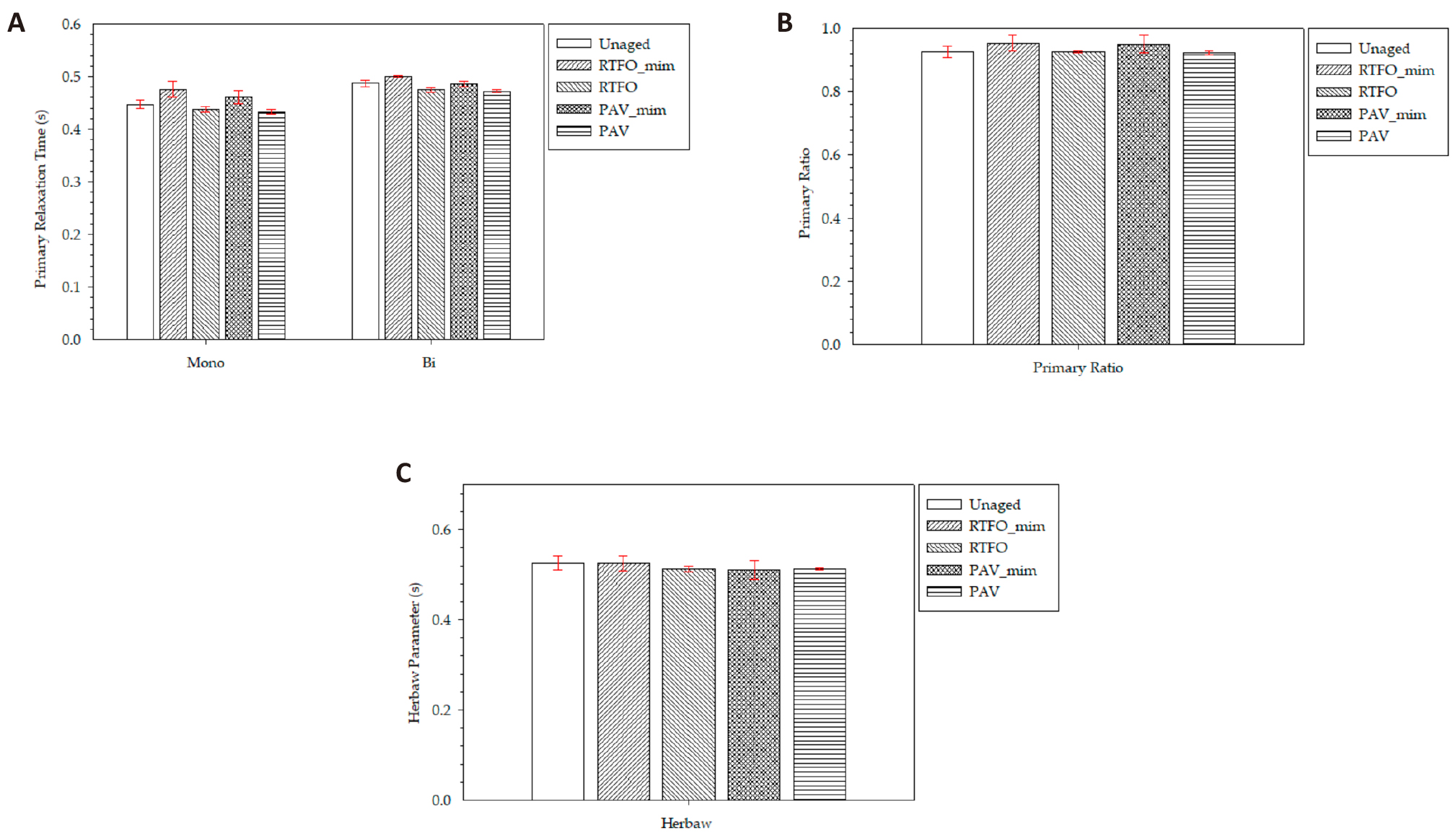
Figure 2. Binder Comparison Of Mimicked and Standard Aging Procedures by (A) Primary Relaxation Time, (B) Primary Ratio, (C) Herbaw parameter.
The primary distinction between mimicked and standard aging procedures was the sample size when aged and the addition of pressure. Both samples used the Chocolate Covered Pretzel method for NMR sample preparation. Mimicked samples, melted onto the NMR tube wall due to aging in the NMR tube, had longer relaxation times and higher ratios. In contrast, standard samples were aged before being placed in an NMR tube. Additionally, standard samples utilized pressure, whereas mimicked samples did not. Since both sample sets used the same temperature and duration, it is assumed that the sample size and pressure affect aging.
3.6 Analysis and Limitations
While there are significant physical differences when asphalt binder is heat-aged, these differences are harder to detect with NMR relaxometry. This is further supported by the analysis of the Herbaw Parameter, as illustrated in Figure 2C. Although the Herbaw Parameter proves useful for some aging indications, it does not consistently differentiate all aging effects. This suggests that heat aging may not significantly alter the hydrogen environment, or that other mechanisms may be influencing changes in stiffness.
4 DISCUSSION
4.1 Heat Aging Effects
The NMR relaxometry data revealed that mimicked and standardized heat aging did not significantly alter the hydrogen environments within the asphalt binder. The primary ratio remained unchanged, indicating that no new, distinct hydrogen environments were introduced. A slight increase in relaxation time observed in the RTFO_mim samples might be attributed to decreased mobility of the sample within the NMR tube. Conversely, the reduction in primary relaxation time for the PAV_mim samples could suggest increased mobility as the sample adjusted to lower temperatures (100℃ instead of 163℃). While mimicked heat aging aligned with industry standards regarding temperature and duration, minor discrepancies were noted when compared to standardized methods. Standardized heat aging samples exhibited shorter primary relaxation times and slightly smaller primary ratios. Shorter relaxation times have been tied to more mobile binder matrices[31]. Since the standardized samples were not stuck to the sample tube walls, they would have more mobility. Smaller ratios have been tied to increased oxidative stress[32]. The high pressure in standardized tests would allow for more oxygen to penetrate the sample and cause small amounts of oxidative stress. Therefore, the sample size and pressure in RTFO and PAV testing play a crucial role in binder aging. Despite these observations, NMR relaxometry did not reveal substantial aging effects from heat alone, potentially due to the pre-existing extensive heat history of the asphalt binder. This suggests that heat might act more as a catalyst for other aging mechanisms rather than being a primary aging factor.
4.2 Cold Aging Effects
Freezing the samples did not induce any permanent chemical changes in the binder’s hydrogen environments. The lower standard deviation in the cold-aged samples implies that freezing may lead to a more homogenized distribution of some components, but NMR relaxometry did not detect any significant changes.
4.3 UV Aging Effects
UV aging emerged as the most impactful factor on the chemical environments within the asphalt binder. This impact was most notable when utilizing the Herbaw parameter which considered both the primary relaxation time and the relative ratio of that time. After UV aging, NMR relaxometry detected some shifts in the primary relaxation time and a significant decrease in the primary ratio. Shifts in relaxation times relate to changes in the matrix, but due to the high variability of relaxation times, other parameters were needed for a comparative analysis. The reduction of the primary ratio could be differentiated from the other aging types while still having a high variability. A decreased primary ratio indicates the creation of more polar environments from oxidative stress which adds hydrogen environments to the binder matrix, decreasing the primary ratio. The presence of these new environments from UV aging was effectively summarized by the Herbaw Parameter used in this study. Although the Herbaw Parameter was less informative with heat aging, it proved valuable in cases where significant and distinct hydrogen environments were formed. UV aging clearly differentiated itself from other aging factors through 1H T1 NMR analysis.
4.4 Summary of Aging Mechanisms
This study illustrates the varying impacts of different aging mechanisms as detected by NMR relaxometry. First, changes in mobility were observed, as evidenced by variations in primary relaxation times, consistent with previous studies[12,31]. These mobility changes were most significant in heat aged samples. Second, new, distinct hydrogen environments from oxidative stress were detected using the primary ratio. UV aging was shown to significantly change the hydrogen environments.
The Herbaw Parameter effectively captures both mobility and oxidation changes, as illustrated in Figure 3. While individual relaxation times and ratios may vary, the impact on the sample’s overall structural changes could be determined in a quantifiable way.
|
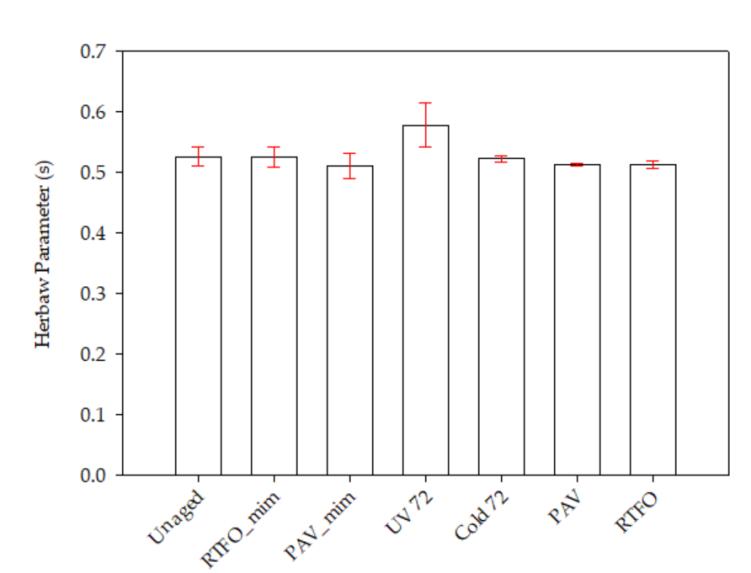
Figure 3. Comparison of Aging Factors by the Herbaw Parameter.
5 CONCLUSION
1H NMR T1 relaxometry was used to detect and quantify the changes in local hydrogen environments induced by UV radiation and temperature while retaining the structural integrity of the material. While no current standards consider UV aging or NMR relaxometry, UV radiation was shown to create distinct hydrogen environments in asphalt binders using 1H NMR T1 relaxometry. Further, this study investigated the Herbaw Parameter for its indication of asphalt binder aging through NMR analysis. The following are the conclusions from this study:
Heat aging did not drastically change the hydrogen environment of asphalt binders as detected by NMR T1 relaxometry. Small differences in the primary relaxation time were noted while no significant changes to the primary ratio were detected. The primary relaxation time indicated that standardized pressure and sample size affected binder aging. While heat aging is known to increase physical stiffness, this change was not as significant in the chemical structure. This discrepancy is most likely due to the extensive heat history of the binder. Additionally, unknown mechanisms or other factors may be more responsible for increased physical stiffness at increased temperatures.
Cold aging did not impact the hydrogen chemical structure of the binder in any of the NMR analyses. Multiple factors may be required to cause permanent changes to the binder when cold.
UV radiation was shown to have the biggest impact on asphalt binder aging as detected by NMR T1 relaxometry. UV aging had a variable impact on the primary relaxation time, but a significant decrease in the primary ratio, indicating oxidative stress. These impacts were summarized using the Herbaw Parameter.
The Herbaw Parameter was found to be a useful tool to summarize the mobility and oxidation of aged asphalt binders. The factors considered in the Herbaw Parameter are the primary relaxation time, which increases with stiffness due to mobility, and the ratio of this time, which decreases with oxidative aging due to more brittle, distinct environments. Oxidative aging is required for the Herbaw Parameter to be a useful tool.
Innovating the detection of failures using a non-destructive, chemical method enhances the understanding, and subsequently the reduction, of failures. In other studies, NMR relaxometry has been used in-situ, which would revolutionize how data is collected[34]. However, currently, the time needed for data collection and the sensitivity needed for analysis limit the NMR application on outdoor pavements. Nonetheless, NMR relaxometry continues to show promise as a helpful tool in asphalt detection to ultimately treat failures before they occur and increase the lifetime of pavements.
5.1 Future Research
Currently, 1H NMR T1 relaxometry has been used to detect binder additives, differentiate binder grades, indicate binder percentage in HMAs, and define chemical rejuvenation vs softening. Since all these parameters can be detected by a quantifiable chemical method, modification or improvement can also be further investigated in future works. Other studies should focus on multi-factor approaches to better understand the aging mechanisms of asphalt binders. More standardized, easily accessible methods are needed to fully characterize the application of NMR relaxometry in industrial applications. Additionally, standard methods should be determined to conduct UV aging and nondestructively detect the impact of such aging.
Acknowledgments
The authors thank the Missouri S&T Institute for Applied NMR Spectroscopy for providing information and resources for this study.
Conflicts of Interest
The authors declared no conflict of interest.
Author Contribution
Herndon RM developed, wrote, and edited this work. Woelk K edited and Abdelrahman A supervised this work. All authors have read and agreed to the published version of the manuscript.
Abbreviation List
IR, Inversion-recovery
NMR, Nuclear magnetic resonance
PAV, Pressure aging vessel
RTFO, Rolling thin film oven
UV, Ultraviolet
References
[1] Lu X, Soenen H, Sjövall P et al. Analysis of asphaltenes and maltenes before and after long-term aging of bitumen. Fuel, 2021; 304: 121426.[DOI]
[2] Moud AA. Asphaltene induced changes in rheological properties: A review. Fuel, 2022; 316: 123372.[DOI]
[3] Lamontagne J, Dumas P, Mouillet V et al. Comparison by Fourier transform infrared (FTIR) spectroscopy of different ageing techniques: Application to road bitumens. Fuel, 2001; 80: 483-488.[DOI]
[4] Ma L, Li Z, Huang J. Investigation of chemistry by FTIR and NMR during the natural exposure aging of asphalt. In: Pavements and materials: Recent advances in design, testing and construction. American Society of Civil Engineers, USA, 2011.
[5] Wu S, Pang L, Liu G et al. Laboratory study on ultraviolet radiation aging of bitumen. J Mater Civil Eng, 2010; 22: 767-772.[DOI]
[6] Li B, Han J, Nan X et al. Adhesion characteristics and spectroscopic analysis of regenerated ultraviolet aged asphalt binder using waste vegetable oil. Case Stud Constr Mat, 2023; 18: e01853.[DOI]
[7] Yao H, Dai Q, You Z. Fourier Transform Infrared Spectroscopy characterization of aging-related properties of original and nano-modified asphalt binders. Constr Build Mater, 2015; 101: 1078-1087.[DOI]
[8] Hou X, Lv S, Chen Z et al. Applications of Fourier transform infrared spectroscopy technologies on asphalt materials. Measurement, 2018; 121: 304-316.[DOI]
[9] Durrieu F, Farcas F, Mouillet V. The influence of UV aging of a Styrene/Butadiene/Styrene modified bitumen: Comparison between laboratory and on site aging. Fuel, 2007; 86: 1446-1451.[DOI]
[10] Wei H, Bai X, Qian G et al. Aging mechanism and properties of SBS modified bitumen under complex environmental conditions. Materials, 2019; 12: 1189.[DOI]
[11] He X, Hochstein D, Ge Q et al. Accelerated aging of asphalt by UV photo-oxidation considering moisture and condensation effects. J Mater Civil Eng, 2018; 30: 04017261.[DOI]
[12] Herndon R, Balasubramanian J, Woelk K et al. Investigating the Physical and Chemical Effects of UV Aging on TPO-Modified Asphalt Binder. Mod Concepts Mater Sci, 2024; 6: 1-8.
[13] Hu L, Bai W, Liu Y et al. Aging Characteristics of SBS-Modified Asphalt under Thermo-Photo-Oxygen Coupling Conditions. J Mater Civil Eng, 2023; 35: 04023327.[DOI]
[14] Madeira NCL, de Souza LM, Pereira AR et al. Study of thermal and photochemical aging of saturates, naphtenic-aromatics, resins, and asphaltene fractions of asphalt cement by FTIR and FT-ICR MS. Fuel, 2024; 367: 131371.[DOI]
[15] Zeng W, Wu S, Pang L et al. Research on Ultra Violet (UV) aging depth of asphalts. Constr Build Mater, 2018; 160: 620-627.[DOI]
[16] Zeng W, Wu S, Wen J et al. The temperature effects in aging index of asphalt during UV aging process. Constr Build Mater, 2015; 93: 1125-1131.[DOI]
[17] Hu J, Wu S, Liu Q et al. Effect of ultraviolet radiation in different wavebands on bitumen. Constr Build Mater, 2018; 159: 479-485.[DOI]
[18] Hu J, Wu S, Liu Q et al. Effect of ultraviolet radiation on bitumen by different ageing procedures. Constr Build Mater, 2018; 163: 73-79.[DOI]
[19] Chen Z, Zhang H, Duan H. Investigation of ultraviolet radiation aging gradient in asphalt binder. Constr Build Mater, 2020; 246: 118501.[DOI]
[20] Osmari PH, Aragão FTS, Leite LFM et al. Chemical, microstructural, and rheological characterizations of binders to evaluate aging and rejuvenation. Transport Res Rec, 2017; 2632: 14-24.[DOI]
[21] Zhang H, Chen Z, Xu G et al. Physical, rheological and chemical characterization of aging behaviors of thermochromic asphalt binder. Fuel, 2018; 211: 850-858.[DOI]
[22] Camargo IGN, Hofko B, Mirwald J et al. Effect of thermal and oxidative aging on asphalt binders rheology and chemical composition. Materials, 2020; 13: 4438.[DOI]
[23] Fini E, Rajib AI, Oldham D et al. Role of chemical composition of recycling agents in their interactions with oxidized asphaltene molecules. J Mater Civil Eng, 2020; 32: 04020268.[DOI]
[24] Yang X, Mills-Beale J, You Z. Chemical characterization and oxidative aging of bio-asphalt and its compatibility with petroleum asphalt. J Clean Prod, 2017; 142: 1837-1847.[DOI]
[25] Siddiqui MN, Ali MF. Investigation of chemical transformations by NMR and GPC during the laboratory aging of Arabian asphalt. Fuel, 1999; 78: 1407-1416.
[26] Wu S, Ye Y, Li Y et al. The effect of UV irradiation on the chemical structure, mechanical and self-healing properties of asphalt mixture. Materials, 2019; 12: 2424.[DOI]
[27] Pagán Pagán NM, Zhang Z, Nguyen TV et al. Physicochemical characterization of asphaltenes using microfluidic analysis. Chem Rev, 2022; 122: 7205-7235.[DOI]
[28] Blümich B. Aging of polymeric materials by stray-field NMR relaxometry with the NMR-MOUSE. Concept Magn Reson A, 2018; 47: e21464.[DOI]
[29] Robertson RE, Branthaver JF, Plancher H et al. Chemical properties of asphalts and their relationship to pavement performance. Washington, DC: Strategic Highway Research Program, National Research Council, 1991.
[30] Herndon RM, Balasubramanian J, Abdelrahman M et al. Asphalt-Binder Mixtures Evaluated by T1 NMR Relaxometry. Physchem, 2024; 4: 285-295.[DOI]
[31] Herndon RM, Balasubramanian J, Woelk K et al. Physical and Chemical Methods to Assess Performance of TPO-Modified Asphalt Binder. Appl Sci, 2024; 14: 3300.[DOI]
[32] Herndon RM, Balasubramanian J, Abdelrahman M et al. Nuclear Magnetic Resonance (NMR) Assessment of Bio and Crude Oil-Based Rejuvenation. Physchem, 2024; 4: 344-355.[DOI]
[33] Mayes ZG, Rice IV WH, Chi L et al. A robust Freeman-Hill-inspired pulse protocol for ringdown-free T1 relaxation measurements. J Magn Reson, 2023; 352: 107490.[DOI]
[34] Blümich B, Teymouri Y, Clark R. NMR on the Road: Non-destructive characterization of the Crumb-Rubber fraction in asphalt. Appl Magn Reson, 2019; 50: 497-509.[DOI]
[35] Herndon RM, Lai K, Abdelrahman M et al. Fitting Quality of NMR Relaxation Data to Differentiate Asphalt Binders. Physchem, 2024; 4: 389-401.[DOI]
[36] Kingsley PB. Methods of measuring spin-lattice (T1) relaxation times: An annotated bibliography. Concept Magn Reson, 1999; 11: 243-276.[DOI]
Copyright © 2024 The Author(s). This open-access article is licensed under a Creative Commons Attribution 4.0 International License (https://creativecommons.org/licenses/by/4.0), which permits unrestricted use, sharing, adaptation, distribution, and reproduction in any medium, provided the original work is properly cited.



 Copyright ©