
Investigation of important factors in Solid State Fermentation for alkaline protease production by Bacillus thuringiensis aizawai HD283
Amira M. Roshdy1*, Asmaa El-Shershaby2
1Department of Microbial Chemistry, Biotechnology Research Institute, National Research Centre, Dokki, Egypt
2Department of Molecular Biology, Biotechnology Research Institute, National Research Centre, Dokki, Egypt
*Correspondence to: Amira M. Roshdy, PhD, Associate Professor, Department of Microbial Chemistry, Biotechnology Research Institute, National Research Centre, 33 El-Bohouth St., Dokki, P.O. 12622, Egypt; Email: amiraroshdy82@yahoo.com
Abstract
Objective: this paper investigates the critical factors in solid state fermentation (SSF) for improved production of alkaline protease by Bacillus thuringiensis aizawai HD283 and explores some biochemical properties of the crude enzyme.
Methods: One factor at a time method was used in this investigation. Tested factors include: nutritive substrate, moisture content, inoculums size and incubation period. Explored assay parameters include: enzyme concentration, time, pH and temperature.
Results: Among others, the agro-industrial byproduct wheat bran was found to be a superior nutritive substrate for alkaline protease production by Bacillus thuringiensis aizawai HD283. Further supplementation with carbon source such as fructose or mannitol has enhanced the production by almost 2 folds. The optimum levels of alkaline protease were obtained using wheat bran of particle size <1mm, 200% moisture content, inoculums size of 60% and incubation period for 5 days. The optimum activity of crude enzyme was obtained at pH 9 and 50°C. However, crude enzyme was active over a wide range of temperature ranging from 40 to 80°C.
Conclusion: Under optimized conditions of SSF, the production of alkaline protease by Bacillus thuringiensis aizawai HD283 could be improved by at least 2-3 folds. Crude enzyme activity over a wide range of temperature (40 to 80°C) suits well many biotechnological applications such as detergent industry, leather and textile industry and waste water treatment.
Keywords: Bacillus thuringiensis, strain HD283, SSF, wheat bran, alkaline protease
1 INTRODUCTION
Micro-organisms are excellent sources for production of alkaline proteases compared to plants and animals[1,2]. This is due to the advantages of rapid and high rate of production, the limited requirements of cultivation, wide biochemical diversity and easy of genetic modifications[3-6]. Most commercial alkaline proteases are produced by bacterial species/spp belonging to the genus Bacillus due to many reasons, including rapid growth rates leading to short fermentation runs and their capacity to secrete desired proteins into the extra-cellular media[7-11].
Alkaline proteases (EC.3.4.21-24, 99) are hydrolytic enzymes capable of degrading proteins into small peptides and amino acids at neutral to alkaline pH[12]. They are ubiquitous enzymes that are found in all forms of life: animals, plants and microorganisms due to their important physiological function[2]. From the viewpoint of biotechnology, alkaline proteases have their importance in detergent industry, leather and textile industry, wastewater treatment, pharmaceutical and medicinal industry, food industry, peptide synthesis in brewing and baking industry[13,14].
Alkaline proteases are usually produced under submerged fermentation conditions due to the advantages of consistent production with defined medium and process conditions. However, higher product yields, lower cost production and optimal use of agro-industrial byproducts have been generally claimed in solid state fermentation (SSF)[15-17]. In parallel, utilization of various agro-industrial wastes in SSF can help in solving pollution problems, which their disposal otherwise causes.
The current study aims to describe the production of alkaline protease by previously identified candidate Bacillus thuringiensis aizawai HD283 under SSF conditions using agro-industrial byproduct as a nutritive substrate, to optimize SSF parameters including moisture content, Inoculums’ size and incubation time for maximum enzyme production and to identify the biochemical properties of produced crude enzyme.
2 MATERIAL AND METHODS
2.1 Bacterial Strain
The Bacillus thuringiensis subspecies aizawai stain HD283 used in the present study was provided by HD culture collection (Howard Dulmage Collection, Cotton Insect Research Laboratory, ARS, USDA, and Brownsville, Texas, USA).
2.2 Preparation of Agro-industrial Waste Material
Different agro-industrial waste materials (Rice straw, Rice husk, Wheat bran, used Tea leaves, Banana peels and Potato peels) were firstly washed well with tap water to get rid of the adhered surface dust. The washed waste material was then dried at 45°C, ground and sterilized for 15min before use. In case of wheat bran, the coarse material was sieved to different particle sizes (˂1mm, 1-2mm, and ˃2mm) to find out the most suitable particle size for enzyme production. Wheat bran with mixture of particle sizes was used as a control.
2.3 Inoculums’ Preparation and Alkaline Protease Production
A fresh colony of Bacillus thuringiensis HD283 strain was grown in a 5mL of nutrient broth yeast extract salt medium as described by Roshdy et al. On the next day, 2mL aliquot of 24h grown culture (18x10-6 CFU/ml) was used to inoculate autoclaved 500mL Erlenmeyer flasks containing 5g of prepared waste material mixed with 5mL of 50mM potassium phosphate buffer of pH7.4. The inoculated flasks were then incubated for 3 days at 30°C under static conditions.
2.4 Crude Enzyme Extraction
The fermented material of known weight was mixed with distilled water (1:5, w/v) for 30min on a magnetic stirrer at room temperature. The slurry was then squeezed through cheesecloth followed by centrifugation of the whole content at 4,000rpm for 10min at 4°C to remove the insoluble materials. The clear supernatant was then used for the protease assay.
2.5 Assay of Alkaline Protease
Alkaline protease activity was assayed according to the method of Lowry et al[18]. using 1% casein substrate (w/v) in 0.1M glycine-NaOH buffer (pH 9.6). The reaction mixture was incubated at 40°C for 20min after which, enzymatic reaction was stopped byaddition of 20% tri-chloroacetic acid with thoroughly mixing. The mixture was then centrifuged at 4,000rpm for 10min. A standard curve was generated using solutions of 0-100μg/mL tyrosine. One unit of activity was defined as the amount of enzyme required to liberate 1 μg of tyrosine per minute under the experimental conditions. All enzyme assays were carried out in triplicate, while mean values and standard errors were calculated.
2.6 Optimization of Solid State Fermentation (SSF) Conditions
2.6.1 Carbon Source Supplementation
The effect of additional carbon source (glucose, mannitol, fructose, lactose, sucrose, cellulose or soluble starch) on the production of alkaline protease by strain HD283 was investigated under standard experimental conditions (wheat bran substrate, 30°C and 3 days). Each carbon source (10%,w/w) was added separately to the wheat bran medium containing flasks before inoculation. The inoculated flasks without any co-carbon (wheat bran only) were used as a control.The concentration of additional carbon/co-carbon source (0-40%) was then optimized for alkaline protease production by strain HD283under the same experimental conditions.
2.6.2 Initial Moisture Content
Different ratios of 1:1, 2:1, 3:1 and 4:1(v/w) of liquid buffer to wheat bran solid material in substrate medium were examined for optimum production of alkaline protease by strain HD283 under standard conditions of experiment, 30˚C for 3 days.
2.6.3 Inoculums Size
Different inoculums amounts of strain HD283 ranging from 10 to 200% (v/v) were added on wheat bran substrate medium to find out the inoculums concentration for optimum production of alkaline protease by strain HD283. Cultures were then incubated statically at 30˚C for 3 days.
2.6.4 Incubation Time
The effect of cultural time (1-6 days) on the production of alkaline protease by strain HD283 was investigated under all previously optimized conditions. At the end of each incubation period, the insoluble materials were separated and crude enzyme was assayed in clear supernatant.
2.7 Crude Enzyme Properties
The effect of different enzyme amounts (0.01-0.5v/v), reaction time (0-90min), temperature (30-80°C) and pH (7.4-11) on enzymatic reaction rate was investigated. The enzyme substrate reaction was carried out in the same manner keeping other parameters constant.
2.8 Statistical Analysis
Ordinary one-way ANOVA was used for statistical analysis using Graph Pad Prism software (version 8).
3 RESULTS AND DISCUSSION
3.1 Alkaline Protease Production under SSF Conditions
Different agro-industrial byproducts (banana peels, potatoes peels, used tealeaves, wheat bran, rice husk, and rice straw) were examined as a nutritive substrate for cultivation of Bacillus strain HD283 and production of alkaline protease. Among them, wheat bran showed the highest ability to support significant production of alkaline protease (P˂0.0001) compared to other byproducts (Figure 1). In this respect, wheat bran is well known as a rich source of amino acids, sugars, minerals and other nutritive materials[19]. Therefore, it is considered as an ideal substrate for microbial cultivation especially for the production of value-added products. Utilization of wheat bran as a substrate in SSF for production of hydrolytic enzymes including alkaline protease was reported by many investigators[20-24]. Herein, we also examined the effect of particle size of wheat bran on the production of alkaline protease by strain HD283. As shown in Table1, enzyme production increased as the particle size decrease with maximum activity obtained using particle size <1mm. These results might be attributed to the differences in the aeration level and substrate mass transfer that affect microbial growth and in turn enzyme production[25].
|
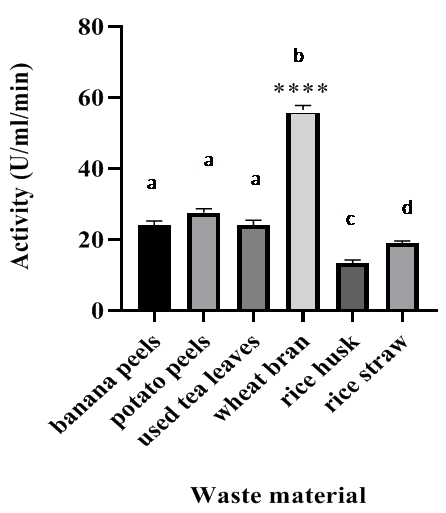
Figure 1. Production of Alkaline Protease by Strain HD283 Cultivated on Different Agro-industrial Waste Materials.
In this experiment, each treated waste material was used as a nutritive substrate for cultivation of strain HD283 under SSF conditions. Moisture content of 50% and inoculums size of 40% were applied for all cultures. After incubation for 3 days at 30°C, the solid materials were separated by centrifugation while liquid part was used for enzyme activity assay. **** and different letters indicate statistically significant difference of P˂0.0001 and P˂0.05, respectively.
Table 1. Effect of Different Particle Sizes of Wheat Bran on the Production of Alkaline Protease by Strain HD283
Particle size |
Relative activity |
SE(n=4) |
P Value |
˂1mm vs.mix |
1.30 |
0.011 |
˂0.0001 |
1-2mm vs. mix |
1.17 |
0.019 |
0.0197 |
>2mm vs. mix |
0.70 |
0.033 |
0.0001 |
Mix |
1.00 |
0.008 |
- |
3.2 Optimization of Solid State Fermentation (SSF) Conditions
3.2.1 Supplementation of Wheat Bran with Additional Carbon Source
The effect of additional carbon source/co-carbon source on the production of alkaline protease by strain HD283 was examined according to Foda S et al[8]. Among different carbon sources, Fructose followed by Mannitol were the best co-carbon sources resulted in significant increase by almost two folds compared to the wheat bran substrate alone (Figure 2). These results were in good accordance with that of Foda S et al.[8], supporting the inductive role of additional carbon source in alkaline protease production by Bacillus spp including strain HD283. Herein, we also found that production of alkaline protease is proportional to fructose concentration (Table 2). These results suggesting that the used strain HD283 is fructophillic that favors Fructose and/or its hydrolyzed form, Mannitol, for its metabolic activities toward alkaline protease production.
|
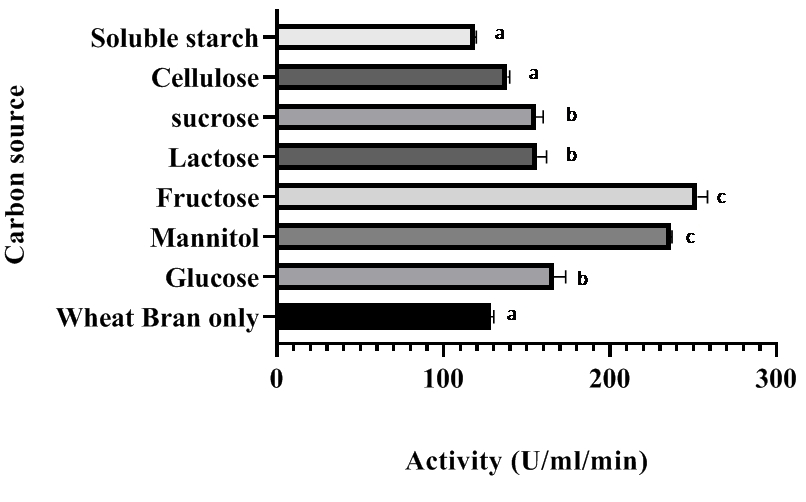
Figure 2. Effect of Co-carbon Source Supplementation on Alkaline Protease Production by Strain HD283.
Wheat bran substrate medium was supplemented with different carbon sources (10%), and the experiment was done in the same manner keeping other parameters constant. Columns represent mean values of 4 experiments while error bars represent SE values. Different letters indicate statistically significant difference (P˂0.05).
Table 2. Effect of Different Concentrations of Supplemented Fructoseon Alkaline Protease Production by Strain HD283
Fructose conc. (%) |
Relative activity |
SE (n=4) |
P value |
0 |
1.00 |
0.014 |
- |
5 vs. 0 |
1.11 |
0.062 |
0.9998 |
10 vs. 0 |
1.19 |
0.007 |
0.9589 |
20 vs. 0 |
1.40 |
0.014 |
0.5417 |
30 vs. 0 |
2.37 |
0.244 |
0.0068 |
40 vs. 0 |
3.06 |
0.073 |
˂0.0001 |
3.2.2 Moisture Content
Initial moisture content of the medium is one of the critical parameters of SSF[15,20]. As shown in Figure 3, significant increase (P≤0.0001) in alkaline protease production was obtained proportionally with the increase of moisture content till the optimum value at 200% (v/w), above which no significant increase was obtained. Lower enzyme levels at moisture contents lower than the optimummight be due to reduced nutrient solubility, poor microbial growth and in turnreduced enzyme production. On the other hand, the lower or constant production levels at moisture content above the optimummight be due to the decrease in oxygen availability, reduced substrate porosity in solid substrate and/or change in substrate particle structure[26]. Previous studies showed other different optimum levels of initial moisture content; for example 70% for Bacillus subtillis K-5 and 67% for Bacillus thuringiensis dendrolimus IP 4A/4B[8,27]. Altogether, these different optimum levels are likely associated with the type of species or even the type of strain.
|
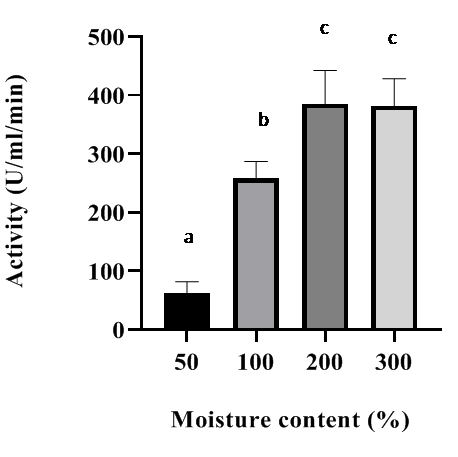
Figure 3. Effect of initial moisture content on the production of alkaline protease by strain HD283.
Different ratios of buffer to solid material (1:1, 2:1, 3:1, 4:1) were applied for cultivation of strain HD283 while other parameters were constant including inoculum size of 40%, incubation time of 3 days at 30°C. Columns represent mean values of 4 experiments while error bars represent SE values. Different letters indicate statistically significant difference (P˂0.05).
3.2.3 Inoculums’ Size
Effect of different inoculums sizes (10-300%, v/v) of strain HD283 on alkaline protease productionunder SSF conditions was examined. As shown in Table 3, non-significant increase or decrease in activity was obtained relative to standard inoculums size of 40% (control). However, higher inoculums sizes might result in reduced dissolved oxygen, increased competition towards nutrient and in turn reduced enzyme production rates. On the other hand, if the inoculums sizes were too small, insufficient number of bacteria would lead to reduced amount of secreted alkaline protease[28].
Table 3. Effect of Inoculums Size on the Production of Alkaline Protease by Strain HD283
Inoculums’ size (%) |
Relative activity |
SE(n=4) |
P value |
10 vs. 40 |
0.868 |
0.032 |
0.267 |
20 vs. 40 |
0.970 |
0.006 |
0.998 |
60 vs. 40 |
1.115 |
0.067 |
0.411 |
80 vs. 40 |
1.069 |
0.032 |
0.876 |
100 vs. 40 |
1.089 |
0.022 |
0.690 |
200 vs. 40 |
1.010 |
0.044 |
˃0.999 |
3.2.4 Incubation Time
The effect of incubation time on alkaline protease production by strain HD283 under SSF was examined over 6 days. The obtained results showed that the used strain could grow and produce alkaline protease from the 1st day with the maximum production at the 5th day (Table 4). No further increase in protease production was observed by the 6th day. This observation might be due to the decrease in microbial growth associated with the depletion of available nutrient, loss of moisture content, production of toxic metabolites and/or degradation of produced protease[29].
Table 4. Effect of Incubation Time on Alkaline Protease Production by Strain HD283
Incubation time (days) |
Relative activity |
SE(n=4) |
P value |
1 vs 3 |
0.807 |
0.015 |
0.453 |
2 vs 3 |
1.087 |
0.034 |
0.955 |
4 vs 3 |
1.099 |
0.041 |
0.927 |
5 vs 3 |
1.754 |
0.026 |
˂0.0001 |
6 vs 3 |
1.547 |
0.005 |
0.0006 |
3.3 Biochemical Properties of Crude Alkaline Protease
To optimize the activity assay for alkaline protease produced by strain HD283, different values for each assay parameter were examined. Firstly, different enzyme amounts (0.01- 0.5µl) were applied to the reaction mixture while the assay was carried out in the same manner. As shown in Table 5, the maximum rate of reaction was obtained with the enzyme amount of 0.5µl while lower amounts resulted in significantly lower rates of reaction.
Table 5. Effect of Enzyme Amount on the Reaction Rate of Activity Assay
Enzyme volume(µl) |
Relative activity |
SE(n=3) |
P value |
0.01 vs.0.5 |
0.001 |
0.0001 |
<0.0001 |
0.02 vs. 0.5 |
0.003 |
0.0004 |
<0.0001 |
0.05 vs. 0.5 |
0.018 |
0.0004 |
<0.0001 |
0.1 vs.0.5 |
0.073 |
0.0034 |
<0.0001 |
0.2 vs.0.5 |
0.209 |
0.0149 |
<0.0001 |
0.3 vs.0.5 |
0.350 |
0.0065 |
<0.0001 |
0.4 vs.0.5 |
0.720 |
0.0017 |
<0.0001 |
0.5 |
1.000 |
0.0001 |
- |
Then different incubation time of reaction (5-90min) was examined as shown in Table 6. The maximum activity was obtained after 5min with further lower reaction rates as time proceed. These results were similar to that alkaline protease of B. thurigiensis dendrolimus IP 4A/4B exhibiting reaction velocity near the theoretical velocity (Vmax)[30].
Table 6. Effect of Reaction Time on Alkaline Protease Activity Assay
Reaction time(min) |
Relative activity |
SE(n=3) |
P value |
5 vs.20 |
3.16 |
0.275 |
<0.0001 |
10 vs.20 |
1.35 |
0.038 |
0.2686 |
30 vs.20 |
0.83 |
0.155 |
0.8213 |
60 vs. 20 |
0.44 |
0.026 |
0.0412 |
90 vs.20 |
0.28 |
0.020 |
0.0082 |
For reaction temperature, the enzyme activity retained more or less the same value with no significant difference up to 70°C. However significant increase was obtained at 80°C (Table 7). Such activity over wide range of temperature was previously reported for alkaline protease produced by thermophilic fungus, Thermomyces lanuginose P134[31]. However, lower optima of temperature were reported for alkaline proteases produced by another strain of Bacillus thurigiensis, dendrolimus IP 4A/4B, or even the same strain aizawai HD856[30,32].
Table 7. Effect of Reaction Temperature on Alkaline Protease Activity Assay
Reaction temp (°C) |
Relative activity |
SE(n=3) |
P value |
30 vs.40 |
0.77 |
0.065 |
0.4758 |
50 vs.40 |
1.44 |
0.161 |
0.0638 |
60 vs.40 |
1.39 |
0.139 |
0.1035 |
70 vs.40 |
1.41 |
0.117 |
0.0860 |
80 vs.40 |
1.48 |
0.109 |
0.0405 |
The effect of reaction pH on enzyme activity was examined at a range of 7.4 to 11 using Tris-HCl buffer for pH values 7.4-9.0 and glycine-NaOH buffer for pH from 8.4 up to 11. As shown in Table 8, there was a significant increase in enzymatic rate up to pH 9, with maximum activity obtained with pH 9 using the two different buffers. However, a significant decrease in enzyme activity was observed above pH 9 till pH 11. Similar optima ranging from 7.5 to 9 were reported for alkaline proteases produced by Bacillus thurigiensis, dendrolimus IP 4A/4B and aizawai HD856[30,32]. All in all, although alkaline proteases of similar properties were obtained previously by other Bacillus candidates[33-36], the produced alkaline protease here is characterized by high activity over wide range of temperature which suits many industrial biotechnological applications such as textile industry, detergent industry and waste water treatment.
Table 8. Effect of Reaction pH on Alkaline Protease Activity Assay
Reaction pH |
Relativeactivity |
SE(n=4) |
P value |
9 |
1.000 |
0.000 |
- |
9.4 vs.9 |
0.813 |
0.038 |
0.0009 |
10 vs.9 |
0.785 |
0.036 |
0.0003 |
10.4 vs.9 |
0.722 |
0.028 |
<0.0001 |
11 vs.9 |
0.674 |
0.013 |
<0.0001 |
9 |
1.000 |
0.000 |
- |
8.4 vs.9 |
0.808 |
0.031 |
<0.0001 |
8 vs.9 |
0.201 |
0.009 |
<0.0001 |
7.4 vs.9 |
0.144 |
0.002 |
<0.0001 |
4 CONCLUSION
Bacillus thurigiensis subspecies aizawai stain HD283 is a promising candidate for alkaline protease production in industrial medium such as wheat bran. Supplementation with carbon source such as fructose is recommended for production enhancement by 2-3 folds. Initial moisture content and incubation time are the most important factors in SSF for production of alkaline protease by stain HD283.The biochemical properties of the crude enzyme show high activity over wide range of temperature up to 80°C, so it can be developed for industrial applications such as detergent industry, textile industry and waste water treatment. However, it is recommended in future studies to examine scale-up effects on production processes and consider the impact of compositional changes in various substrates on enzyme activity and stability.
Acknowledgements
The authors would like to thank Prof. Dr. Sahar Ahmed for critically reading the manuscript and providing helpful comments, Prof. Dr. Yasser Shaheen and Dr. Nahla Hussein for encouragement and scientific assistance in writing the text of the manuscript.
Conflicts of Interest
The authors declared no conflict of interest.
Author Contribution
Roshdy A. was responsible for conceptualizing the research plan, providing the chemicals and bacterial strain under study, implementing laboratory experiments, research methodology, listing data in an Excel file with graphs, providing sources for many references, reviewing and approving the manuscript, and corresponding with the journal for publication. El-Shershaby A. was responsible for statistical analysis of data and graphs, writing the manuscript, and implementing modifications recommended by reviewers and editor.
Abbreviation List
SSF, solid state fermentation
References
[1] Rao MB, Tanksale AM, Ghatge MS et al. Molecular and biotechnological aspects of microbial proteases. Microbiol Mol Biol R, 1998; 62: 597-635.[DOI]
[2] Ellaiah P, Srinivasulu B, Adinarayana K. A review on microbial alkaline proteases. J Sci Ind Res India, 2002; 61: 690-704.
[3] Chitte R, Chaphalkar S. The world of proteases across microbes, insects, and medicinal trees. Proteases in Physiology and Pathology. Springer: Singapore, 2017: 517-526.
[4] Jisha VN, Smitha RB, Pradeep S et al. Versatility of microbial proteases. Adv Enzyme Res. 2013; 2013: 39-51.[DOI]
[5] Omoniyi O, Moro D, Afolabi O. Microbial Proteases: Sources, Significance and Industrial Applications. Int J Curr Microbiol Appl S. 2024; 13: 1-23.[DOI]
[6] Sun Q, Zhang B, Yan QJ et al. Comparative analysis on the distribution of protease activities among fruits and vegetable resources. Food Chem, 2016; 213: 708-713.[DOI]
[7] Romsomsa N, Chim-anagae P, Jangchud A. Optimization of silk degumming protease production from Bacillus subtilis C4 using Plackett-Burman design and response surface methodology. Sci Asia, 2010; 36: 118-124.[DOI]
[8] Foda S, Safaa A, Youssef M et al. Production physiology of alkaline protease by Bacillus thuringiensis spp. under solid-state fermentation conditions. J Appl S Res, 2013; 9: 1975-1984.
[9] dos Santos Aguilar JG, Sato HH. Microbial proteases: production and application in obtaining protein hydrolysates. Food Res Int, 2018; 103: 253-262.[DOI]
[10] Rekik H, Jaouadi NZ, Gargouri F et al. Production, purification and biochemical characterization of a novel detergent-stable serine alkaline protease from Bacillus safensis strain RH12. Int J Biol Macromol, 2019; 121: 1227-1239.[DOI]
[11] Roshdy AM, Shata HM, Ali SM et al. Commercial extraction of applicable alkaline protease and chitinase by Bacillus thuringiensis dendrolimus IP 4A/4B. J Mod Agric Biotechnol, 2022; 1.[DOI]
[12] Horikoshi K. Alkaliphiles: some applications of their products for biotechnology. Microbiol Mol Biol R, 1999; 63: 735-750.[DOI]
[13] Kumar CG, Takagi H. Microbial alkaline proteases: from a bioindustrial viewpoint. Biotechnol Adv, 1999; 17: 561-594.[DOI]
[14] Razzaq A, Shamsi S, Ali A et al. Microbial proteases applications. Front Bioeng Biotech, 2019; 7: 110.[DOI]
[15] Pandey A. Solid-state fermentation. Biochem Eng J, 2003; 13: 81-84.[DOI]
[16] Potumarthi R, Ch S, Jetty A. Alkaline protease production by submerged fermentation in stirred tank reactor using Bacillus licheniformis NCIM-2042: effect of aeration and agitation regimes. Biochem Eng J, 2007; 34: 185-192.[DOI]
[17] Dhillon GS, Oberoi HS, Kaur S et al. Value-addition of agricultural wastes for augmented cellulase and xylanase production through solid-state tray fermentation employing mixed-culture of fungi. Ind Crop Prod, 2011; 34: 1160-1167.[DOI]
[18] Lowry OH, Rosebrough NJ, Farr AL et al. Protein measurement with the Folin phenol reagent. J Biol Chem, 1951; 193: 265-275.[DOI]
[19] Balandrán-Quintana RR, Mercado-Ruiz JN, Mendoza-Wilson AM. Wheat bran proteins: a review of their uses and potential. Food Rev Int, 2015; 31: 279-293.[DOI]
[20] El-Shishtawy RM, Mohamed SA, Asiri AM et al. Solid fermentation of wheat bran for hydrolytic enzymes production and saccharification content by a local isolate Bacillus megatherium. BMC Biotechnol, 2014; 14: 1-8.[DOI]
[21] Matkawala F, Nighojkar S, Kumar A et al. Enhanced production of alkaline protease by Neocosmospora sp. N1 using custard apple seed powder as inducer and its application for stain removal and dehairing. Biocatal Agr Biotechnol, 2019; 21: 101310.[DOI]
[22] Roshdy AM, Shata HM, Ali SM et al. Commercial extraction of applicable alkaline protease and chitinase by Bacillus thuringiensis dendrolimus IP 4A/4B. J Mod Agric Biotechnol, 2022; 1:10.[DOI]
[23] Vu V, Farkas C, Riyad O et al. Enhancement of the enzymatic hydrolysis efficiency of wheat bran using the Bacillus strains and their consortium. Bioresource Technol, 2022; 343: 126092.[DOI]
[24] Matrawy AA, Marey HS, Embaby AM. The agro-industrial byproduct wheat bran as an inducer for alkaline protease (ALK-PR23) production by pschyrotolerant Lysinibacillus sphaericus strain AA6 EMCCN3080. Waste Biomass Valori, 2024; 15: 1943-1958.[DOI]
[25] Prakasham RS, Rao CS, Sarma PN. Green gram husk—an inexpensive substrate for alkaline protease production by Bacillus sp. in solid-state fermentation. Bioresource Technol, 2006; 97: 1449-1454.[DOI]
[26] Kumar R, Balaji S, Uma TS, et al. Optimization of influential parameters for extracellular keratinase production by Bacillus subtilis (MTCC9102) in solid state fermentation using horn meal—a biowaste management. Appl Biochem Biotechnol, 2010; 160: 30-39.[DOI]
[27] Shad AA, Ahmad T, Iqbal MF et al. Production, Partial Purification and Characterization of Protease through Response Surface Methodology by Bacillus subtilis K-5. Braz Arch Biol Technol, 2024; 67: e24210355.[DOI]
[28] Abd Rahman RNZ, Geok LP, Basri M et al. Physical factors affecting the production of organic solvent-tolerant protease by Pseudomonas aeruginosa strain K. Bioresource Technol, 2005; 96: 429-436.[DOI]
[29] Limkar MB, Pawar SV, Rathod VK. Statistical optimization of xylanase and alkaline protease co-production by Bacillus spp using Box-Behnken Design under submerged fermentation using wheat bran as a substrate. Biocatal Agr Biotechnol, 2019; 17: 455-464.[DOI]
[30] Roshdy AM, Shata HM, Ali SM et al. Biochemical Properties of Crude Alkaline Protease Produced by Bacillus thuringiensis dendrolimus IP 4A/4B under Solid-State Fermentation Conditions. J Mod Agric Biotechnol, 2023; 2.[DOI]
[31] Li DC, Yang YJ, Shen CY. Protease production by the thermophilic fungus Thermomyces lanuginosus. Mycol Res, 1997; 101: 18-22.[DOI]
[32] Roshdy A, Baker N, Sharaf O. Production Physiology and Biochemical properties of Crude Thermophile Protease by Mild - Halophilic Bacillus thuringiensis aizawai HD 865. J Mod Agric Biotechnol, 2024; 3: 8. DOI:10.53964/jmab.2024008[DOI]
[33] Saeed K, Riaz S, Adil A et al. Characterization of alkaline metalloprotease isolated from halophilic bacterium Bacillus cereus and its applications in various industrial processes. An Acad Bras Cienc, 2023; 95: e20230014.[DOI]
[34] Roshdy A, Kahil T, and Safwat M. Halotolerant Alkaline Protease Production by New Isolate Halophilic Bacillus cereus NRC-1. Middle East J Appl Sci, 2016; 6: 964-976.
[35] Daoud L, Hmani H, Ben Ali M et al. An original halo-alkaline protease from Bacillus halodurans strain US193: biochemical characterization and potential use as bio-additive in detergents. J Polym Environ, 2018; 26: 23-32.[DOI]
[36] Adinarayana K, Ellaiah P, Prasad DS. Purification and partial characterization of thermostable serine alkaline protease from a newly isolated Bacillus subtilis PE-11. AAPS PharmSciTech, 2003; 4: 440-448.[DOI]
Copyright © 2024 The Author(s). This open-access article is licensed under a Creative Commons Attribution 4.0 International License (https://creativecommons.org/licenses/by/4.0), which permits unrestricted use, sharing, adaptation, distribution, and reproduction in any medium, provided the original work is properly cited.



 Copyright ©