
Aulacidae Family as Endoparasitoids of Xylophagous Insects: Of the Order Coleoptera, Hymenoptera and Diptera
Carlos Henrique Marchiori1*
1Department of Biological Science, Instituto Federal Goiano, Goias, Brazil
*Correspondence to: Carlos Henrique Marchiori, PhD, Professor, Department of Biological Science, Instituto Federal Goiano, Rua T-65, Setor Bueno, Goiânia, Goias 74230120, Brazil; E-mail: chmarchiori@yahoo.com.br
Abstract
Regarding the biology of the Aulacidae family, their larvae live under the barks of dying or dead deciduous trees where they are predators or scavengers of the larvae of other insects. Adults, which are rarely captured, are found mainly in wooded areas close to the larval habitat, mainly on trunks and leaves. The aim of this manuscript is to describe insects belonging to the Aulacidae family are parasitoids of Coleoptera, Diptera and Hymenoptera. For this, a bibliographic survey of Aulacidae was carried out from the years 1988 to 2022. Only complete articles published in scientific journals and expanded abstracts presented in national and international scientific events were considered. Additional data was obtained from platforms such as Academia.edu, Frontiers, Qeios, PubMed, Biological Abstract, Publons, Dialnet, World, Wide Science, Springer, RefSeek, Microsoft Academic and Science.
Keywords: scielo, evanoidea, insect, cerambycidae, sawfly
1 INTRODUCTION
The Aulacidae are a small, cosmopolitan family of wasps with two extant genera containing about 200 known species. They are closely related to the Gasteruptiidae family, sharing the characteristic of having the first and second metasomal tergites fused together, and having the head on a long pronotal neck, although they are not as slender and elongated as the gasteruptiids, and they have more sculpted chests. They share the evanioid trait of having the metasoma fixed high above the posterior thighs on the propodus (Figure 1)[1-3].
|

Figure 1. Holotype, female, habitus, lateral. Source: http://www.waspweb.org/evanioidea/Aulacidae/index.htm
1.1 Description
They have small eyes, circular or subcircular antennae composed of 14 segments in females and 13 segments in males, low antennal insertions on the face, close to the lower margin of the eyes scape ventrally convex in the lateral view, and much thicker than the pedicel and sub-antennary flagellomeres for accommodation of the scape (Figure 2).
|

Figure 2. The male. 14: Antennae. 15: Anterior aspect of the head. 16: Dorsal aspect of the head. 17: Lateral aspect of the head. 18: Dorsal aspect of the mesosoma. 19: Lateral aspect of the mesosoma. Source: https://zookeys.pensoft.net/article/7207/element/2/15
The metapostnotum exists between the propodeum and the metanotum as a distinct sclerotization. The pyramidal propodus and the metasoma insert high at the apex, with the metasoma fused dorsally. Posterior thigh with groove on the inner lateral surface, grooves apposed forming a guiding ovipositor. Posterior trochanter with transverse trochanteral groove, prefemur present. Each tarsal claw with a basal tooth. Forewing vein 2m-cu present, vein 2r-m usually present, largely spectral, 3r-m vein present, often largely spectral. Front wing vein 2-Rs+M is either long or very short. Ovipositor exserted, protruding well beyond then apex of the metasoma[4-7].
1.2 Habitat and Distribution
While they are generally rarely collected, the Aulacidae can be locally abundant in areas subject to logging or forest fires.
Distribution: Democratic Republic of Congo, Kenya, Mozambique, South Africa, Zimbabwe and other places around the world (Figure 3)[8,9].
|

Figure 3. Habitat of Aulacidae Family. Source: https://www.mindat.org/taxon-1248954.html
1.3 Bioecology
Parasitoids of wood-boring beetle (Coleoptera) or sawfly (Symphyta, Xiphydriidae) larvae.
Aulacus are known to visit flowers, but whether they are feeding on pollen and/or nectar is unclear. Apiaceous plants produce pollen and also have nectariferous discs. Available data indicates that adult species fly for a relatively short period each year, suggesting that they have an annual life cycle.
The Aulacidae larva feeds quickly, kills the host by feeding on its internal organs, emerges from the host's skin and spins a cocoon in which it forms its pupae. Aulacid larvae emerge from fully grown Xiphydria larvae. The cocoon is reddish-pink, thin, translucent and testaceous, and has the remains of the host larvae attached. The adult emerges about 2 weeks later, escaping by gnawing a hole in the thin wooden cover left by the host. Aulacus burquei (Provancher, 1882) also weaves a cocoon (Figure 4)[9-13].
|
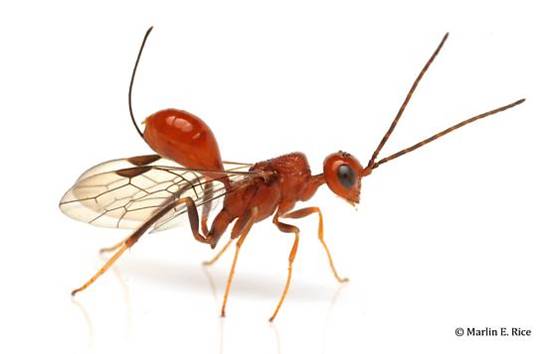
Figure 4. Aulacus burquei (Provancher, 1882). Source: https://bugguide.net/node/view/1531685
1.4 Taxonomy and Phylogeny
Evanioidea comprises 3 distinct families, Aulacidae, Gasteruptiidae and Evaniidae, and several fossil taxa that occupy uncertain positions. Some systematists have discovered morphological, biological, and molecular evidence questioning the monophyly of Evanioidea, but no major formal changes at the taxonomic level have been made since Hedicke.
Subfamilies: Hyptiogastritinae Stethaprioninae, Stevardiinae and Characinae (Figure 5). Genus: Aulacus and Pristaulacus.
|
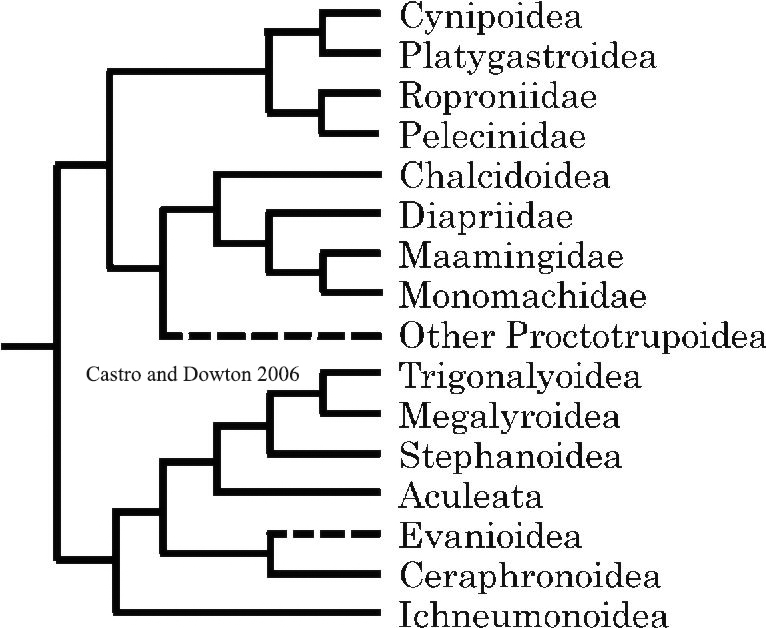
Figure 5. Strict consensus tree of apocritan taxa based on the mitochondrial genes 16S rDNA and CO1, and nuclear genes 28S rDNA and 18S rDNA, simplified from Castro and Dowton (2006). Dashed lines indicate taxa that may be paraphyletic. Source: Sharkey MJ. Phylogeny and Classification of Hymenoptera. Zootaxa. 2007; 1668: 521–548.
While rarely ever collected, Aulacidae can be locally abundant in areas undergoing logging or forest fires. The rich fossil record of Aulacidae indicates that they were quite abundant in the Mesozoic region[14-16].
1.5 Objective
The aim of this manuscript is to describe the family Aulacidae as an endoparasitoid of Coleoptera, Diptera and Hymenoptera.
2 METHODS
The Marchiori 2021 methodology[17] was used to prepare this mini review.
3 STUDIES THAT WERE CARRIED OUT AND SELECTED
3.1 Study 1
The objective of this study was to determine the families of parasitoid hymenopteran, which occur in the native forests of the Environmental Protection Area of Velha stream in Luz, Minas Gerais, Brazil. The insects were collected in the Protection Area of Córrego da Velha located in the Municipality of Luz, Minas Gerais, Brazil during the period from August of 2003 to March of 2004[18].
2 Malaise traps were used to capture the insects, which were set up inside 2 fragments of the Atlantic Forest about 30 metres from the edge[18].
1,131 specimens of hymenopteran parasitoids distributed in 8 superfamilies and 21 families were collected. Among the families collected in this experiment, Ichneumonidae and Encyrtidae stood out with relative abundances of 42.00% and 25.29% respectively[18].
The Aulacidae (1/0.09%), Leucospidae (1/0.09%) and Gasteruptiidae (2/0.18%) families, which were considered infrequent in samplings, were also captured in this experiment. The Ichneumonidae and Encyrtidae families were more frequent, while Aulacidae, Gasteruptiidae, Leucospidae and Signiphoridae were the least abundant. With this study, knowledge about the distribution of families of parasitoids in Brazil can be obtained (Figure 6)[18].
|
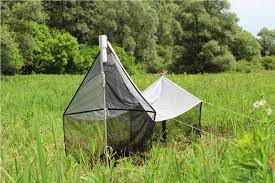
Figure 6. Malaise trap. Source: https://en.wikipedia.org/wiki/Malaise_trap
3.2 Study 2
The objective of this study was to carry out a survey of parasitoid Hymenoptera families in Caatinga fragments in the region from Jequié, Bahia. The second objective was to compare the faunal structure between the sampled areas and similar studies carried out in Brazil[19,20].
The insects were collected from 3 points of Caatinga in the Jequié region, Bahia. 2 of the sampled points are located in the Fazenda Velha Irrigation District, where agricultural and family farming projects are developed. The 3rd sampled point is located in an area peripheral to the seat of the city of Jequié. Sampling was performed using a flight intercept trap. A Malaise trap was used at each collection point[19,20].
In total, 17,046 specimens of parasitoid wasps belong to 30 families and 8 superfamilies (Chrysidoidea, Ceraphronoidea, Chalcidoidea, Cynipoidea, Evanioidea, Ichneumonoidea, Platygastroidea, Proctotrupoidea) were collected. The abundance data of the families obtained in this study in each location are presented sampled.
The most abundant families were Braconidae, Platygastridae and Bethylidae, which account for almost half of the total number of parasitoid wasps collected. Of the families that were collected, 20 (Chrysididae, Bethylidae, Sclerogibbidae, Dryinidae, Evaniidae, Gasteruptiidae, Ichneumonidae, Braconidae, Ceraphronidae, Megaspilidae, Figitidae, Monomachidae, Diapriidae, Platygastridae. Chalcididae, Eurytomidae, Torymidae, Pteromalidae, Perilampidae, Eupelmidae, Encyrtidae, Eulophidae, Aphelinidae, Trichogrammatidae, and Mymaridae) were common to all study sites[19,20].
Megaspilidae was abundant inside the fragment on the edge of the pasture, and Aulacidae, AE was abundant inside the fragment of the native forest (abbreviated as AE)1 (0.02%) and forest remnant in the urban perimeter of the area belonging to the State University of Southwest Bahia, Campus de Jequié, (abbreviated as UC) (UC 3) (0.03%) (Total=4/0.02%). Gasteruptiidae, Aphelinidae, Trichogrammatidae and Agaonidae occurred in AE[19,20].
3.3 Study 3
Aulacidae of the southwestern United States, Mexico, and Central America.
Numbers: 32 extant spp. in 2 genera in our area (1) (2), -170 described spp. in 3 genera worldwide and many undescribed spp. (3)[21].
A-Aulacus Jurine, 1807 (9 spp.)
B-Pristaulacus Kieffer, 1900 (23 pp. + 1 fossil sp.)[21].
I dentification: Although bearing some resemblance to Gasteruptiidae, our spp. is usually black with a reddish abdomen, longer antennae, and 2 recurring veins in the front wing. The genera are separated based on the following traits of wing venation (3). Aulacus: has a 2r-m vein and a longer 2-Rs+M vein. Pristaulacus: lacks a 2r-m vein and has a shortened 2-Rs+M vein[21].
Range: Most parts of the world, more diverse in the tropics.
Habitat: Adults are usually found around logs, where hosts occur.
Food: Endoparasitoids of the wood-boring larvae of beetles (of several families, but mostly longhorns) and Xiphydria wood wasps[21].
Remarks: It was often mistaken for ichneumonid as they often frequent dead standing trees, logs, woodpiles.
Note: The "neck" is located between the head and thorax and the high attachment point of the metasoma[21].
3.4 Study 4
3.4.1 Aulacidae (Hymenoptera: Evanioidea) in Russia[22,23]
Pristaulacus Kieffer 1900; Species: Pristaulacus compressus (Spinola, 1808), Clorophorus pilosus glabromaculatus Peyerimhoff, 1919 (Coleoptera: Cerambycidae), Xiphydria longicollis (Geoffroy, 1785) (Hymenoptera: Xiphydriidae) Sawfly and Pristaulacus obscuripennis (Westw, 1986) (Figure 7)[22,23].
|
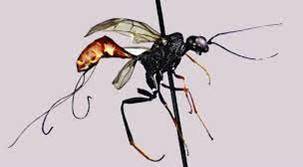
Figure 7. Pristaulacus compressus (Spinola, 1808). Source: https://www.researchgate.net/figure/Pristaulacus-compressus-Spinola-1808-female-Iran-lateral-habitus_fig4_322897227
Distribution: Palearctic northern Italy from the Peninsula Segnalata by Sardegna from Sicily.
Description: Length of 5-14 mm. Long antennae with 14 segments in both sexes. Endoparasitoids of xylophagous larvae longhorn beetles and borers (Cerambycidae, Buprestidae), as well as horntails (Xiphydriidae)[22,23].
Biology: Buprestidae are exclusively phytophagous beetles. They are found in galleries of rotted trunks before their pupation, alive or recently cut or burned. They can also make galleries in branches or produce galls. Due to such habits, some species are of certain economic importance when they dig their galleries in fruit plants or in industrially used wood[22,23].
Distribution: They are universally distributed. There are 2 genera in Europe (Aulacus and Pristaulacus), and 40 species in Australia.
Classification: About 220 species are described.
3.4.2 Aulacus Jurine, 1807, 75 species; Pristaulacus Kieffer, 1900, about 150 species and Panaulix Benoit, 1984
Host: Augyles hispidulus (Kiesenwetter, 1843) (Coleoptera: Heteroceridae)[22,23].
This family has a cosmopolitan distribution, with 3 genera (Aulacus, Pristaulacus and Panaulix) and about 160 described species. The genera Aulacus and Pristaulacus frequently occur in the Neotropical region, with about 40 known species. In Brazil, about 30 species are known to exist[22,23].
3.4.3 Aulacus Jurine, 1807: A total of 78 species in Russian: Aulacus flavigenis Alekseev, 1986
Distribution: Russia: Primorsky Krai, south Khabarovsk territory, European part. South Korea: Gangwon-do. China: Heilongjiang. Finding the species in the European part of Russia needs confirmation[22,23].
Biology: Listed as a parasite found in South Korea. Xiphydria palaeanarctica Semenov, 1921 (Xiphydriidae), adults are found in shrunken trunks of Salix sp. (Salicaceae) and Juglans mandshurica (Maximowicz) (Juglandaceae)[22,23].
3.4.4 Aulacus japonicas Konishi, 1990.
Distribution: Russia: Sakhalin
Biology: Unknown (Figure 8).
|

Figure 8. Specimens of Aulacus japonicus Konishi, 1990. Source: https://www.naro.affrc.go.jp/org/niaes/type/dbhymenoptera/hym-009_a_japonicus.html
3.4.5 Aulacus jeoffreyi Alekseev, 1993
Distribution: Russia: Sakhalin.
Biology: Unknown.
3.4.6 Aulacus larisae Sundukov et al. Lelej sp. nov.
Distribution: Russia: Kuril Islands, Kunashir and south of Primorsky Krai[22,23].
Biology: The holotype of A. larisae sp. n. is harvested in Kunashir on shrinking downy alder Alnus hirsuta (Spach) (Betulaceae) Turkish. Active golden alder colonized by Xiphydria camelus (Linnaeus, 1758) (Xiphydriidae) (Figure 9)[22,23].
|

Figure 9. Xiphydria camelus (Linnaeus, 1758) (Xiphydriidae). Source: http://insecta.pro/gallery/80674
3.4.7 Aulacus striatus Jurine, 1807
Distribution: Russia: Trans-Baikal territory, Irkutsk region, Southern Urals, Krasnodar territory, Dagestan, European part. China, Inner Mongolia, Western Kazakhstan (indicated for the first time), Belarus (indicated for the first time), Ukraine and Western Europe and North Africa (Figure 10)[22,23].
|

Figure 10. Aulacus striatus Jurine, 1807. Source: https://artsandculture.google.com/asset/aulacus-striatus-jurine-1807/7AFPCwFjWvjDHw
Biology: Various species of the genus Xiphydria Latreille, 1803 are indicated as hosts of A. striatus in Europe. (Xiphydriidae): Xiphydria camelus (Linnaeus, 1758), Xiphydria longicollis (Geoffroy, 1785), Xiphydria picta Konow, 1897, Xiphydria prolongate (Geoffroy, 1785) adult insects are found on dead or fallen trees Acer, Alnus, Betula, Fraxinus, Populus, Quercus, Salix and Ulmus. There are observations about visiting flowering umbrella plants (Apiaceae). The biology of A. striatus in the Irkutsk region and Transbaikalia has not yet been studied[22,23].
3.4.8 Aulacus uchidai Turrisi et Konishi, 2011
Distribution: Russia (nominated for the first time): Kuril Islands: Kunashir. Japan: Hokkaido.
Biology: A. uchidai females collected at about 2 points. Kunashir on freshly dried Mayr maple trunks Acer mayrii Schwer (Sapindaceae), which at the time were actively populated by Xiphydria ogasawarai Matsumura, 1927 (Xiphydriidae)[22,23].
3.4.9 Pristaulacus gibbator (Thunberg, 1822)
Distribution: Russia: Magadan and Amur regions, Trans-Baikal Territory, Buryatia, Krasnoyarsk region, Tuva, European part. Sweden, Germany, Austria and Poland[22,23].
Biology: It exists as a host of different species of P. gibbator. The authors indicate 1 species, Palaeocalli diumcoriaceum (Paykull, 1800) (Cerambycidae) developing in Picea (Figure 11)[22,23].
|
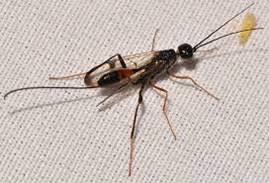
Figure 11. Adult Pristaulacus gibbator (Thunberg, 1822). Source: https://www.researchgate.net/figure/Wings-of-Aulacidae-Pristaulacus-gibbator_fig12_230725674
3.4.10 Pristaulacus intermedius Uchida, 1932
Distribution: Russia (mentioned for the first time): south Primorsky territory. South Korea: Chungcheong and Kang[22,23].
Biology: As a host of P. intermediaus in Japan, the longhorn beetle Chlorophorus japonicus (Chevrolat, 1863) (Cerambycidae) whose larvae develop on Aphananthe aspera (Thunb.) Planch in DC (Ulmaceae) (Figure 12)[22,23].
|
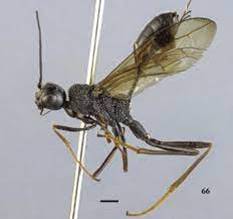
Figure 12. Adult: Pristaulacus intermedius Uchida, 1932, female; 74 Forewing and hind wing 75 metasoma lateral. Source:https://www.researchgate.net/figure/Figures-74-75-Pristaulacus-intermedius-Uchida-1932-female-74-Forewing-and-hind-wing_fig13_302695910. Side view.
In South Korea, the potential hosts of this species may be longhorn beetles Xylotrechus pyrrhoderus Bates, 1873, Amarysius altajensis (Laxmann, 1770), Cyrtoclytus capra (Germar, 1824), Clytus sp. and Olenecamptus sp. (Cerambycidae) and possibly Chrysobothris sp. (Buprestidae) developing in dried wood of deciduous species and larch Larix (larches) (Pinaceae). Observations have shown that some P. intermedius specimens in South Korea have a two-year development cycle[22,23].
3.5 Study 5
In this paper, the male morphology of Pristaulacus emarginaticeps Turner, 1922, is described for the first time and the species is newly recorded in Laos[24].
The Pristaulacus comptipennis Enderle in 1912 species group is characterized by deep occipital margination of the head (most obvious in dorsal view). This species group was first defined in the phylogenetic analyses and subsequently formally defined. It is endemic to Southeast Asia. 4 species, P. emarginaticeps, Pristaulacus excisus Turner, 1922, Pristaulacus lagrecai Turrisi and Smith 2011 and Pristaulacus vietnamensis Turrisi and Smith 2011 have so far been recorded in Vietnam[24].
Of these species, P. emarginaticeps was described from a single female and no additional specimens have been recorded. In samples collected from Vietnam and Laos, we found 1 female and 2 males of this species. In this paper, the male morphology of P. emarginaticeps is described for the first time and the species is newly recorded in Laos[24].
3.6 Study 6
The present study deals with new records of Aulacidae from Greece and Cyprus with a review of the distribution of the Aulacidae in these countries, and provides notes for their identification[25-27].
3.6.1 Pristaulacus barbeyi (Ferrière, 1933)
Distribution: Spain, Algeria, Morocco, Greece, Turkey and Iran.
Remarks: This species has recently been recorded in Greece. It is presently known only from the Greek mainland, in the north (Epirus and Thessaly) and central (Attica) regions. Very little is known on the biology of this species. The type specimens were obtained from wood of Abies numidica De Lannoy ex Carriére (Pinaceae) together with an unidentified Coleoptera Buprestidae, whereas the Turkish specimens were obtained together with its potential host, Phaenops knoteki Reitter, 1898 (Coleoptera: Buprestidae).The specimens recorded in Iran were also obtained from Abies sp. with unknown Buprestidae[25-27].
3.6.2 Pristaulacus chlapowskii Kieffer, 1902
Distribution: France, Czech Republic, Hungary, Bulgaria, Russia, Italy and Greece.
Remarks: This species is reported from Greece for the first time. It is presently known from only one locality in the Chalkidiki Peninsula and in Northern Greece [25-27].
3.6.3 Pristaulacus compressus (Spinola, 1808)
Distribution: Morocco, Spain, France, Austria, Germany, Switzerland, Italy, Czech Republic, Slovakia, Poland, Romania, Bulgaria, Hungary, former Yugoslavia, Russia (west part), Ukraine, Turkey, Iran, Iraq and Greece[25-27].
Remarks: This species is reported from Greece for the first time. It is presently known from only one locality of Macedonia in northern Greece. Several potential hosts are recorded in literature namely Coleoptera Cerambycidae: Xylotrechus arvicola (Olivier, 1795), Xylotrechus antilope (Schönherr, 1817), Chlorophorus glabromaculatus (Goeze, 1777), Xylotrechus pilosus (Förster, 1771), Chlorophorus sexguttatus (Lucas, 1849), Chlorophorusvarius (Müller, 1766), Exocentrus punctipennis Mulsant and Guillebeau, 1856 and one Hymenoptera, Xiphydriidae: Xiphydria longicollis (Geoffroy, 1785)[25-27].
3.6.4 Pristaulacus edoardoi Turrisi, 2007
Distribution: Thessaly (Central Greece) and Crete.
Remarks: The potential host is Pedostrangalia ariadne (Daniel, 1904) (Coleoptera, Cerambycidae)[25-27].
3.6.5 Pristaulacus galitae (Gribodo, 1879).
Distribution: Morocco, Algeria, Tunisia (including Galita island), Spain, Canary Islands (Tenerife), France, Germany, Austria, Czech Re-public, Slovakia, Bulgaria, Hungary, Romania, Russia, Ukraine, Italy (including Sardinia and Sicily), Croatia, Turkey, Greece (mainland, Crete Island and Rhodos Island), recently recorded in Poland and Iran, Cyprus[25-27].
Remarks: Recently recorded inmainland Greece, currently known for only the Peloponnese Peninsula, Crete Island and Rhodos Island. It has been recorded in Lesvos Island (Eastern Aegean islands) and Cyprus. In literature, there are many putative recorded hosts mostly belonging to Coleoptera Cerambycidae: Trichoferus fasciculatus (Faldermann, 1837), Niphona picticornis Mulsant, 1839; Purpuricenus kaehleri (Linnaeus, 1758) (Lichtenstein and Picard 1918); Pogonocherus perroudi Mulsant, 1839, Trichoferus berberidis Sama, 1994, Trichoferus cisti Sama, 1987, Trichoferus spartii (Müller, 1948), Pseudosphegesthes cinereus (Castelnau and Gory, 1836), Chlorophorus glabromaculatus (Goeze, 1777)[25-27].
There are 2 other putative recorded hosts namely Scobicia pustulata (Fabricius, 1801) (Coleoptera, Bostrychidae) and Denopsal bofasciatus (Charpentier, 1825) (Coleoptera, Cleridae) (Oehlke 1983)[25-27].
3.6.6 Pristaulacus gloriator (Fabricius, 1804)
Distribution: Czech Republic, Slovakia, Germany, Hungary, Austria, Romania, Russia, Italy, Albania, Greece, Turkey, Iran and recently recorded in Poland[25-27].
Remarks: Recently recorded inmainland Greece, from which it is presently known for only one mountainous locality of Epirus. It is one of the most common Pristaulacus species in central Europe, but it has a scattered distribution in the Mediterranean countries. Potential hosts include Coleoptera: Callidium violaceum (Linnaeus, 1758), Chlorophorus figratus (Scopoli, 1763), Paraclytus reitteri (Ganglbauer, 1881), (Cerambycidae) (Madl, 1990); Dicerca berolinensis (Herbst, 1779) and Chrysobothris igniventris Reitter, 1895 (Buprestidae)[25-27].
3.6.7 Pristaulacus mourguesi Maneval, 1935
Distribution: France, Croatia, Hungary and Greece. There is a generic record in the Near East without material source.
Remarks: This species has recently been recorded in mainland Greece, where it is presently known from northern territories. It has also been recorded in Ikaria Island (Eastern Aegean Islands and Greece). Its biology remains unknown[25-27].
3.7 Study 7
Host: Relations and Larval Biology:
Aulicidae are believed to be wood-boring endoparasitoids of Hymenoptera or Coleoptera. For Aulacus, host data indicates that they mainly parasitize xiphydriid wasps in the Northern Hemisphere and Cerambicidae in the Southern Hemisphere. There are 3 documented exceptions to this: Aulacus striatus Jurine, 1807 has been bred from Xylotrechus capricornis (Gebler, 1830) (Coleoptera: Cerambycidae) in Europe (Sedivy and Capek 1988), while there are doubtful records of A. Striatus from Purpuricenus kaehleri (Linnaeus, 1758) (Cerambycidae) and Aulacus aneurus Walkley, 1952, from Dendroctonus (Coleoptera: Scolytidae) in New Mexico[28-31].
Both Eastern and Nearctic genus Pristaulacus species parasitize beetle larvae (Buprestidae) and/or longhorn beetles (Cerambycidae). For instance, Pristaulacus editus (Cresson, 1880) and Pristaulacus californicus (Townes, 1950) parasitize buprestid and cerambycid larvae that are often found on pine cones. Cerambycids are the only wood-boring beetles recorded as hosts of Pristaulacus in the Australian region. For the Palearctic, in addition to cerambycids and buprestids, Pristaulacus was recorded as a parasite in false gunpowder beetles (Bostrichidae) and checkered beetles (Cleridae). Pristaulacus bimaculatus Kieffer, 1900, was created from the wood of Ceratonia siliqua L. (Fabaceae) (carob) infested with Scobicia pustulata (Fabricius, 1801) (Bostrichidae) and Denops albofasciatus (Charpentier, 1825) (Cleridae)[28-31].
When parasitizing Xiphydriidae, Aulacids are recorded only from the genus Xiphydria. This host family is a small group of wood boring sawflies that are found in most temperate and tropical forest regions, except in Africa. The larvae bore into dead or dying branches and small limbs of deciduous broad-leaved trees. Many tropical species are rarely encountered[28-31].
4 CONCLUSION
With regards to the biology of the Aulacidae family, their larvae live under the barks of dying or dead deciduous trees where they are predators or scavengers of the larvae of other insects. Adults, which are rarely captured, are found mainly in wooded areas, close to the larval habitat, mainly on trunks and leaves. This article increases our knowledge of the family Aulacidae from both the conceptual and taxonomic points of view.
Acknowledgements
I thank the Editor and his working group for publishing my article in the Journal of Modern Agriculture and Biotechnology.
Conflicts of Interest
The author declared no conflict of interest.
Author Contribution
Marchiori CH contributed to the manuscript and approved the final version.
References
[1] Gauld I, Bolton B. The Hymenoptera, 1st ed. Oxford University Press: Oxford, UK, 1988.
[2] Moghaddam MG, Turrisi GF. Taxonomic and faunistic study of Aulacidae (Hymenoptera, Evanioidea) from Iran, with illustrated key to species. Zoosyst Evol, 2018; 94: 95. DOI: 10.3897/zse.94.22501
[3] Rafael JA, Melo GA, Carvalho R et al. Insects from Brazil: Diversity and taxonomy, 1st ed. Holos Editora: Ribeirão Preto, BR, 2012.
[4] Hanson PE, Gould ID. Hymenoptera of the neotropical region, 77st ed. Memoirs of the American Entomological Institute: Bonn, DE, 2006.
[5] Rajmohana K, Sudheer K, Girish Kumar P et al. Perspectives on biosystematics and biodiversity, 1st ed. University of Calicut: Kerala, IN, 2004.
[6] Jennings JT, Austin AD. Higher-level phylogeny of the Aulacidae and Gasteruptiidae (Hymenoptera: Evanioidea). Hymenoptera: evolution, biodiversity and biological control, 1st ed. CSIRO Publishing: Collingwood, UA, 2000.
[7] Engel MS. New evanioid wasps from the Cenomanian of Myanmar (Hymenoptera: Othniodellithidae, Aulacidae), with a summary of family-group names among Evanioidea. Am Mus Novit, 2017; 3871: 1-28. DOI: 10.1206/3871.1
[8] Smith DR, Tripotin P, Shinohara A. The xiphydriid wood wasps (Hymenoptera: Xiphydriidae) of Korea. P Entomol Soc Wash, 2011; 13: 61-70. DOI: 10.4289/0013-8797.113.1.61
[9] Austin AD, Dowton M. The Hymenoptera: Evolution, biodiversity and biological control, 1st ed. CSIRO Publishing: Melbourne, UA, 2000.
[10] Ghahari H, Madl M. An annotated catalogue of Iranian Aulacidae, Evaniidae and Gasteruptiidae (Hymenoptera: Evaioidea). Zootaxa, 2017; 4338: 341-353. DOI: 10.11646/zootaxa.4338.2.8
[11] Turrisi GF. The parasitoid wasp family Aulacidae with a revised world checklist (Hymenoptera, Evanioidea). P Entomol Soc Wash, 2017; 119: 931-939. DOI: 10.4289/0013-8797.119.SpecialIssue.931
[12] Jouault C, Nel A, Perrichot V. New evanioid wasps (Hymenoptera: Praeaulacidae, Aulacidae) from Cenomanian Burmese amber. Cretac Res, 2020; 110: 104407. DOI: 10.1016/j.cretres.2020.104407
[13] Smith DR. World catalog of the family Aulacidae (Hymenoptera), 1st ed. Washington Associated Publishers: Washington, DS, 2001.
[14] Corentin J, Maréchal A, Fabien L et al. Including fossils in phylogeny: A glimpse into the evolution of the superfamily Evanioidea (Hymenoptera: Apocrita) under tip-dating and the fossilized birth-death process. Zool J Linn Soc-Lond, 2022; 194: 1396-1423. DOI: 10.1093/ZOOLINNEAN/ZLAB034
[15] Goulet H, Huber JT. Hymenoptera of the world: An identification guide to families, 1st ed. Research Branch Agriculture: Ottawa, CA, 1993.
[16] Atlas of living Australia. Aulacidae. Accessed July 27, 2022. Available at https://www.biodiversitylibrary.org/item/24831
[17] Marchiori CH. Diptera species ectoparasitic of mammals and parasitoid insect pests. Open Access Res J Life Sci, 2021; 1; 6-14. DOI: 10.53022/oarjls.2021.1.2.0118
[18] Amaral DP, Fonseca AR, Silva CG et al. Diversity of parasitoid families (Hymenoptera: Insecta) collected with Malaise traps in native forest in Luz, Minas Gerais State Brazil, 1st ed. Archives of the Biological Institute: São Paulo, BR, 2005.
[19] Dorfey CK, Köhler SA. Survey of families of parasitoid hymenopteran associated with tobacco (Nicotiana tabacum L.) cultivation in Santa Cruz do Sul and Lagoão, Rio Grande do Sul, Brazil, 3st ed. Archives of the Biological Institute, São Paulo, BR, 2011.
[20] Alves FP. Diversity of parasitoid hymenopterans (Insects: Hymenoptera) in Caatinga fragments, with emphasis on Braconidae family (Ichneumonoidea) Bahia, Brazil [master’s thesis]. Jequié, BR: Universidade Estadual do Sudoeste da Bahia; 2013.
[21] Smith DR. Aulacidae of the southwestern United States, Mexico, and Central America (Hymenoptera). Contrib Entomol, 2008; 58: 267-355. DOI: 10.21248/contrib.entomol.58.2.267-355
[22] van Noor S. Wasp Web: Hymenoptera of the Afrotropical region. Accessed July 27, 2022. Available at http://www.waspweb.org
[23] Alekseev VN. Wasps of Aulacidae (Hymenoptera, Evanioidea, Aulacidae) from Eastern Siberia and Far East of USSR, 1st ed. Soviet Union, in full Union of Soviet Socialist Republics: Vladivostok, RU, 1986.
[24] Kuroda K. Discovery of the male of a rare aulacid wasp, Pristaulacus emarginaticeps Turner, 1922 (Hymenoptera: Aulacidae) from Vietnam and Laos. Biodivers Data J, 2016; 6: e26198. DOI: 10.3897/BDJ.6.e26198
[25] Turrisi GF. Review of Aulacidae from Greece and Cyprus with new records. Entomol Hellenica, 2013; 22: 7-15. DOI: 10.12681/eh.11522
[26] Turrisi GF. Revision of the Palaearctic species of Pristaulacus Kieffer, 1900 (Hymenoptera: Aulacidae). Zootaxa, 2007; 1433: 1-76. DOI: 10.11646/zootaxa.1433.1.1
[27] Watson L, Dallwitz MJ. Insects of Britain and Ireland: The families of Hymenoptera, 14st ed. DELTA-Description Language for Taxonomy: Vancouver, CA, 2003.
[28] Jennings JT, Deans AR. Tree of life web project. Accessed July 07, 2022. Available at http://tolweb.org/Aulacidae/23534
[29] Turrisi GF. Pristaulacus barbeyi (Ferrière, 1933), new to Iberian Peninsula (Hymenoptera Aulacidae). Bull Itta Entomol Soc, 2013; 145: 99-102. DOI: 10.4081/BollettinoSEI.2013.99
[30] Smith DR. Neotropical Pristaulacus Kieffer (Hymenoptera: Aulacidae), Species with acute anterolateral mesonotal projections. T Am Entomol Soc, 2018; 144: 309-345. DOI: 10.3157/061.144.0203
[31] Smith DR, Turrisi GF. New species of Pristaulacus Kieffer (Hymenoptera: Aulacidae) from Southern India. P Entomol Soc Wash, 2020; 122: 462-470. DOI: 10.4289/0013-8797.122.2.462
Copyright © 2022 The Author(s). This open-access article is licensed under a Creative Commons Attribution 4.0 International License (https://creativecommons.org/licenses/by/4.0), which permits unrestricted use, sharing, adaptation, distribution, and reproduction in any medium, provided the original work is properly cited.



 Copyright ©
