
Exploring the Effects of Generative Artificial Intelligence on Learning Effectiveness Through Motivations
Chung-Lun Wei1*, Chiawei Chu1
1Faculty of Data Science, City University of Macau, Macau, China
*Correspondence to: Chung-Lun Wei, PhD, Assistant Professor, Faculty of Data Science, City University of Macau, Avenida Padre Tomás Pereira, Taipa, Macau, China; Email: chunglunwei@cityu.edu.mo
DOI: 10.53964/id.2026015
Abstract
Generative artificial intelligence (GenAI) is an important learning tool in academia and practice for the development of contemporary science and technology. However, few studies have investigated the effect of GenAI on perceived learning effectiveness (LE) through intrinsic psychological states and extrinsic technological features concerning motivation. This study developed and validated an integrated framework based on flow theory (Flow), acting as an intrinsic motivation with its antecedents, interactivity (INT), and challenges (CHA), and the technology acceptance model (TAM), acting as an extrinsic motivation. Data collected from 112 respondents in Macau were tested against the research model using the partial least squares approach. The results indicate that INT and CHA positively influence flow (Flow), which, in turn, promotes LE and attitudes (ATT) toward GenAI. Furthermore, perceived ease of use (PEU) plays a critical role in determining perceived usefulness, which affects subsequent ATT and, ultimately, LE, although PEU does not have a significant effect on ATT. The findings reveal that joint intrinsic and extrinsic motivation could significantly improve learners’ LE in a GenAI-using environment.
Keywords: generative artificial intelligence, flow theory, technology acceptance model, learning effectiveness
1 INTRODUCTION
The development and maturity of technologies such as artificial intelligence (AI) widely affect people's thinking and behavior and are revolutionizing various sectors[1,2]. The professional technology of AI enables this new type of information system to perceive, understand, and learn like humans and to assist people in completing work and decision-making[3-5]. Some high-tech giants, including OpenAI, Google, Microsoft, Meta, and Amazon, have invested considerable manpower and financial resources in actively developing and improving this technology to gain competitive advantages in the market[6]. In academic and educational practice, AI research has been applied to several topics including academic achievement, self-efficacy, learning attitudes, and numerous learning systems[7-10]. In contrast, a paradigm shift to a new form of technology-centered to human-centered AI research has recently been proposed for underlining AI-empowered educational evolution to promote learner agency, personalized learning, and learner-as-leader perspectives[11,12]. This learner-centered personalized human–AI interaction scenario will provide AI with a new role in education[13,14].
Generative artificial intelligence (GenAI), one of the current mainstream developments in AI such as ChatGPT, Claude, Gemini, and Ernie, can be defined as a technology with the following characteristics: uses deep learning (DL) models to generate human-like content (e.g., texts and images) when answering various complex and diverse questions[15,16]. Studies have shown that GenAI tools that influence both learning practices and student experiences have multiple potential applications such as generating new content, language translation, providing tutoring, and helping students with learning assessments and tests[15,17]. However, in an investigation of Australian university students, 60% indicated that they had no intention of using GenAI in their learning and 48% reported that they had not yet started using GenAI[18]. The low usage rates may originate from several uncertain perceptions, including students’ lack of clarity about the usefulness and ease of use of GenAI and the benefits of personal learning effectiveness[17]. In addition, this new technology is still in the early stages of innovative adoption and its relative advantages and complexities must be understood[17,19]. Accordingly, given the continued development and advancement of GenAI and its potential future applications, its rapid introduction into various fields to make it effective, particularly in personal learning experiences, has become an urgent and important issue[20,21].
Recent advances in GenAI have been driven not only by large language models but also by interdisciplinary AI technologies, including multimodal learning, neural-symbolic reasoning, AI-assisted mathematical derivation, and domain-specific foundation models[22-26]. These developments have substantially enhanced AI systems’ capabilities in reasoning, problem-solving, scientific knowledge generation, and educational support. As a result, GenAI has evolved from a conversational tool into an intelligent learning assistant capable of integrating text, images, mathematical expressions, and logical reasoning across diverse learning scenarios.
Although numerous applications of GenAI in various fields, such as medicine, tourism, and marketing, have garnered significant attention and discussion[27-29], few studies have explored the extrinsic motivations and intrinsic psychological states of employing this tool to promote effective learning. Given the nature of GenAI tools, which can provide suggestions, solutions, and opinions on problems through dialogue, perceiving the factors that can enhance users' use of this auxiliary tool to acquire knowledge and skills in numerous fields will achieve the goals of personalized learning and success[17]. As a cutting-edge technology, GenAI shapes a new form of learning environment, encouraging scholars to examine its impact on learning outcomes. The technology acceptance model (TAM)[30] is regarded as one of the most widely applied theoretical models in the field of information systems because of its widespread popularity and parsimonious features, and it can explore and advise the acceptance of an extensive range of new technologies[31,32]. It is particularly advantageous to explain the adoption of any new technology flexibly with a robust theoretical and psychometric base and powerful explanatory ability[33]. It has been suggested as a crucial research framework across various domains for the use of novel technology[32-35]. In addition, because GenAI can provide learners with diverse information, knowledge, and experiences with audio, videos, text, and images in response to problems from different backgrounds and in various fields in an innovative, customized, comprehensive, and timely manner[21,27,36,37], it has surpassed the goals and results of traditional learning in the past, demonstrating the extraordinary value of this new learning tool[38]. Flow theory[39] is a central hedonic theoretical model that explains user behavior toward technologies, including virtual learning, online games, and mobile social networks[40-42]. Flow is a mental status that illustrates a feeling of enjoyment and psychological immersion when involved in an activity with a total focus and is often accompanied by positive emotions or a sense of pleasure[43,44]. Motivation arises when a person's learning goals or rewards are meaningful or when learning contributes to valuable achievements[45,46]. Flow plays a key role in realizing learning goals or achievements, demonstrating a direct correlation between motivational concepts and flow[40]. With the emergence of GenAI, an opportunity exists for research on flow in the context of AI-based learning, which has encouraged researchers to investigate its impact on perceived learning effectiveness.
Traditional "technology-centric" AI architecture typically confines learners to passive data consumption by enforcing predetermined learning trajectories[11,47]. Consequently, existing literature predominantly leverages the TAM to examine extrinsic motivations, emphasizing perceived usefulness (PU) and instrumental value. Conversely, GenAI catalyzes a paradigm shift toward a "learner-centric" approach. This emerging model fosters active inquiry, interactive dialogue, and personalized exploration, thereby repositioning the learner as an autonomous agent in the knowledge-acquisition process[47,48]. Within this proactive exploration paradigm, learners evaluate technologies not merely through the lens of perceived ease of use (PEU, an extrinsic motivator), but also by how effectively interactive dialogues stimulate their intrinsic motivation, specifically through the cultivation of curiosity, a sense of autonomy, and psychological immersion[48]. Consequently, absent a robust focus on these intrinsic factors, learners are highly susceptible to disengagement triggered by boredom or a lack of pedagogical scaffolding[49]. Accordingly, in the GenAI era, integrating both intrinsic and extrinsic motivational frameworks become imperative for a comprehensive understanding of learner-centered AI education.
Accordingly, the specific purposes of this study are to address the following issues: (1) Is the TAM applicable for understanding the impact of GenAI on learning effectiveness? and (2) Can the nature and elements of flow theory and its antecedents affect attitudes toward GenAI and subsequent learning effectiveness? The continuous development and improvement of contemporary information systems and technologies, such as GenAI, have become adaptive learning tools for learners. This also leads to individuals becoming more motivated and engaged in the learning process, thereby promoting their achievements[50]. Although GenAI tools have been associated with the functions and results of learning in several studies, the underlying reasons for using GenAI, particularly motivational impacts and psychological or emotional responses, are poorly explored and under-researched. By drawing on the well-known TAM and flow theory and delving into their variables, stakeholders, such as educators, technology developers, and policymakers, can gain a nuanced understanding of how learners perceive and interact with GenAI advancements. Through an empirical investigation, this study seeks to contribute to this burgeoning domain by connecting our findings to the existing body of literature and providing valuable insights into the ongoing conversation about the future of the GenAI learning landscape and a fast-changing technological environment.
2 LITERATURE REVIEW AND RESEARCH FRAMEWORK
2.1 GenAI in the Learning Context
Since GenAI emerged in late 2022, it has garnered widespread attention and interest in academia and practice and has been applied and discussed in diverse fields[21,51,52]. As a beneficial learning tool, a wide range of perspectives have been presented regarding the effectiveness of GenAI in the education system and workplace environment[5,17,21]. By leveraging DL technologies to generate responses and content based on a vast collection of data, GenAI can be adopted for various potential learning applications, such as question answering, manuscript generation, and comprehensive summarization[53]. In this context, GenAI can offer a more adaptive and personalized learning experience to help learners facilitate creative thinking through a learning journey that is different from traditional human-to-human interactions[54]. This supplemental learning tool allows learners to reduce their fear of failure and provides a comfortable learning environment conducive to exploring new knowledge or ideas[55,56], leading them to become more engaged and motivated[57,58]. Accordingly, several studies have indicated that through the characteristics of GenAI, a contemporary learning assistant that is personal, closely interactive, and responsive to needs, learners can effectively change the learning process, thereby enhancing their learning achievements[9,59-61].
Recent interdisciplinary studies have shown that multimodal foundation models enable learners to process text, images, and diagrams simultaneously[22,23,26], whereas neural-symbolic reasoning improves logical inference and explainability[24]. Furthermore, AI-assisted mathematical derivation has demonstrated promising applications in Science, Technology, Engineering, and Mathematics education by supporting symbolic manipulation, theorem verification, and stepwise problem solving[25,26]. These technological advances provide the underlying foundation for contemporary GenAI-based learning environments.
In the business sector, scholars have reported that the hospitality and tourism industry can customize its products and services to help customers search for products, make decisions, and optimize customer experience, contributing to customer acquisition and retention[62-64]. In this process, customers can interact with the GenAI tool to learn more about bookings, event-based reservations, and surrounding scenic spots and environments and obtain personalized recommendations and images, videos, and tours of suggested places on their itinerary[6]. In addition, GenAI can be suitable for employees in the workplace to provide them with learning and development resources at the appropriate time and place, such as online curricula and tutorials, and subsequently provide personalized suggestions for future career prospects based on employees’ skills and competences[65].
Although GenAI has these powerful advantages and impressive learning results in multiple fields and functions, the reasons that motivate people to use such emerging learning tools have yet to be clarified and examined. Motivation is key to learning and significantly affects learning outcomes[20,66-69]. Several studies have indicated that for newly developed technologies or systems, such as GenAI, the motivation to use such tools will be strengthened in situations that are conducive to the completion of tasks and can be easily used[33,70-73]. In addition, in response to individual needs and problems, GenAI can generate customized conversation content and suggestions, forming personally exclusive interactive experiences that will lead people to focus more on the conversation[74-76]. This process meets learners' expectations and addresses their problems, making it interesting and engaging[77-79]. This intrinsic psychological state of stimulation, responsiveness, and complete involvement has been recognized as an important element in learning achievements[80,81]. Learning effectiveness is an important indicator of learning achievements and learning outcomes[82], which differs from the traditional assessment method based on scores in classrooms or task achievement indicators in business and focuses on the learner's personal perception[83,84]. This new type of evaluation method has attracted the attention of many scholars and has become the research target of many studies, including management education, educational travel, and interactive video games[82,85,86]. In the interactive GenAI learning environment, evaluating learning effectiveness not only helps us understand the impact of new learning tools on learners, but also improves the performance of personal learning in the new technological era[87,88].
2.2 Technology Acceptance Model
The TAM, which has been considered a far-reaching model that elucidates individuals’ acceptance and usage of information technologies, was developed by Davis[30,89]. It originates from the theory of reasoned action, which interprets every type of human behavior and the importance of individual beliefs in predicting human action[90,91]. The objective of the TAM is to provide a description of the determinants of computer acceptance that are general, capable of clarifying user behavior across a broad range of end-user groups, and both theoretically validated and parsimonious[30]. Two critical factors are of primary relevance to computer acceptance behaviors: PU and PEU[92]. The former refers to the user's subjective probability that using a specific application system will enhance their work performance, whereas the latter is the degree to which the prospective user expects that using a particular system will be free of effort. Meanwhile, these two particular beliefs are jointly linked to attitudes toward using the system and are coupled with PU to influence users’ behavioral intentions and subsequent actual system use[30].
Because the TAM has been acknowledged as one of the most influential models of users’ technology adoption, it has been extensively employed to clarify individuals’ acceptance and usage of information technologies in various fields, including e-commerce, social network applications, mobile banking, health informatics, manufacturing and production, and automated vehicles[32,33,93-96]. In the context of learning, it has also been regarded as a critical theoretical research framework for investigating the beneficial effects of TAM-related antecedents and interactions with TAM elements[35,72,97-99], demonstrating its robustness and usefulness. Although perceived self-efficacy was similar to PEU and was discarded after the exploratory analysis, the study reaffirmed the importance of applying the TAM with the relevance of its components to measure acceptance in e-learning systems. In addition, using the TAM as a base, several studies have examined and offered significant evidence for integrating an emerging short-video-supported technology application[99-101], such as TikTok, into the online learning environment, indicating the essential role of pedagogical strategies that leverage the distinct characteristics of social media tools (i.e., PU and PEU) for the creation and diffusion of short video content to promote students’ quality learning and engagement. These studies have also shown the dominance of incorporating the TAM as an extrinsic perspective in influencing user acceptance and usage behavior of new information technologies[73,102].
Although TAM has demonstrated substantial explanatory value across technology-adoption contexts, empirical findings regarding the relationships among PEU, PU, attitude, and experiential states are not uniformly consistent. In particular, the strength and significance of TAM relationships may vary according to the characteristics of the technology, the users, and the usage context. For example, PEU may have a weaker direct association with attitude when users are already familiar with a technology or when the technology has become sufficiently intuitive, whereas PU may remain more salient in shaping users’ evaluations. Such contextual variation suggests that TAM relationships should not necessarily be assumed to operate identically across different technological environments.
This issue may be particularly relevant to GenAI-enabled learning. Compared with conventional information systems, GenAI tools allow users to interact through natural-language dialogue, iteratively refine questions, and obtain personalized responses. Consequently, users’ evaluations may be shaped not only by utilitarian beliefs concerning usefulness and ease of use but also by their experiential engagement with the technology. Individual differences may further condition these relationships. For example, learners with greater prior experience with AI may perceive GenAI as easier to use and may require less cognitive effort to interact with the system, whereas learners with limited experience may place greater emphasis on usability and guidance. Similarly, domain-specific knowledge and individual cognitive characteristics may influence how learners interpret GenAI responses and evaluate the usefulness of the technology.
Accordingly, the relationships proposed by TAM may be context-dependent rather than universally stable. Recognizing these potential boundary conditions provides a more nuanced basis for examining TAM in a GenAI-enabled learning environment and motivates the present study to empirically investigate the relationships among PEU, PU, attitude, and learning effectiveness.
Within a GenAI learning environment, learners can talk to the platform in a simple manner, similar to dialogue, and obtain solutions or appropriate suggestions through repeated and in-depth explorations of the core of the problem. In this process, learners need little computer-related professional skills or knowledge and can benefit from detailed guidance, as if they have a personal instructor. Perceiving the friendliness of the interface and the value it creates, therefore, users may tend to develop a favorable attitude and positive sentiment toward using this interactive learning tool in their learning journey[30,35,103]. Hence, this study offers the following hypotheses in the learning context:
H1: PEU positively affects the PU of using the GenAI tool.
H2: PEU positively affects the attitude (ATT) toward using the GenAI tool.
H3: PU positively affects the ATT toward using the GenAI tool.
Learning effectiveness is regarded as an overall set of learners’ learning outcomes and is associated with their final learning achievements[82,86]. Scholars proposed a method to comprehend learning effectiveness using multiple items of variables: knowledge acquisition, critical thinking, satisfaction during and after learning, and the emotional perceptions of an individual towards a group[104]. Studies have also indicated that learning satisfaction is a learner's attitude toward learning activities and that had a significantly high correlation between learners’ attitudes (satisfaction) and learning effectiveness[105,106]. Accordingly, this study proposes the following hypothesis toward employing GenAI:
H4: ATT toward using the GenAI tool positively affects learning effectiveness (LE).
2.3 Flow Theory
Flow experience refers to the general feeling that people are fully engaged in a particular action[39,107], which results in a positive psychological condition that is intrinsically rewarding and entertaining; meanwhile, people feel cognitively motivated and happy[108,109]. Flow entails a sense of gratification, thrill, and engrossment while participating in an entire activity[107]. When people are in a state of flow, their self-consciousness is weakened, and their perception of external stimuli is limited[110,111]. Within a computer-mediated context, scholars have demonstrated the applicability and predictive validity of flow theory for explaining people's behavior in current digital interactions[81,112,113]. Flow theory has been identified as a crucial theoretical base for numerous online behaviors, such as website shopping, social interaction, online gaming, and digital tourism[42,111,114,115]. Therefore, when using GenAI tools for learning, the experience perspective of flow will help to better understand how learners interact with this new type of platform to produce a sense of concentration and pleasant immersion, and ultimately achieve effective learning results.
When the learning content is meaningful to the learner, self-reward and motivation will arise[45]. Because anything that generates flow is accompanied by rewards, the relationship between intrinsic motivation and flow is closely linked[40,107]. After empirical validation, Shin[116] indicated that compared with students in the low-flow group, students in the high-flow group were more satisfied with online learning, showing that the flow experience will promote students' learning accomplishments. Similarly, Cooper[81], using flow theory to examine military training, found that engagement factors in flow were the most significant contributors to increased learning and performance on an immersive platform. In a game-learning context, during the role-playing or simulation process in the game, the learner achieves the goals of the game and overcomes the prescribed challenges, thereby enjoying a series of new emotional experiences (i.e., flow) that involve concentration, self-control, and interaction with the game, resulting in feelings of pleasure and a sense of accomplishment[39,40,117-119]. This immersive game scene simultaneously promotes learners’ own learning pace and the achievement of plans, thus helping them complete their learning goals.
Although the flow experience is an important theoretical basis in several research situations, no consistent consensus exists on its characteristics or definitions in the academic community. However, researchers have developed various flow dimensions to demonstrate its definition or user experience when engaging in diverse studies. Csikszentmihalyi[39] proposed nine measurements of flow: immediate feedback, clear goals, matching personal skills and challenges, sense of control, concentration, loss of self-consciousness, merger of action and awareness, altered sense of time, and autotelic experience. In a new technology using context, Moon and Kim[120] argued that flow comprises concentration, curiosity, and perceived enjoyment, whereas Huang[121] proposed the four dimensions of attention, curiosity, control, and intrinsic interest within the flow for website design. Within the GenAI learning context, learners can proactively ask questions according to their own needs, control the entire learning process and procedures, focus on the responses and clues provided by the platform, experience the fun of real-time communication with the computer system, and simultaneously stimulate deeper curiosity to explore possible solutions based on the characteristics of the latest contemporary AI technology[118,122,123]. Therefore, following previous findings[121,122], the present study categorized flow experience into four dimensions—perceived control, enjoyment, concentration, and curiosity—to examine the interrelationships in the context of GenAI-enabled learning.
The relationship between TAM-related beliefs and flow experience may also be more complex than a simple separation between extrinsic and intrinsic motivations. Perceptions of usefulness and ease of use may create favorable conditions for sustained interaction with a technology, thereby facilitating concentration and enjoyment. Conversely, a positive flow experience may strengthen users’ evaluations of the technology by making the interaction more enjoyable and personally rewarding. Thus, TAM-related beliefs and flow may reinforce each other rather than operate as completely independent motivational mechanisms. However, the strength and direction of these relationships may depend on user and contextual characteristics, including prior experience with AI, cognitive characteristics, and domain-specific knowledge.
For example, experienced AI users may require less effort to interact with GenAI and may therefore enter a flow state more readily, whereas less experienced users may experience greater cognitive demands during interaction. Similarly, learners with stronger domain knowledge may be better able to formulate questions, evaluate generated responses, and sustain task engagement, potentially strengthening the relationship between technology perceptions and flow. These possibilities suggest that the TAM–flow relationship may be contingent rather than universal. Nevertheless, because the present study focuses on establishing an integrated baseline model rather than testing moderation effects, these potential boundary conditions are recognized as important directions for future research.
Based on the flow theory, flow occurs when an action creates a challenge within one's capabilities and is sufficient to generate exploratory behavior that leads to enjoyment[39,107]. The balance between the skills and challenges required by the tasks encountered during the activities is important for generating flow. If the level of challenge is excessively high (which leads to feelings of frustration) or excessively low (which causes boredom) compared with that of skill, it will not produce an optimal user experience that is interesting and enjoyable[39,116]. In addition, studies have shown that the challenge in people's behavior is a critical determinant of flow[116,124,125]. Learners can understand using the GenAI platform as challenging as exploring the features of a new mobile application. The procedure of finding the needed knowledge, using compound question and answer methods, and exploring personalized multidomain information can be challenging. Accordingly, this study proposes the following hypothesis:
H5: The challenge (CHA) of using the GenAI tool positively affects the flow (Flow) that learners experience during learning.
Interactivity is understood as the degree to which users can modify the configuration and content of the mediated environment when necessary[126]. In a learning environment employing GenAI as a tool, learners can quickly explore the essence of the problem using various methods, such as text and pictures, from different perspectives through multiple rounds based on GenAI's immediate response to the problem, thereby acquiring broader and in-depth knowledge and skills. During this process, GenAI, which is perceived as interactive, tends to offer advanced perceived control and freedom, and is expected to be more enjoyable and captivating[127]. The immediate and higher controllability and accurate responses of interactive dialogues help learners stay focused on their current problems and tasks[128]. Therefore, learners would derive considerable benefits from a robust perception of interactivity when utilizing the GenAI tool, which subsequently increases their flow experience when interacting with such a system[111]. Hence, this study hypothesizes the following:
H6: The interactivity (INT) of using the GenAI tool positively affects the Flow that learners experience during learning.
Norman[129] indicated that affect can create a level of emotional feedback that has an important impact on user cognition and is associated with attitudes, expectations, and motivations. These emotional responses may induce subsequent changes in people's attitudes, intentions, and behaviors[42,110,130]. A flow experience is a state of positive emotions (e.g., pleasure and happiness) that usually occurs when people are fully engaged in an activity; therefore, it is plausible to develop favorable attitudes toward this activity. Studies have shown that the flow generated using new technologies or skills influences users and facilitates the formation of a better attitude toward these new products or services, resulting in continued adoption and utilization[40,110,128,131,132]. Although the theoretical reasoning in this study assumes that flow experience contributes to the formation of favorable attitudes toward GenAI, the relationship between flow and attitude may not necessarily be unidirectional. A pre-existing favorable attitude toward GenAI may also predispose learners to engage more actively with the technology, interpret their interactions more positively, and consequently experience greater flow. Thus, a reciprocal relationship between flow and attitude is theoretically possible. However, the present study adopts a cross-sectional research design, in which flow and attitude were measured at the same point in time. Therefore, the temporal precedence between these constructs cannot be empirically established, and reciprocal causality cannot be ruled out. Following flow theory and prior research on technology-mediated experiences, this study specifies flow as an antecedent of attitude to reflect the proposed theoretical direction. Nevertheless, this directional assumption should be interpreted cautiously, and future longitudinal or experimental research is encouraged to examine whether the relationship between flow and attitude is reciprocal and how the two constructs dynamically influence each other over time. Accordingly, the following hypothesis is proposed:
H7: The Flow that learners experience positively affects their ATT toward using the GenAI tool.
Learning effectiveness includes learning achievements, satisfactory learning process and results, and the emotional atmosphere of the learning environment[104]. In the learning setting of GenAI, learners continuously interact with this system to obtain answers or suggestions for questions, instantly deepen their understanding of domain knowledge, and immerse themselves in an enjoyable sense of accomplishment. Immersion perception of physical or mental involvement can be a crucial predictor of learning gains in simulation-based learning, augmented reality applications for environmental science learning, and educational travel[82,133,134]. Therefore, it can be expected that the more focused learners are on the GenAI system for responses and subsequent thinking, the happier and more satisfied they will feel in learning activities throughout the entire process, and the learning will be effective. Accordingly, this study proposes the following hypothesis:
H8: The Flow that learners experience positively affects their LE.
In summary, this study proposes that the TAM, which serves as an extrinsic motivation, and the flow experience, which serves as an intrinsic motivation, impact a learner’s learning effectiveness when using GenAI as a learning tool. It also verifies the effects of interactivity and challenges on the flow theory, as shown in Figure 1.
|
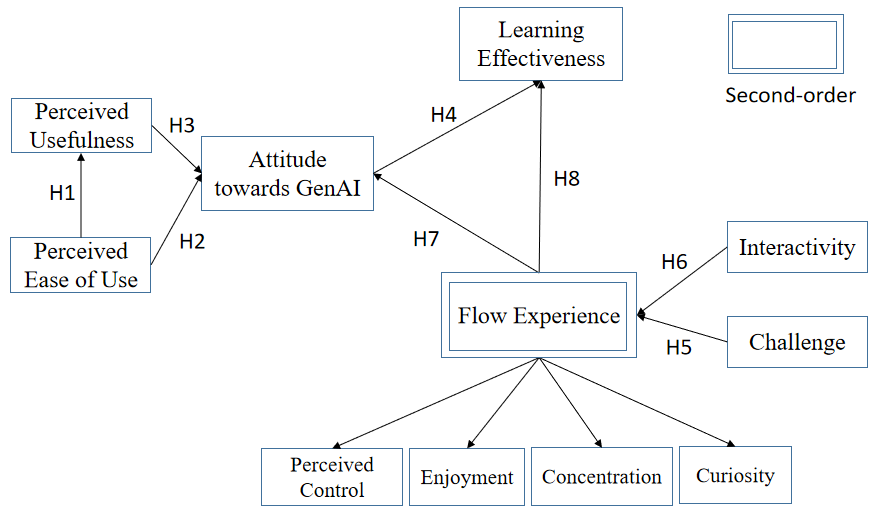
Figure 1. Research Model.
3 RESEARCH METHODOLOGY
3.1 Measures and Questionnaire
Measurement items were adopted from the literature and employed to survey the seven constructs in the research model depicted in Figure 1. The scale items were modified to suit GenAI using the context and environment in Macau, China. The flow experience was conceptualized as a second-order reflective construct composed by the first-order dimensions of perceived control, enjoyment, concentration, and curiosity using items mainly taken from Huang[121], Koufaris[125], and Agarwal and Karahanna[135]. The items used to measure perceived usefulness and ease of use were adapted from Akbari et al.[136] and Huang et al.[110], whereas those used to measure attitudes were based on Moon and Kim[120]. In addition, the interactivity dimension was adopted from Pallud[137] and Liang et al.[130] and comprised three items. A three-item scale proposed by Guo et al.[124] and Shin[116] was used to measure the challenge constructs. Finally, the scales used to measure learning effectiveness were adopted from Li and Liang[82], Liaw[106], and Wei et al.[86]. The scale items are presented in Table S1.
The initial questionnaire was constructed in English, derived from relevant literature and the conceptual framework of this study. It was subsequently translated into Chinese to align with the local research context. To establish translation equivalence, an independent language expert performed a back-translation into English. The original and back-translated versions were then systematically compared and reconciled to ensure conceptual consistency and rectify potential discrepancies, thereby validating the Chinese instrument. The questionnaire was pretested with five academicians and five practitioners who used GenAI to ensure its face validity. The final version was established after the wording was refined based on their comments and feedback. All items were rated on seven-point Likert scales anchored at 1 (“strongly disagree”=1) to 7 (“strongly agree”=7).
3.2 Sample and Data Collection
This study conducted an online survey to collect questionnaire responses and the questionnaire and hyperlink were created through a well-known questionnaire collection platform (www.wjx.cn) in China. The link was posted on Chinese social media platforms, such as WeChat and Weibo. We introduced the purpose of the survey, the time and number of questions required to complete the questionnaire, and assured participants of the anonymity and confidentiality of their responses. We also stressed that the research results are only for academic purposes and will not be disclosed to any third party. Practical workers or students who have used GenAI as a personal learning tool and are interested in this research are encouraged to participate. In response, a total of 130 filled questionnaire were received and after removing the missing values, a total of 112 valid samples were used for further analysis. Table 1 summarizes the respondents’ demographic information.
Table 1. Sample Demographic Information (N=112)
Measure |
Item |
Frequency |
Percentage |
Gender |
Female Male |
49 63 |
43.8 56.2 |
Age |
18–25 26–30 31–40 41–50 >50 |
74 17 13 2 6 |
66.1 15.2 11.6 1.8 5.3 |
Educational level |
High school Diploma Bachelor Master PhD |
3 4 62 25 18 |
2.7 3.6 55.4 22.3 16.0 |
Industry |
Student Information and communication Military, civil servants, teachers Freelance Services (Banking, tourism) Electronics Manufacturing Others |
78 11 6 4 3 2 2 6 |
69.7 9.8 5.3 3.6 2.7 1.8 1.8 5.3 |
Most commonly used GenAI |
ChatGPT ERNIE (Baidu) Kimi (Moonshot AI) Tongyi Qianwen (Aliyun) Poe (Quora) Others |
72 19 6 3 3 9 |
64.3 17.0 5.3 2.7 2.7 8.0 |
3.3 Common Method Bias
Because the survey data are obtained from responses to a single online questionnaire, the variable relationships proposed in the study may be affected by common method bias[138]. This study analyzed the variance inflation factor (VIF) values to perform a multicollinearity test. The results demonstrated that the maximum VIF value was 2.706, indicating that all VIFs in all constructs were less than the threshold value of 3. In addition, the Harman’s single-factor test was employed to execute exploratory factor analysis and the most prominent factor explained 47.9% of the total variance, which is less than 50%. Therefore, the above tests revealed that common method bias was not a serious problem in this study.
4 RESULTS
The proposed research model among a series of constructs was designed to explore causal relationships and elucidate the effects of the proposed dimensions on the learning effectiveness. The partial least squares structural equation modeling (PLS-SEM) procedure is well suited for exploratory causal prediction than covariance-based structural equation modeling[139,140]. Furthermore, PLS requires fewer restrictions on data distribution and sample size and can estimate complex models with several constructs and indicator variables[141,142]. Accordingly, this study used SmartPLS (v.4) software[143] to examine the proposed research model. Furthermore, according to Hair et al.[144], bootstrapping was used to determine the path coefficients’ significance using 5,000 resamples.
4.1 Measurement Model
Indicator loadings, internal consistency reliability, convergent validity, and discriminant validity were examined using the measurement model[142]. The item loadings, reliabilities, and convergent validities of the measurement models are listed in Table 2. Except for one item measuring challenge dimension that did not meet the minimum loading criteria and was dropped, the remaining items’ loadings in their corresponding dimensions were significant and exceeded the minimum acceptable level of 0.7[145]. Composite reliability (CR) and average variance extracted (AVE) are evaluated for each construct. The CR should not be less than the critical value of 0.7 and the AVE should surpass 0.5. All the CRs and AVEs in this study were above the acceptable levels, showing reliable internal consistency and satisfactory convergent validity[145].
Table 2. Item Loadings, CRs, and AVEs
Construct |
Item |
Loading |
Cronbach's Alpha |
CR |
AVE |
Flow-perceived control (PC) |
pc1 |
0.885 |
0.854 |
0.857 |
0.774 |
pc2 |
0.878 |
||||
pc3 |
0.876 |
||||
Flow-enjoyment (ENJ) |
enj1 |
0.938 |
0.929 |
0.932 |
0.875 |
enj2 |
0.914 |
||||
enj3 |
0.954 |
||||
Flow-concentration (CON) |
con1 |
0.889 |
0.911 |
0.915 |
0.849 |
con2 |
0.947 |
||||
con3 |
0.927 |
||||
Flow-curiosity (CUR) |
cur1 |
0.947 |
0.902 |
0.911 |
0.837 |
cur2 |
0.929 |
||||
cur3 |
0.867 |
||||
Perceived usefulness (PU) |
pu1 |
0.922 |
0.933 |
0.936 |
0.883 |
pu2 |
0.961 |
||||
pu3 |
0.936 |
||||
Perceived ease of use (PEU) |
peu1 |
0.931 |
0.921 |
0.928 |
0.863 |
peu2 |
0.932 |
||||
peu3 |
0.925 |
||||
Attitude (ATT) |
att1 |
0.908 |
0.886 |
0.888 |
0.815 |
att2 |
0.895 |
||||
att3 |
0.905 |
||||
Interactivity (INT) |
int1 |
0.718 |
0.727 |
0.758 |
0.645 |
int2 |
0.825 |
||||
int3 |
0.859 |
||||
Challenge (CHA) |
cha1 |
0.941 |
0.854 |
0.861 |
0.873 |
cha2 |
0.927 |
||||
Learning effectiveness (LE) |
le1 |
0.942 |
0.873 |
0.893 |
0.798 |
le2 |
0.839 |
||||
le3 |
0.896 |
Notes: All item loading values are significant (P<0.001).
Two widely recognized tests, the Fornell–Larcker criterion and the heterotrait-monotrait (HTMT) ratio, were employed to assess discriminant validity[142]. The former test requires that a construct’s square root of AVE be greater than its correlation with other constructs[146]. The latter, HTMT ratio, should be less than 0.85 to discriminate between the two constructs[147]. The results of these two tests are summarized in Tables 3 and 4 and indicate good discriminant validity.
Table 3. Correlations and the Square Root of the AVEs
|
ATT |
CHA |
CON |
CUR |
ENJ |
INT |
LE |
PC |
PEU |
PU |
ATT |
0.903 |
|
|
|
|
|
|
|
|
|
CHA |
0.544 |
0.934 |
|
|
|
|
|
|
|
|
CON |
0.463 |
0.393 |
0.922 |
|
|
|
|
|
|
|
CUR |
0.597 |
0.655 |
0.576 |
0.915 |
|
|
|
|
|
|
ENJ |
0.643 |
0.521 |
0.639 |
0.695 |
0.936 |
|
|
|
|
|
INT |
0.443 |
0.292 |
0.597 |
0.511 |
0.554 |
0.803 |
|
|
|
|
LE |
0.632 |
0.519 |
0.501 |
0.573 |
0.675 |
0.502 |
0.893 |
|
|
|
PC |
0.628 |
0.591 |
0.423 |
0.567 |
0.572 |
0.476 |
0.516 |
0.880 |
|
|
PEU |
0.521 |
0.531 |
0.532 |
0.430 |
0.566 |
0.459 |
0.465 |
0.674 |
0.929 |
|
PU |
0.722 |
0.533 |
0.538 |
0.573 |
0.639 |
0.413 |
0.621 |
0.645 |
0.514 |
0.939 |
Notes: Diagonal values (in bold) show the square roots of AVE for each construct. Off-diagonal elements show the factor correlation coefficients.
Table 4. HTMT Analysis
|
ATT |
CHA |
CON |
CUR |
ENJ |
INT |
LE |
PC |
PEU |
CHA |
0.622 |
|
|
|
|
|
|
|
|
CON |
0.514 |
0.441 |
|
|
|
|
|
|
|
CUR |
0.666 |
0.751 |
0.627 |
|
|
|
|
|
|
ENJ |
0.707 |
0.580 |
0.695 |
0.751 |
|
|
|
|
|
INT |
0.531 |
0.348 |
0.717 |
0.614 |
0.662 |
|
|
|
|
LE |
0.709 |
0.587 |
0.555 |
0.640 |
0.743 |
0.603 |
|
|
|
PC |
0.716 |
0.696 |
0.476 |
0.646 |
0.637 |
0.592 |
0.579 |
|
|
PEU |
0.572 |
0.601 |
0.577 |
0.469 |
0.609 |
0.530 |
0.509 |
0.764 |
|
PU |
0.793 |
0.596 |
0.584 |
0.623 |
0.685 |
0.500 |
0.671 |
0.717 |
0.552 |
4.2 Structural Model
Bootstrapping is employed to test the research hypotheses and validate the structural models. The results of the structural model are shown in Figure 2. Except for H2 (the path from PEU to attitude), all other paths were significant, indicating that these hypotheses were supported. In addition, the proposed research model explained 59.4% of the variance in user attitude, 65% in flow experience, and 51.7% of the variance in learning effectiveness. According to Hair et al.[142], the R2 values of 0.75, 0.50, and 0.25 in the PLS model can be considered substantial, moderate, and weak, respectively. In this study, the main R2 values of the structural model were moderate, indicating a good explanatory power for the dependent variables. The predictive accuracy of the PLS path model was examined by calculating Q2 values[148,149]. All Q2 values were larger than zero, implying the predictive relevance of the path model[142].
|
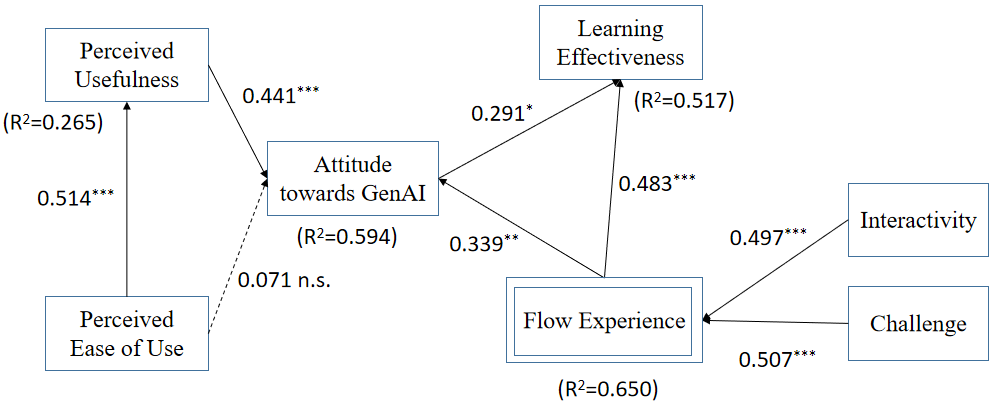
Figure 2. Structural Model. *P<0.05; **P<0.01; ***P<0.001; n.s.: not significant.
4.3 Total and Indirect Effects
To provide a more comprehensive assessment of the proposed model, we additionally examined the indirect and total effects using the bootstrapping procedure. The results reveal several important indirect relationships among the constructs (Table 5). First, flow showed an indirect effect on learning effectiveness through attitude (β=0.099, t=1.638, P=0.101), indicating that this specific indirect pathway was not statistically significant. In contrast, perceived usefulness demonstrated a significant indirect effect on learning effectiveness through attitude (β=0.128, t=2.160, P=0.031). The indirect effect of PEU through attitude was not significant (β=0.021, t=0.593, P=0.553). Furthermore, the sequential indirect effect of PEU through perceived usefulness and attitude on learning effectiveness was not statistically significant at the 5% level (β=0.066, t=1.858, P=0.063).
Table 5. Analysis of Direct, Indirect, and Total Effects
Path |
Direct Effect |
Indirect Effect |
Total Effect |
INT → Flow |
0.497*** |
— |
0.497*** |
CHA → Flow |
0.507*** |
— |
0.507*** |
Flow → ATT |
0.339** |
— |
0.339** |
ATT → LE |
0.291* |
— |
0.291* |
Flow → LE |
0.483*** |
0.099 (ns) (ATT) |
0.582*** |
PEU → PU |
0.514*** |
— |
0.514*** |
PEU → ATT |
0.071(ns) |
0.227* (PU) |
0.298* |
PU → ATT |
0.441*** |
— |
0.441*** |
INT → LE |
— |
0.240*** (Flow) + 0.049(ns) (Flow - ATT) |
0.289*** |
CHA → LE |
— |
0.245*** (Flow)+ 0.050(ns) (Flow - ATT) |
0.295*** |
PU → LE |
— |
0.128* (ATT) |
0.128* |
PEU → LE |
— |
0.066(ns) (PU - ATT) + 0.021(ns) (ATT) |
0.087(ns) |
Notes: Direct effects represent the path coefficients. Indirect effects represent the total indirect effects across all relevant mediation paths. Total effects represent the sum of direct and indirect effects. Significance levels are reported based on the bootstrapping results.
The results also demonstrate significant indirect effects of interactivity and challenge on learning effectiveness through flow. Specifically, the indirect effect of interactivity through flow was significant (β=0.240, t=4.107, P<0.001), as was the indirect effect of challenge through flow (β=0.245, t=3.735, P<0.001). However, the sequential indirect effects through flow and attitude were not statistically significant for either interactivity (β=0.049, t=1.516, P=0.129) or challenge (β=0.050, t=1.610, P=0.107). The total-effects analysis further indicates significant overall effects of flow on attitude (β=0.339, t=2.704, P=0.007) and learning effectiveness (β=0.582, t=7.212, P<0.001). Attitude also demonstrated a significant total effect on learning effectiveness (β=0.291, t=2.353, P=0.019). In addition, interactivity and challenge showed significant total effects on learning effectiveness, with coefficients of 0.289 (t=5.332, P<0.001) and 0.295 (t=5.193, P<0.001), respectively. Taken together, these findings provide a more comprehensive view of the proposed model by distinguishing the direct, indirect, and overall effects among the constructs. In particular, the significant indirect effects of interactivity and challenge through flow highlight the potential mediating role of flow in linking learners’ interaction experiences with learning effectiveness.
4.4 Comparison of Alternative Theoretical Models
To examine the incremental explanatory value of the proposed dual-motivation framework, we conducted post hoc comparisons between the integrated TAM–Flow model and two theoretically simpler alternative models: a TAM-only model and a Flow-only model (Table 6). The comparison focused primarily on the explained variance (R2 and adjusted R2) and predictive relevance (Q2) of learning effectiveness. The TAM-only model explained 39.9% of the variance in learning effectiveness, with a Q2 value of 0.168. The Flow-only model explained 47.4% of the variance in learning effectiveness, with a Q2 value of 0.377. Thus, the Flow-only model demonstrated greater explanatory and predictive performance for learning effectiveness than the TAM-only model. The integrated TAM–Flow model explained 51.7% of the variance in learning effectiveness, with a Q2 value of 0.382. Compared with the TAM-only model, the integrated model increased the explained variance in learning effectiveness by 11.8 percentage points. Compared with the Flow-only model, the integrated model increased the explained variance by 4.3 percentage points. These results indicate that incorporating both TAM and Flow Theory provides additional explanatory value beyond either theoretical perspective considered independently. However, the increase in Q2 from the Flow-only model to the integrated model was relatively small (0.377 to 0.382), suggesting that the primary contribution of the integrated framework is reflected in its additional explanatory power rather than a substantial improvement in predictive relevance over the Flow-only model.
Table 6. Comparison of Alternative Theoretical Models
Model |
LE R² |
Adjusted R² |
Q² |
ΔR² vs. TAM-only |
ΔR² vs. Flow-only |
TAM-only |
0.399 |
0.393 |
0.168 |
— |
— |
Flow-only |
0.474 |
0.469 |
0.377 |
0.075 |
— |
Integrated TAM–Flow |
0.517 |
0.508 |
0.382 |
0.118 |
0.043 |
Notes: ΔR² represents the increase in explained variance in learning effectiveness relative to the corresponding simpler model. The integrated model combines the TAM and Flow Theory perspectives specified in the proposed research framework.
5 DISCUSSION
5.1 Interpretation of the Results
In this study, flow experience, as an intrinsic motivation, as well as its antecedents, interactivity and challenge, coupled with TAM, as an extrinsic motivation, were employed to explore the impact of the GenAI tool on learning effectiveness in diverse learning environments. The results indicate that the flow experience of a learner and their attitude toward GenAI positively influence learning effectiveness, suggesting that both are strong predictors of learning effectiveness. This also shows that when an individual is better able to control the order, content, and responses to conversations with GenAI, becomes more absorbed and intensely focused on entire mental thinking processes, arouses curiosity and explores the texts, pictures, and knowledge provided by GenAI, and feels more joy and fun in this dialogue activity, they will learn more efficiently and gain more learning. The intrinsic psychological immersion and pleasure evidenced in this study also make the individuals more willing to use GenAI tools for learning. In addition, the interaction between learners and GenAI and the challenges they encounter when using this tool have been proven to have a significant effect on flow. This illustrates that the ability of GenAI to provide comprehensive, explicit, and relevant responses in a timely and personalized manner and with moderate challenges, such as in discussion topics or technical aspects, will help users feel engaged and enjoy their learning activities, which aligns with prior literature in the context of technology-mediated use and learning experience[42,111,130,136,137].
The significant positive relationship between flow and attitude toward GenAI supports the proposed theoretical direction that a positive and immersive flow experience can foster more favorable evaluations of the technology. However, this relationship should not necessarily be interpreted as strictly unidirectional. Learners who already hold favorable attitudes toward GenAI may be more willing to engage with the technology, explore its functions, and interpret their interactions positively, which may in turn facilitate the experience of flow. Because the present study uses cross-sectional data, it cannot establish temporal precedence or determine whether flow precedes attitude, attitude precedes flow, or the two mutually reinforce each other. Accordingly, the findings should be interpreted as evidence supporting the hypothesized directional association rather than definitive evidence of causal ordering. Future longitudinal or experimental studies could clarify the temporal dynamics and potential reciprocal relationship between flow and attitude in GenAI-enabled learning.
Furthermore, this study also validated that users’ PEU positively and significantly affects the perceived usefulness of GenAI, which consequently influences their attitudes toward GenAI. This three-way relationship is consistent with previous research on the application of TAM in the current technological development context[72,73,150]. In the environment of using GenAI as a learning tool, simply using text, pictures, or videos through dialogues to obtain answers to questions and suggestions from the GenAI platform can indeed promote learning performance and benefits, thereby strengthening favorable attitude toward this tool. However, this study did not find any direct effect of PEU on attitude. Although this result contradicts those of prior studies[30,35,73], it does not necessarily indicate that the ease of use of GenAI tools is not important for attitude. The development trend of new technologies has become increasingly easy to use, intuitive, and widely accepted by young people[151,152]. As most of the participants were young and highly educated in this study, the effect of PEU on attitude was less significant. In addition, a learning tool that is difficult to use and takes time to master is difficult for most novices to accept, particularly in markets with hundreds of similar products.
The additional indirect-effect analysis provides further insight into the mechanisms underlying learning effectiveness in the GenAI-enabled learning environment. In particular, the significant indirect effects of interactivity and challenge on learning effectiveness through flow suggest that learners’ interaction experiences can contribute to learning effectiveness by facilitating a stronger flow experience. The indirect effect of interactivity through flow was 0.240 (P<0.001), while the corresponding indirect effect of challenge through flow was 0.245 (P<0.001). These findings highlight the role of flow as an important experiential mechanism through which the characteristics of the learning interaction may be associated with learning effectiveness.
However, the results also indicate that the mediating role of attitude is more limited than might be inferred from the direct relationships alone. Although flow had a significant total effect on attitude and learning effectiveness, the specific indirect effect of flow on learning effectiveness through attitude was not statistically significant (β=0.099, P=0.101). Similarly, the sequential indirect effects of interactivity and challenge through flow and attitude were not statistically significant. These findings suggest that a significant relationship between a predictor and an outcome does not necessarily imply that the effect is transmitted through every theoretically proposed mediator.
In contrast, perceived usefulness demonstrated a significant indirect effect on learning effectiveness through attitude (β=0.128, P=0.031), indicating that learners’ usefulness perceptions may influence learning effectiveness partly through their attitudes toward GenAI. Overall, the indirect-effect analysis therefore provides a more differentiated understanding of the proposed model than an examination of direct effects alone.
The comparison of alternative theoretical models provides additional insight into the explanatory contribution of the proposed dual-motivation framework. The TAM-only model explained 39.9% of the variance in learning effectiveness, whereas the Flow-only model explained 47.4%. The integrated TAM–Flow model increased the explained variance to 51.7%. Thus, incorporating both theoretical perspectives increased the explained variance by 11.8 percentage points relative to the TAM-only model and by 4.3 percentage points relative to the Flow-only model.
These findings suggest that TAM and Flow Theory provide complementary, although not equivalent, explanatory perspectives on learning effectiveness in the context of GenAI-supported learning. TAM captures learners' cognitive evaluations of the technology, particularly perceptions of usefulness and ease of use, whereas Flow Theory captures the experiential and motivational aspects of learners' engagement with the technology. The higher R2 of the Flow-only model compared with the TAM-only model also suggests that experiential and motivational factors play an important role in explaining learning effectiveness in the present research context.
It is noteworthy, however, that the improvement in Q2 from the Flow-only model (0.377) to the integrated model (0.382) was relatively small. This suggests that the principal contribution of the integrated framework lies in its additional explanatory coverage rather than a substantial improvement in out-of-sample predictive relevance over the Flow-only specification. Accordingly, the findings should be interpreted as evidence that TAM adds incremental explanatory value to a Flow-based framework, rather than as evidence that combining the two theories necessarily produces substantially greater predictive performance.
Another consideration concerns the measurement of learning effectiveness. In this study, learning effectiveness was assessed based on participants' self-reported perceptions rather than objective indicators of learning performance. Although self-reported learning effectiveness has been widely used in educational and information systems research[82,86,106], perceived learning effectiveness may not necessarily correspond to actual learning gains or objectively measured performance. Participants may perceive that they have learned effectively without demonstrating a corresponding improvement in knowledge, skills, or task performance. This issue also raises the possibility of social desirability bias and inflated self-assessments. In particular, learners who are enthusiastic about emerging GenAI technologies may hold favorable perceptions of their learning experiences and may consequently evaluate their learning effectiveness more positively. Such perceptions may reflect learners' subjective evaluations of the technology and their learning experience rather than objective improvements in learning outcomes. Therefore, the findings of this study should be interpreted as explaining perceived learning effectiveness rather than objectively verified learning performance.
5.2 Implications for Research
Previous studies have used the TAM and flow theory to elucidate people's behaviors and intentions in various research scenarios[103,111,114,130,153]. However, they have rarely been used collectively as a motivation background to validate the effects of emerging technologies such as GenAI on the learning process. The integration of TAM and flow fills a significant gap and offers a more comprehensive psychological perspective of the dynamics in the learning experience as well as identifies the most influential motivation attribute in the context of GenAI use. It also contributes to a more nuanced interpretation of the intricate relationship between motivation and learning achievement in the AI-driven generation domain[154,155]. In motivation research, previous studies have mainly explored tool utilization or changes in user behavior from a single element of the theory (such as enjoyment or usefulness)[156,157], and limited emphasis has been placed on discussing the theoretical levels of these components (such as flow or the TAM). Therefore, the pioneering efforts of this study provide a new research direction, dividing psychological and behavior-related theoretical models into intrinsic, extrinsic, and mixed motivation forms to explain their impact and degree comparison on learning effectiveness and results. It could be designed to investigate the influences of these motivations in various contexts. Additionally, this study provides new insights into the precursors of the flow experience, particularly in the area of AI-enabled learning accomplishments. This crucial clarification not only expands the knowledge of the existing literature on the flow state in AI-enabled learning contexts but also improves the theoretical base created by antecedent research.
Moreover, the development of AI is rapid, and the functions of GenAI continue to evolve[36]. This unprecedented tool, which can attract learners to focus, control the learning process according to their personal needs, and bring fun and curiosity, is full of imagination, particularly in the field of fast and efficient learning. This study may serve as a starting point for organizations to explore and solve problems using this tool and strengthen their market competitiveness in various fields, such as marketing, manufacturing, and management[28,63,65], in addition to enhancing individual learning outcomes.
5.3 Implications for Practice
From the findings of this study, several practical implications can be suggested for GenAI system developers, marketers, and practitioners to improve the benefits of this tool. First, the significant impact of interactivity provides clues for focusing more on aspects related to the quality of the dialogue and communication processes used between GenAI and learners. In addition to strengthening the mechanism of GenAI in natural language technology to respond to learners’ questions and inquiries quickly, understandably, and smoothly, the GenAI system should inform users about the collection of personal information and preferences for personalized solutions[114]. This relies on the policy that security procedures promoting personal privacy and data protection should be emphasized to ensure low risk of leakage or misuse of this important information for users. This GenAI feature, which combines three types of interactions — learner–content interaction (GenAI provides knowledge), learner–instructor interaction (GenAI acts as an expert), and learner–learner interaction (GenAI learns questions and user preferences)[158] — highlights the direction for the development of new learning tools in the future. Second, the results confirmed the crucial role of challenges in shaping learner flow experience with GenAI. Notably, the positive challenges, such as discovering information and using special GenAI features, not negative ones, such as difficult navigation and slow connected time, should be emphasized[125]. Therefore, GenAI developers can provide illustrative information or methods for the topics discussed or the required skills to stimulate learners' curiosity, explore solutions to problems, and enjoy learning results. Additionally, contemporary GenAI interface designs leverage multimodal inputs — such as facial recognition and behavioral interaction patterns — to detect users' affective states. When the system identifies an overly simplistic response, indicating potential boredom, it adaptively introduces reflective prompting to elevate the cognitive challenge. Conversely, if a learner experiences a cognitive impasse (signaling frustration), the system provides timely pedagogical hints. This dynamic calibration effectively maintains an optimal equilibrium between task challenge and learner skill level. Third, this study demonstrates the importance of flow as an intrinsic motivational factor in learners’ learning effectiveness using GenAI. Accordingly, system analysis practitioners must consider these issues in user interface design. In addition, the considerable effect of flow experience on learning effectiveness also provides insights for practitioners and decision makers in industries, such as hospitality and tourism. Currently, trip planning systems are widely used by several tourism companies to prepare customers for their journeys[6,63,64]. The introduction of such a planning system with a higher flow experience will not only assist customers in planning a complete package of customized itineraries based on their personal needs and preferences, which can be adjusted during the journey in real time to learn more about history, culture, and attraction features, but will also enable the travel company to generate additional revenue through cross-marketing, upselling, and cross-industry cooperation and attract potential customers. Finally, this study reiterates the critical importance of the usefulness and ease of use of learning tools. Although the effect of ease of use on attitude was not significant in this empirical investigation, its dominant effect on usefulness and subsequent attitude cannot be ignored. These highlight that, the TAM served as an extrinsic motivation and the development of new technologies continues to improve and innovate. Meanwhile, the usefulness and ease of use of tools should still be essential considerations for developers when designing functions and features for the new tool and for companies when implementing a new system.
5.4 Limitations and Future Research
This study has several limitations that suggest avenues for future research. First, this study was conducted using the cross-sectional view of learners’ achievements. Additional studies with longitudinal investigations would offer a fuller picture of how learning outcomes and the connections among determinants vary over time. Second, two influencers (interactivity and challenge) are considered in predicting the flow, and no antecedent or extension of the TAM[159] is explored in this study. Other important factors, such as personal innovativeness, perceived usage cost, and ethical concerns[160-162], were not incorporated into the proposed model. Future research could extend the framework by examining how these individual and contextual variables influence flow experience, technology acceptance, and learning effectiveness in GenAI-supported learning environments. Third, this study centered on the learning effectiveness perspective and did not consider other learning behaviors (e.g., loyalty and referral), thus narrowing the impact of the entire learning process. Future studies should explore diverse learning outcomes that may indicate different correlations among the dimensions. Finally, this study was conducted in Macau using a relatively homogeneous sample. Moreover, students accounted for 69.7% of the respondents, which may limit the generalizability of the findings to other demographic groups and occupational populations. Future studies should collect data from multiple regions (e.g., different cities or countries) and include participants from diverse industries, such as manufacturing, tourism, and finance, to improve the external validity and broader applicability of the proposed model. Additionally, subgroup analyses can be conducted to examine heterogeneity across different categories. For example, a comparative study could focus on the types of generative AI used (e.g., text generation vs. multimodal large models), as the interactivity and challenges of different media can significantly affect learners' flow experience. Furthermore, varying usage frequencies or experience levels may distinctively influence learners' intrinsic and extrinsic motivation.
6 CONCLUSION
Motivation is an important driver of the learning processes and outcomes. This study provides a comprehensive investigation of the factors influencing learning effectiveness in the context of a GenAI-using learning environment by integrating flow theory (serving as an intrinsic motivation) with its antecedents, and the TAM (serving as an extrinsic motivation) into the research model. Flow was defined as a second-order, multidimensional, and reflective construct comprising four dimensions: perceived control, enjoyment, concentration, and curiosity. The findings underscore that interactivity and challenges are critical factors in fostering flow experiences, highlighting their role in enhancing learners’ learning effectiveness. Flow has also been confirmed as an important indicator of learning effectiveness. Furthermore, PEU significantly contributed to perceived usefulness and influence attitudes toward GenAI and, ultimately, learning effectiveness, suggesting the association of the TAM within the GenAI-learning setting. These findings offer valuable insights for developers, marketers, and practitioners, suggesting that enhancing the features of using technological tools and considering the inner psychological states of learners can be strategic avenues for increasing their learning effectiveness. This study contributes a novel perspective by combining intrinsic and extrinsic motivations to provide a more holistic understanding of learning effectiveness.
Acknowledgements
Not applicable.
Ethical Statement
Not applicable.
Conflicts of Interest
The authors declare that they have no conflict of interest.
Data Availability
The data analyzed in this study is available at https://doi.org/10.6084/m9.figshare.28822121.
Copyright Permissions
Copyright © 2026 The Author(s). Published by Innovation Forever Publishing Group Limited. This open-access article is licensed under a Creative Commons Attribution 4.0 International License (https://creativecommons.org/licenses/by/4.0), which permits unrestricted use, sharing, adaptation, distribution, and reproduction in any medium, provided the original work is properly cited.
Author Contribution
Wei CL contributed to the conceptualization, experimental design, data collection, data analysis, and drafting. Chu C was responsible for data collection, drafting, methodology, and resources. All authors have read and approved the final version of the manuscript.
Abbreviation List
AI, Artificial intelligence
ATT, Attitude
AVE, Average variance extracted
CHA, Challenge
CR, Composite reliability
DL, Deep learning
GenAI, Generative artificial intelligence
HTMT, Heterotrait-Monotrait ratio
INT, Interactivity
LE, Learning effectiveness
PEU, Perceived ease of use
PLS-SEM, Partial least squares structural equation modeling
PU, Perceived usefulness
TAM, Technology acceptance model
VIF, Variance inflation factor
References
[1] Chen D, Liu W, Liu X. What drives college students to use AI for L2 learning? Modeling the roles of self-efficacy, anxiety, and attitude based on an extended technology acceptance model. Acta Psychol, 2024; 249: 104442.[DOI]
[2] Chen X, Xie H, Hwang G-J. A multi-perspective study on artificial intelligence in education: Grants, conferences, journals, software tools, institutions, and researchers. Comput Educ Artif Intell, 2020; 1: 100005.[DOI]
[3] Arias-Pérez J, Vélez-Jaramillo J. Understanding knowledge hiding under technological turbulence caused by artificial intelligence and robotics. J Knowl Manag, 2022; 26: 1476-1491.[DOI]
[4] Loureiro SMC, Guerreiro J, Tussyadiah I. Artificial intelligence in business: state of the art and future research agenda. J Bus Res, 2021; 129: 911-926.[DOI]
[5] Zhou Q, Chen K, Cheng S. Bringing employee learning to AI stress research: A moderated mediation model. Technol Forecast Soc Chang, 2024; 209: 123773.[DOI]
[6] Dwivedi YK, Pandey N, Currie W et al. Leveraging ChatGPT and other generative artificial intelligence (AI)-based applications in the hospitality and tourism industry: practices, challenges and research agenda. Int J Contemp Hosp Manag, 2024; 36: 1-12.[DOI]
[7] Hong ZW, Huang YM, Hsu M et al. Authoring robot-assisted instructional materials for improving learning performance and motivation in EFL classrooms. Educ Technol Soc, 2016; 19: 337-349.
[8] Kim J, Lee SS. Are two heads better than one? The effect of student-AI collaboration on students' learning task performance. TechTrends, 2022; 67: 365-375.[DOI]
[9] Xu T, Wang H. The effectiveness of artificial intelligence on English language learning achievement. System, 2024; 125: 103428.[DOI]
[10] Wu R, Yu Z. Do AI chatbots improve students learning outcomes? Evidence from a meta-analysis. Br J Educ Technol, 2023; 1-24.[DOI]
[11] Ouyang F, Jiao P. Artificial intelligence in education: The three paradigms. Comput Educ Artif Intell, 2021; 2: 100020.[DOI]
[12] Wang F, Cheung ACK, Chai CS. Language learning development in human-AI interaction: A thematic review of the research landscape. System, 2024; 125: 103424.[DOI]
[13] Hwang G-J, Xie H, Wah BW et al. Vision, challenges, roles and research issues of artificial intelligence in education. Comput Educ Artif Intell, 2020; 1: 100001.[DOI]
[14] Sundar SS. Rise of machine agency: A framework for studying the psychology of human-AI interaction (HAII). J Comput-Mediat Commun, 2020; 25: 74-88.[DOI]
[15] Kizilcec RF, Huber E, Papanastasiou EC et al. Perceived impact of generative AI on assessments: Comparing educator and student perspectives in Australia, Cyprus, and the United States. Comput Educ Artif Intell, 2024; 7: 100269.[DOI]
[16] Lim WM, Gunasekara A, Pallant JL et al. Generative AI and the future of education: Ragnarok or reformation? A paradoxical perspective from management educators. Int J Manag Educ, 2023; 21: 100790.[DOI]
[17] Gruenhagen JH, Sinclair PM, Carroll J-A et al. The rapid rise of generative AI and its implications for academic integrity: Students' perceptions and use of chatbots for assistance with assessments. Comput Educ Artif Intell, 2024; 7: 100273.[DOI]
[18] Ziebell N, Skeat J. How is generative AI being used by university students and academics? Melbourne Graduate School of Education: University of Melbourne, Australia, 2023.Available at:[Web]
[19] Rogers EM. Diffusion of innovations, 5th ed. Free Press: New York, 2003.
[20] Huang AYQ, Lu OHT, Yang SJH. Effects of artificial Intelligence-Enabled personalized recommendations on learners' learning engagement, motivation, and outcomes in a flipped classroom. Comput Educ, 2023; 194: 104684.[DOI]
[21] Yilmaz R, Karaoglan Yilmaz FG. The effect of generative artificial intelligence (AI)-based tool use on students' computational thinking skills, programming self-efficacy and motivation. Comput Educ Artif Intell, 2023; 4: 100147.[DOI]
[22] Firouzi F, Ray A, Farahani B et al. Generative IoT: advancing IoT with generative AI and large language models. Digit Commun Netw, 2026; 12: 869-893.[DOI]
[23] Marquez-Carpintero L, Lopez-Sellers A, Cazorla M. Simulating students with large language models: A review of architecture, mechanisms, and role modeling in education with generative AI. Comput Sci Rev, 2026; 62: 101008.[DOI]
[24] Bigane YA, Ben-Bouazza F-E, Edder A. A Neuro-Symbolic Clinical Agent for cardiovascular risk stratification: Integrating stacking ensembles with simulation-augmented reasoning. Inform Med Unlocked, 2026; 63: 101760.[DOI]
[25] Forootani A, Aliabadi DE, Thrän D. A survey on mathematical reasoning and optimization with large language models. Intell Syst Appl, 2026; 31: 200712.[DOI]
[26] Giri S, Vishnoi V. A Unified Generative AI Framework for Adaptive and Multimodal STEM Education. Procedia Comput Sci, 2026; 282: 3127-3136.[DOI]
[27] Chavez MR, Butler TS, Rekawek P et al. Chat generative pre-trained transformer: why we should embrace this technology. Am J Obstet Gynecol, 2023; 228: 706-711.[DOI]
[28] Paul J, Ueno A, Dennis C. ChatGPT and consumers: benefits, pitfalls and future research agenda. Int J Consum Stud, 2023; 47: 1213-1225.[DOI]
[29] Tlili A, Shehata B, Adarkwah MA et al. What if the devil is my guardian angel: ChatGPT as a case study of using chatbots in education? Smart Learn Env, 2023; 10: 15.[DOI]
[30] Davis FD, Bagozzi RP, Warshaw PR. User acceptance of computer technology: A comparison of two theoretical models. Manage Sci, 1989; 35: 982-1003.[DOI]
[31] Lee Y, Kozar KA, Larsen KRT. The technology acceptance model: past, present and future. Commun Assoc Inf Syst, 2003; 12: 752-780.[DOI]
[32] Tao D, Wang T, Wang T et al. A systematic review and meta-analysis of user acceptance of consumer-oriented health information technologies. Comput Hum Behav, 2020; 104: 106147.[DOI]
[33] Chatterjee S, Rana NP, Dwivedi YK et al. Understanding AI adoption in manufacturing and production firms using an integrated TAM-TOE model. Technol Forecast Soc Chang, 2021; 170: 120880.[DOI]
[34] Kamal SA, Shafiq M, Kakria P. Investigating acceptance of telemedicine services through an extended technology acceptance model (TAM). Technol Soc, 2020; 60: 101212.[DOI]
[35] Saif N, Khan SU, Shaheen I et al. Chat-GPT; validating Technology Acceptance Model (TAM) in education sector via ubiquitous learning mechanism. Comput Hum Behav, 2024; 154: 108097.[DOI]
[36] Baabdullah AM. Generative conversational AI agent for managerial practices: The role of IQ dimensions, novelty seeking and ethical concerns. Technol Forecast Soc Chang, 2024; 198: 122951.[DOI]
[37] Kanitz R, Gonzalez K, Briker R et al. Augmenting organizational change and strategy activities: leveraging generative artificial intelligence. J Appl Bahav Sci, 2023; 59: 345-363.[DOI]
[38] Collie RJ, Martin AJ. Teachers' motivation and engagement to harness generative AI for teaching and learning: The role of contextual, occupational, and background factors. Comput Educ Artif Intell, 2024; 6: 100224.[DOI]
[39] Csikszentmihalyi M. Flow: The psychology of optimal experience. Harper & Row: New York, 1990.
[40] Faiola A, Newlon C, Pfaff M et al. Correlating the effects of flow and telepresence in virtual worlds: Enhancing our understanding of user behavior in game-based learning. Comput Hum Behav, 2013; 29: 1113-1121.[DOI]
[41] Kim MJ, Lee C-K, Bonn M. Obtaining a better understanding about travel-related purchase intentions among senior users of mobile social network sites. Int J Inf Manage, 2017; 37: 484-496.[DOI]
[42] Roh T, Xiao S, Park BI. What makes metaverse users immersed in the flow state in an emerging market? An application of affordance theory and ISSM. J Retail Consum Serv, 2024; 81: 104012.[DOI]
[43] Csikszentmihalyi M. Finding flow: The psychology of engagement with everyday life. HarperCollins: New York, 1997.
[44] Csikszentmihalyi M, Csikszentmihalyi IS. Optimal Experience: Psychological Studies of Flow in Consciousness. Cambridge University Press: Cambridge, MA, 1992.
[45] Brandt R. Punished by rewards? A conversation with Alfie Kohn. Educ Leadership, 1995; 53: 13-16.
[46] Chance P. The rewards of learning. Phi Delta Kappan, 1992; 73: 200-207.
[47] Kong S-C, Yang Y. A Human-Centered Learning and Teaching Framework Using Generative Artificial Intelligence for Self-Regulated Learning Development Through Domain Knowledge Learning in K-12 Settings. IEEE Trans Learn Technol, 2024; 17: 1562-1573.[DOI]
[48] Albasry H, Carmona-Cejudo E, Rauf A et al. A systematically derived AI-based framework for student-centered learning in higher education. Soc Sci Humanit Open, 2025; 12: 102085.[DOI]
[49] Malik S, Naz L, Ghafoor D et al. Artificial Intelligence in Education: Bridging Technology and Pedagogy for Student-Centered Outcomes. Crit Rev Soc Sci Stud, 2025; 3: 2394-2405.[DOI]
[50] Wang FH. An exploration of online behavior engagement and achievement in flipped classroom supported by learning management system. Comput Educ, 2017; 114: 79-91.[DOI]
[51] Dwivedi YK, Hughes L, Ismagilova E et al. Artificial Intelligence (AI): multidisciplinary perspectives on emerging challenges, opportunities, and agenda for research, practice and policy. Int J Inf Manage, 2021; 57: 101994.[DOI]
[52] Kasneci E, Seßler K, Küchemann S et al. ChatGPT for good? On opportunities and challenges of large language models for education. Learn Individ Differ, 2023; 103: 102274.[DOI]
[53] Radford A, Wu J, Child R et al. Language models are unsupervised multitask learners. OpenAI blog, 2019; 1: 9.
[54] Gray R. Meaningful interaction: Toward a new theoretical approach to online instruction. Technol Pedagag Educ, 2019; 28: 473-484.[DOI]
[55] Følstad A, Araujo T, Law EL-C et al. Future directions for chatbot research: An interdisciplinary research agenda. Computing, 2021; 103: 2915-2942.[DOI]
[56] Kim J, Merrill K, Xu K et al. My teacher is a machine: Understanding students' perceptions of AI teaching assistants in online education. Int J Hum-Comput Interact, 2020; 36: 1902-1911.[DOI]
[57] Karaoglan Yilmaz FG, Yilmaz R. Examining student satisfaction with the use of smart mooc. International Istanbul scientific research congress, Istanbul, Turkey, 23-25 July 2022.
[58] Karaoglan Yilmaz FG, Yilmaz R. Examining student views on the use of the learning analytics dashboard of a smart mooc. 2nd International Azerbaijan congress on life, social, health, and art sciences, Online, August 13-14, 2022.
[59] Chang CY, Hwang GJ, Gau ML. Promoting students' learning achievement and self-efficacy: A mobile chatbot approach for nursing training. Br J Educ Technol, 2022; 53: 171-188.[DOI]
[60] Ray PP. ChatGPT: a comprehensive review on background, applications, key challenges, bias, ethics, limitations and future scope. Internet Things Cyber-Phys Syst, 2023; 3: 121-154.[DOI]
[61] Ye Y, You H, Du J. Improved trust in human-robot collaboration with ChatGPT. IEEE Access, 2023; 11: 55748-55754.[DOI]
[62] Chen S, Han X, Bilgihan A et al. Customer engagement research in hospitality and tourism: a systematic review. J Hosp Market Manag, 2021; 30: 871-904.[DOI]
[63] Gursoy D, Li Y, Song H. ChatGPT and the hospitality and tourism industry: an overview of current trends and future research directions. J Hosp Market Manag, 2023; 32: 579-592.[DOI]
[64] Mich L, Garigliano R. ChatGPT for e-tourism: a technological perspective. Inf Technol Tour, 2023; 25: 1-12.[DOI]
[65] Korzynski P, Mazurek G, Altmann A et al. Generative artificial intelligence as a new context for management theories: analysis of ChatGPT. Cent Eur Manag J, 2023; 31: 3-13.[DOI]
[66] Brooker A, Corrin L, De Barba P et al. A tale of two MOOCs: How student motivation and participation predict learning outcomes in different MOOCs. Australas J Educ Techno, 2018; 34: 73-87.[DOI]
[67] Hsieh TL. Motivation matters? The relationship among different types of learning motivation, engagement behaviors and learning outcomes of undergraduate students in Taiwan. High Educ, 2014; 68: 417-433.[DOI]
[68] Hung CY, Sun JCY, Liu JY. Effects of flipped classrooms integrated with MOOCs and game-based learning on the learning motivation and outcomes of students from different backgrounds. Interact Learn Environ, 2019; 27: 1028-1046.[DOI]
[69] Xiong Y, Li H, Kornhaber ML et al. Examining the relations among student motivation, engagement, and retention in a mooc: A structural equation modeling approach. Glob Educ Rev, 2015; 2: 23-33.
[70] Ajzen I. The theory of planned behavior. Organ Behav Hum Decis Process, 1991; 50: 179-221.[DOI]
[71] George AS, George ASH. A review of ChatGPT AI's impact on several business sectors. Partn Univers Int Innov J, 2023; 1: 9-23.
[72] Liu G, Ma C. Measuring EFL learners' use of ChatGPT in informal digital learning of English based on the technology acceptance model. Innov Lang Learn Teach, 2024; 18: 125-138.[DOI]
[73] Sánchez RA, Hueros AD. Motivational factors that influence the acceptance of Moodle using TAM. Comput Hum Behav, 2010; 26: 1632-1640.[DOI]
[74] Letheren K, Glavas C. Embracing the bots: how direct to consumer advertising is about to change forever. 2017. Accessed March 2026.[DOI]
[75] Simonofski A, Zuiderwijk A, Clarinval A et al. Tailoring open government data portals for lay citizens: a gamification theory approach. Int J Inf Manage, 2022; 65: 102511.[DOI]
[76] Zumstein D, Hundertmark S. Chatbots - an interactive technology for personalized communication, transactions, and services. IADIS Int J WWW/Internet, 2017; 15: 96-109.
[77] Alalwan AA. Investigating the impact of social media advertising features on customer purchase intention. Int J Inf Manage, 2018; 42: 65-77.[DOI]
[78] Alalwan AA, Algharabat RS, Baabdullah AM et al. Examining the impact of mobile interactivity on customer engagement in the context of mobile shopping. J Enterp Inf Manag, 2020; 33: 627-653.[DOI]
[79] Shareef MA, Dwivedi YK, Kumar V et al. Content design of advertisement for consumer exposure: mobile marketing through short messaging service. Int J Inf Manage, 2017; 37: 257-268.[DOI]
[80] Chen Y-M, Hsu T-H, Lu Y-J. Impact of flow on mobile shopping intention. J Retail Consum Serv, 2018; 41: 281-287.[DOI]
[81] Cooper K. Go with the flow: engagement factors for learning in second life. Spring Simulation Multi-Conference, Orlando, Florida, USA, 2010; 39: 1-9.[DOI]
[82] Li P, Liang H. Factors influencing learning effectiveness of educational travel: A case study in China. J Hosp Tour Manag, 2020; 42: 141-152.[DOI]
[83] Cheng G, Chau J. Exploring the relationship between learning styles, online participation, learning achievement and course satisfaction: An empirical study of a blended learning course. Br J Educ Technol, 2014; 47: 257-278.[DOI]
[84] Kent C, Laslo E, Rafaeli S. Interactivity in online discussions and learning outcomes. Comput Educ, 2016; 97: 116-128.[DOI]
[85] Hong JC, Tsai CM, Ho YJ et al. A comparative study of the learning effectiveness of a blended and embodied interactive video game for kindergarten students. Interact Learn Environ, 2013; 21: 39-53.[DOI]
[86] Wei C-L, Wang Y-M, Lin H-H et al. Developing and validating a business simulation systems success model in the context of management education. Int J Manag Educ, 2022; 20: 100634.[DOI]
[87] Baker DS, Underwood J, Thakur R. Factors contributing to cognitive absorption and grounded learning effectiveness in a competitive business marketing simulation. Mark Educ Rev, 2017; 27: 127-140.[DOI]
[88] Buil I, Catalán S, Martínez E. Exploring students' flow experiences in business simulation games. J Comput Assist Learn, 2018; 34: 183-192.[DOI]
[89] Davis FD. A Technology Acceptance Model for Empirically Testing new end-User Information Systems: Theory and Results [Doctor's thesis]. MIT Sloan School of Management, USA, 1986.
[90] Ajzen I, Fishbein M. Understanding attitudes and predicting social behaviour. Prentice-Hall: Engelwood Cliffs, NJ, 1980.
[91] Fishbein M, Ajzen I. Belief, attitude, intentions and behaviour: An introduction to theory and research. Addison-Wesley: Boston, 1975.
[92] Davis FD. Perceived usefulness, perceived ease of use and user acceptance of information technology. MIS Q, 1989; 13: 319-340.[DOI]
[93] Chen X, Tao D, Zhou Z. Factors affecting reposting behaviour using a mobile phone-based user-generated-content online community application among Chinese young adults. Behav Inf Technol, 2018; 38: 120-131.[DOI]
[94] Tao D, Yuan J, Shao F et al. Factors affecting consumer acceptance of an online health information portal among young internet users. CIN-Comput Inform Nurs, 2018; 36: 530-539.[DOI]
[95] Wang C, Ahmad SF, Ayassrah AYABA et al. An empirical evaluation of technology acceptance model for Artificial Intelligence in E-commerce. Heliyon, 2023a; 9: e18349.[DOI]
[96] Zhang T, Tao D, Qu X et al. The roles of initial trust and perceived risk in public's acceptance of automated vehicles. Transp Res Pt C-Emerg Technol, 2019; 98: 207-220.[DOI]
[97] Al-Rahmi WM, Yahaya N, Aldraiweesh AA et al. Integrating technology acceptance model with innovation diffusion theory: an empirical investigation on students' intention to use E-learning systems. IEEE Access, 2019; 7: 26797-26809.[DOI]
[98] Dahri NA, Yahaya N, Al-Rahmi WM et al. Extended TAM based acceptance of AI-Powered ChatGPT for supporting metacognitive self-regulated learning in education: A mixed-methods study. Heliyon, 2024; 10: e29317.[DOI]
[99] Wang S, Sun Z, Li M et al. Leveraging TikTok for active learning in management education: An extended technology acceptance model approach. Int J Manag Educ, 2024; 22: 101009.[DOI]
[100] Conde-Caballero D, Castillo-Sarmiento CA, Ballesteros-Yánez I et al. Microlearning through TikTok in higher education. An evaluation of uses and potentials. Educ Inf Technol, 2024; 29: 2365-2385.[DOI]
[101] Wang S, Yang D, Shehata B et al. Exploring effects of intelligent recommendation, interactivity, and playfulness on learning engagement: An application of TikTok considering the meditation of anxiety and moderation of virtual reward. Comput Hum Behav, 2023; 149: 107951.[DOI]
[102] Venkatesh V. Determinants of Perceived Ease of Use: Integrating Control, Intrinsic Motivation, and Emotion into the Technology Acceptance Model. Inf Syst Res, 2000; 11: 342-365.[DOI]
[103] Kasilingam DL. Understanding the attitude and intention to use smartphone chatbots for shopping. Technol Soc, 2020; 62: 101280.[DOI]
[104] Alavi M, Wheeler BC, Valacich JS. Using IT to reengineer business education: An exploratory investigation of collaborative telelearning. MIS Q, 1995; 19: 293-312.[DOI]
[105] Kong H, Yan Q. The relationship between learning satisfaction and career competencies. Int J Hosp Manag, 2014; 41: 133-139.[DOI]
[106] Liaw S-S. Investigating students' perceived satisfaction, behavioral intention, and effectiveness of e-learning: A case study of the Blackboard system. Comput Educ, 2008; 51: 864-873.[DOI]
[107] Csikszentmihalyi M. Beyond boredom and anxiety. Jossey-Bass: San Francisco, 1975.
[108] Bressler DM, Bodzin AM. A mixed methods assessment of students' flow experiences during a mobile augmented reality science game. J Comput Assist Learn, 2013; 29: 505-517.[DOI]
[109] Moneta GB, Csikszentmihalyi M. The effect of perceived challenges and skills on the quality of subjective experience. J Pers, 1996; 64: 275-310.[DOI]
[110] Huang Y-C, Li L-N, Lee H-Y et al. Surfing in virtual reality: An application of extended technology acceptance model with flow theory. Comput Hum Behav Rep, 2023; 9: 100252.[DOI]
[111] Pang H, Ruan Y, Zhang K. Deciphering technological contributions of visibility and interactivity to website atmospheric and customer stickiness in AI-driven websites: The pivotal function of online flow state. J Retail Consum Serv, 2024; 78: 103795.[DOI]
[112] Hoffman DL, Novak TP. Flow online: Lessons learned and future prospects. J Interact Mark, 2009; 23: 23-34.[DOI]
[113] Novak TP, Hoffman DL, Yung YF. Measuring the customer experience in online environments: a structural modeling approach. Mark Sci, 2000; 19: 22-42.[DOI]
[114] Baabdullah AM, Alalwan AA, Algharabat RS et al. Virtual agents and flow experience: An empirical examination of AI-powered chatbots. Technol Forecast Soc Chang, 2022; 181: 121772.[DOI]
[115] Khare A, Kautish P, Khare A. The online flow and its influence on awe experience: an AI-enabled e-tail service exploration. Int J Retail Distrib Manag, 2023; 51: 713-735.[DOI]
[116] Shin N. Online learners' flow experience. An empirical study. Br J Educ Technol, 2006; 37: 705-720.[DOI]
[117] Faiola A, Voiskounsky AE. Flow experience of MUD players: Investigating multi-user dimension gamers from the USA. In: Salvendy G, Jacko J (Ed). Proceedings of the 12th international conference on human-computer interaction. Mahwah, NJ, 2007; 324-333.[DOI]
[118] Kautish P, Khare A. Investigating the moderating role of AI-enabled services on flow and awe experience. Int J Inf Manage, 2022; 66: 102519.[DOI]
[119] Warburton S. Second Life in higher education: Assessing the potential for and the barriers to deploying virtual worlds in learning and teaching. Br J Educ Technol, 2009; 40: 414-426.[DOI]
[120] Moon JW, Kim YG. Extending the TAM for a world-wide-Web context. Inf Manage, 2001; 38: 217-230.[DOI]
[121] Huang MH. Designing website attributes to induce experiential encounters. Comput Hum Behav, 2003; 19: 425-442.[DOI]
[122] Trevino LK, Webster J. Flow in computer-mediated communication. Commun Res, 1992; 19: 539-573.[DOI]
[123] Webster J, Trevino LK, Ryan L. The dimensionality and correlates of flow in human-computer interactions. Comput Hum Behav, 1993; 9: 411-426.[DOI]
[124] Guo Z, Xiao L, Van Toorn C et al. Promoting online learners' continuance intention: An integrated flow framework. Inf Manage, 2016; 53: 279-295.[DOI]
[125] Koufaris M. Applying the Technology Acceptance Model and Flow Theory to Online Consumer Behavior. Inf Syst Res, 2002; 13: 205-223.[DOI]
[126] Steuer J. Defining virtual reality: dimensions determining telepresence. J Commun, 1992; 42: 73-93.[DOI]
[127] Sicilia M, Ruiz S, Munuera JL. Effects of interactivity in a web site: the moderating effect of need for cognition. J Advert, 2005; 34: 31-44.[DOI]
[128] van Noort G, Voorveld HAM, van Reijmersdal EA. Interactivity in brand web sites: cognitive, affective, and behavioral responses explained by consumers' online flow experience. J Interact Mar, 2012; 26: 223-234.[DOI]
[129] Norman D. Emotional design: Why we love (or hate) everyday things. Basic Books: New York, 2004.
[130] Liang Y, Zhang X, Wang H et al. Users' willingness to adopt metaverse drawing on flow theory: An empirical study using PLS-SEM and FsQCA. Heliyon, 2024; 10: e33394.[DOI]
[131] Jiménez-Barreto J, Rubio N, Molinillo S. Find a flight for me, Oscar!" Motivational customer experiences with chatbots. Int J Contemp Hosp Manag, 2021; 33: 3860-3882.[DOI]
[132] Sicilia M, Ruiz S. The role of flow in web site effectiveness. J Interact Advert, 2007; 8: 33-44.[DOI]
[133] Georgiou Y, Kyza EA. Relations between student motivation, immersion and learning outcomes in location-based augmented reality settings. Comput Hum Behav, 2018; 89: 173-181.[DOI]
[134] Yoo JH, Kim YJ. Factors influencing nursing students' flow experience during simulation-based learning. Clin Simul Nurs, 2018; 24: 1-8.[DOI]
[135] Agarwal R, Karahanna E. Time Flies When You're Having Fun: Cognitive Absorption and Beliefs about Information Technology Usage. MIS Q, 2000; 24: 665-694.[DOI]
[136] Akbari M, Rezvani A, Shahriari E et al. Acceptance of 5 G technology: Mediation role of Trust and Concentration. J Eng Technol Manage, 2020; 57: 101585.[DOI]
[137] Pallud J. Impact of interactive technologies on stimulating learning experiences in a museum. Inf Manage, 2017; 54: 465-478.[DOI]
[138] Podsakoff PM, Mackenzie SB, Lee JY et al. Common method biases in behavioral research: A critical review of the literature and recommended remedies. J Appl Psychol, 2003; 88: 879-903.[DOI]
[139] Gefen D, Rigdon EE, Straub D. An update and extension to SEM guidelines for administrative and social science research. MIS Q, 2011; 35: 3-14.[DOI]
[140] Lowry PB, Gaskin J. Partial least squares (PLS) structural equation modeling (SEM) for building and testing behavioral causal theory: When to choose it and how to use it. IEEE Trans Prof Commun, 2014; 57: 123-146.[DOI]
[141] Chin WW, Peterson RA, Brown SP. Structural equation modeling in marketing: some practical reminders. J Market Theory Pract, 2008; 16: 287-298.[DOI]
[142] Hair JF, Risher JJ, Sarstedt M et al. When to use and how to report the results of PLS-SEM. Eur Bus Rev, 2019; 31: 2-24.[DOI]
[143] Ringle CM, Wende S, Becker J-M. SmartPLS 4. 2024. Accessed January 2026.Available at:[Web]
[144] Hair JF, Sarstedt M, Ringle CM et al. An assessment of the use of partial least squares structural equation modeling in marketing research. J Acad Mark Sci, 2012; 40: 414-433.[DOI]
[145] Hair JF, Hult GTM, Ringle CM et al. A primer on partial least squares structural equation modeling (PLS-SEM), 3rd ed. Sage Thousand Oaks: CA, USA, 2022.[DOI]
[146] Fornell C, Larcker DF. Evaluating structural equation models with unobservable variables and measurement error. J Mark Res, 1981; 18: 39-50.[DOI]
[147] Henseler J, Ringle CM, Sarstedt M. A new criterion for assessing discriminant validity in variance-based structural equation modeling. J Acad Mark Sci, 2015; 43: 115-135.[DOI]
[148] Geisser S. A predictive approach to the random effects model. Biometrika, 1974; 61: 101-107.[DOI]
[149] Stone M. Cross-validatory choice and assessment of statistical predictions. J R Stat Soc, 1974; 36: 111-147.[DOI]
[150] Debasa F, Gelashvili V, Martínez-Navalón JG et al. Do stress and anxiety influence users' intention to make restaurant reservations through mobile apps? Eur Res Manag Bus Econ, 2023; 29: 100205.[DOI]
[151] Wang O, Somogyi S, Charlebois S. Food choice in the e-commerce era: A comparison between business-to-consumer (B2C), online-to-offline (O2O) and new retail. Br Food J, 2020; 122: 1215-1237.[DOI]
[152] Wang Y-M, Chiu W-C, Wei C-L et al. What drives consumers' intention to purchase self-driving cars. Manag Decis Econ, 2024; 45: 1773-1792.[DOI]
[153] Selamat MA, Windasari NA. Chatbot for SMEs: integrating customer and business owner perspectives. Technol Soc, 2021; 66: 101685.[DOI]
[154] Deci EL. Notes on the theory and metatheory of intrinsic motivation. Organ Behav Hum Perform, 1976; 15: 130-145.[DOI]
[155] Deci EL, Koestner R, Ryan RM. A meta-analytic review of experiments examining the effects of extrinsic rewards on intrinsic motivation. Psychol Bull, 1999; 125: 627.[DOI]
[156] Yang S, Wang B, Lu Y. Exploring the dual outcomes of mobile social networking service enjoyment: The roles of social self-efficacy and habit. Comput Hum Behav, 2016; 64: 486-496.[DOI]
[157] Turel O, Serenko A. The benefits and dangers of enjoyment with social networking websites. Eur J Inform Syst, 2012; 21: 512-528.[DOI]
[158] Moore MG. Editorial: Three types of interaction. Am J Distance Educ, 1989; 3: 1-7.[DOI]
[159] Venkatesh V, Davis FD. A theoretical extension of the technology acceptance model: Four longitudinal field studies. Manage Sci, 2000; 46: 186-204.[DOI]
[160] Rahman A, Khan MA, Mahmud FU et al. A Systematic Literature Review on the Impact of Generative AI in Digital Marketing: Advancements, Opportunities, and Challenges. Comput Mater Contin, 2026; 87: 11.[DOI]
[161] Chung C, Ha J. Future technology-based clothing design scenario development and innovative application of AI visualization. Futures, 2026; 183: 103895.[DOI]
[162] Huang Y, Arora C, Huong WC et al. Ethical concerns of generative AI and mitigation strategies: A systematic mapping study. Appl Soft Comput, 2026; 193: 114789.[DOI]



 Copyright ©