
Innovations in Plant Stress Tolerance: Integrating Molecular Discoveries For Field-Level Climate Resilience
Naeem Khan1*
1Agronomy Department, University of Florida, Gainesville, FL, USA
*Correspondence to: Naeem Khan, PhD, Senior Scientist, Agronomy Department, University of Florida, Gainesville, FL 32608, USA; Email: naeemkhan@ufl.edu
DOI: 10.53964/id.2026006
Abstract
Climate change, expanding abiotic and biotic stresses, and increasing global food demand have accelerated innovation in strategies to improve plant stress tolerance. In the past decade, progress has come from molecular and genome-editing tools (notably CRISPR/Cas systems), integrated omics and systems biology, epigenetic and epitranscriptomic regulation, microbiome engineering, advanced phenotyping (high-throughput and field-deployable), and AI-driven breeding and trait discovery. While numerous reviews have described individual technological advances, this review uniquely focuses on how these innovations can be integrated and translated into field-level climate resilience. We critically evaluate not only technological progress but also translational bottlenecks that limit deployment under realistic agricultural environments. This review synthesizes recent advances, highlights translational successes and persistent gaps, critically examines methodological and practical limitations, and proposes recommendations for future research and deployment. Three major knowledge gaps are emphasized: (1) limited long-term multi-environment validation of edited or engineered traits; (2) insufficient understanding of genotype × environment × management (G×E×M) interactions; and (3) inadequate integration of molecular innovations with field-based phenomics and breeding pipelines. The key themes are: precision editing of stress-responsive loci, harnessing beneficial microbes and microbial consortia, exploiting stress memory and epigenetic marks, scaling phenomics for realistic environments, and integrating multi-omics with machine learning to accelerate resilient cultivar development.
Keywords: plant stress tolerance, CRISPR, plant microbiome, epigenetics, high-throughput phenotyping, multi-omics, resilience, drought, salinity
1 INTRODUCTION
Plants constantly encounter a wide spectrum of environmental stresses, including drought, salinity, temperature extremes, flooding, nutrient deficiency, and biotic pressures such as pathogens and insect pests. These stresses rarely occur in isolation; rather, they interact in complex and dynamic combinations that lead to cascading physiological consequences affecting photosynthesis, metabolism, and reproductive development[1]. The accelerating pace of climate change and the expansion of cultivation into marginal lands have intensified these challenges, making stress tolerance a global priority for food security[2].
In addition to yield stability, resilience under variable and extreme environments has become a defining target of next-generation crop improvement programs.
Conventional breeding has historically delivered remarkable yield gains, yet its progress is constrained by the time required for selection cycles, limited natural variation, and the polygenic nature of many stress-response traits[3]. Over the past decade, however, biological and technological innovations have transformed the scope of plant improvement. Advances in genomics, precision genome editing, high-throughput phenotyping, omics integration, and computational prediction have opened routes for faster and more predictable improvement in resilience[4].
Despite these advances, translating molecular discoveries into consistent field performance remains a central challenge. Many promising traits validated under controlled conditions exhibit reduced or variable effects across environments due to strong genotype × environment (G×E) interactions.
Recent innovations cluster into five interrelated domains: (1) Genetic and molecular technologies, including modern genome editing and molecular breeding; (2) Epigenetic and epitranscriptomic regulation, emphasizing stress memory and heritable plasticity; (3) Microbiome engineering and biological amendments to enhance plant–microbe resilience; (4) Precision phenotyping and digital agronomy, incorporating sensor and artificial intelligence (AI)-based trait assessment; and (5) Data integration and AI-assisted discovery, uniting multi-omics and machine learning for predictive breeding[5,6].
Rather than reviewing each domain in isolation, this article evaluates how these approaches can be strategically integrated to enhance field-level resilience and breeding efficiency.
The overarching aim of these innovations is to bridge the gap between laboratory discovery and field performance. Yet, as numerous reviews emphasize[7,8], large translational gaps remain due to G×E interactions, regulatory uncertainty, and limited long-term field validation. The following sections critically examine key developments in genome editing and epigenetic regulation that underpin the next generation of crop stress-tolerance strategies.
This review is organized as follows: Section 2 examines molecular and genome-editing innovations for stress tolerance, including both their potential and current translational limitations. Section 3 discusses epigenetic and epitranscriptomic regulation underlying stress memory and adaptive plasticity, while Section 4 explores plant–microbiome interactions and emerging microbiome engineering strategies. Section 5 highlights advances in high-throughput phenotyping and digital agriculture that enable large-scale characterization of stress responses. Section 6 focuses on multi-omics integration and AI-driven data analysis frameworks that support predictive modeling and systems-level understanding of crop resilience. Section 7 reviews complementary agronomic and nanobiotechnological interventions. Because crops in agricultural environments typically encounter multiple stresses simultaneously, Section 8 presents combined stress responses as a central framework for evaluating the effectiveness of emerging resilience technologies under realistic field conditions. The final sections discuss current limitations, translational challenges, and priority research directions for accelerating deployment in agricultural systems.
2 MOLECULAR AND GENOME-EDITING INNOVATIONS
2.1 CRISPR and Precision Editing for Stress Traits
Genome-editing technologies based on clustered regularly interspaced short palindromic repeats (CRISPR) and associated nucleases have rapidly evolved from simple knockout tools to versatile molecular platforms[9]. Early CRISPR/Cas9 systems were used primarily for loss-of-function mutations, but newer systems include base editors, prime editors, CRISPR activation/interference (CRISPRa/i) modules, and dCas-fused epigenetic regulators that enable fine control of gene expression[10].
These systems have been applied to genes governing drought signalling, osmotic adjustment, reactive oxygen species detoxification, and phytohormone homeostasis. For example, CRISPR-mediated knockout of OsRR22 enhanced salt tolerance in rice[11], while editing of SlLBD40 improved drought recovery in tomato[12]. Promoter replacement of ARGOS8 in maize generated lines with superior yield under water-limited conditions[13]. Such studies illustrate the capacity of editing not only coding sequences but also regulatory regions to fine-tune stress responses with minimal growth penalties.
CRISPR offers high target specificity, multiplexing capability (simultaneous editing of several loci), and potential for allele swapping to replace susceptible alleles with tolerant variants[14]. These traits accelerate functional validation and breeding pipelines. However, many stress-response traits are polygenic and strongly modulated by environment; thus, single-gene edits often confer modest benefits under field conditions[15]. Despite the rapid expansion of genome-editing applications, translation of single-gene edits into consistent field-level performance remains limited. Several factors explain this gap. First, many stress tolerance traits are polygenic and involve complex regulatory networks; consequently, modification of a single locus often produces detectable physiological effects under controlled conditions but fails to generate stable yield advantages under heterogeneous field environments[16]. Second, technical barriers continue to constrain editing deployment in major crops. Transformation efficiency remains highly genotype-dependent, and several important crops exhibit transformation recalcitrance, slowing the generation of edited lines suitable for breeding. Third, edited traits may interact with background allelic variation, meaning that edits validated in model genotypes do not always produce similar outcomes in elite cultivars. Finally, regulatory uncertainty across jurisdictions creates uneven pathways for field testing and commercialization, limiting large-scale validation of edited crops.
These factors collectively indicate that while genome editing is transformative as a discovery and trait-engineering tool, its most impactful applications will likely involve multiplex editing of regulatory networks combined with genomic selection and extensive multi-environment testing rather than single-gene modifications alone.Additional concerns include off-target edits in complex genomes, transformation and regeneration bottlenecks, and variable regulatory frameworks for gene-edited crops[16,17]. Long-term ecological impacts and trait stability must also be assessed across environments. Despite these caveats, genome editing remains a central pillar of modern crop improvement (Figure 1).
|
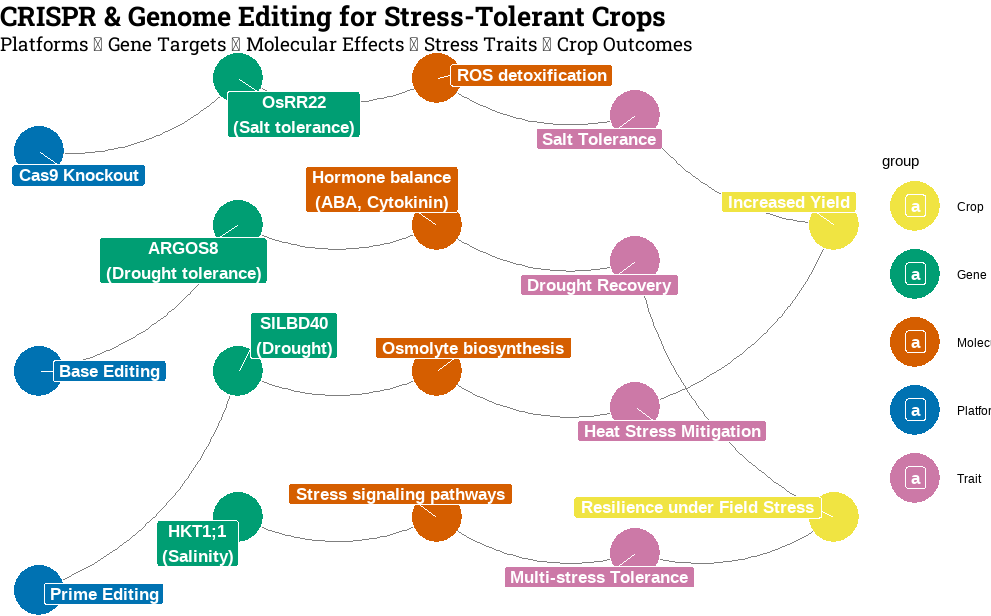
Figure 1. CRISPR and Genome-editing Platforms for Crop Stress Resilience. Schematic illustration of CRISPR-based platforms (Cas9 knockout, base and prime editing, CRISPRa/i epigenetic regulation), their gene targets (e.g., OsRR22, ARGOS8, SlLBD40, HKT1;1), molecular effects (reactive oxygen species (ROS) detoxification, hormone balance, stress signaling), associated stress traits (salt, drought, heat tolerance), and resultant crop-level outcomes such as improved yield and resilience under abiotic stress. Color-coded layers distinguish platforms, genes, molecular effects, traits, and outcomes.
While CRISPR-based approaches dominate current literature, alternative molecular breeding strategies, including TILLING, marker-assisted selection, genomic selection, and haplotype-based introgression remain essential, particularly where regulatory or transformation barriers limit genome editing. Moreover, edited stress-tolerance traits frequently involve trade-offs between growth and defense, reflecting pleiotropic gene effects and resource allocation constraints. Yield penalties, altered phenology, or reduced performance under non-stress conditions have been observed in several edited lines. Therefore, rigorous multi-location field trials and long-term stability assessments are critical to determine agronomic value beyond controlled environments. However, most genome-editing studies focus on single-stress tolerance, whereas crops in the field frequently encounter combined stresses (see Section 8).
2.2 Molecular Breeding and Gene Discovery
Complementary to genome editing, advances in quantitative genomics have enabled the identification of loci controlling stress-tolerance traits. Genome-wide association studies (GWAS), quantitative trait locus mapping, and pan-genome analyses reveal allelic diversity and candidate genes for drought, salinity, and heat resilience. Integration of these findings with genomic prediction and genomic selection (GS) shortens breeding cycles by predicting genotype performance prior to field testing[17].
However, predictive accuracy of GS for complex, environment-dependent traits remains limited without robust multi-environment phenotypic datasets[18]. Therefore, coupling molecular breeding with physiological trait measurements and controlled environment validation is crucial. Multi-omics approaches combining transcriptomic, metabolomic, and proteomic signatures with genetic data have further refined gene discovery, enabling identification of regulatory hubs controlling stress networks[19].
Taken together, these examples illustrate a recurring challenge in plant stress biology: many technological advances demonstrate strong mechanistic promise but encounter significant barriers during translation to field agriculture. Genome editing faces polygenic trait architecture and transformation constraints; epigenetic strategies struggle with stability and inheritance; and microbiome engineering must overcome ecological competition and environmental variability. Addressing these bottlenecks will require integrating molecular innovation with long-term field validation, ecological understanding, and breeding strategies that explicitly account for genotype × environment interactions.
3 EPIGENETICS AND EPITRANSCRIPTOMICS: STRESS MEMORY AND HERITABLE PLASTICITY
3.1 Epigenetic Mechanisms in Stress Response
Epigenetic regulation provides an additional layer of control over gene expression without altering the underlying DNA sequence. DNA methylation, histone modification, chromatin remodeling, and non-coding RNA interactions coordinate gene activation or repression during environmental challenges[20]. Stress exposure can reprogram the epigenome, resulting in transcriptional “memory” that allows plants to respond more effectively to subsequent stresses[21,22].
Studies have shown that drought or salt stress induces heritable DNA methylation changes in Arabidopsis, rice, and maize[23]. However, while stress-induced epigenetic variation is well documented at the molecular level, evidence for stable transgenerational inheritance remains limited and context dependent. Some marks persist through mitotic divisions and contribute to short-term stress memory within a generation, whereas meiotically heritable transmission across multiple generations has been demonstrated only in specific cases and often under controlled conditions[24].
Epigenetic priming, wherein prior exposure leads to faster or stronger responses upon re-exposure, has emerged as a key adaptive mechanism. This phenomenon is experimentally supported for within-generation memory; however, its durability across diverse field environments is still under investigation. Manipulating this phenomenon; through epigenetic drugs, breeding for epigenetic variants (epi-alleles), or engineered epigenome editing; offers an attractive route to non-transgenic enhancement of resilience[25]. However, the concept of stable transgenerational stress tolerance mediated purely by epigenetic inheritance remains debated. Although stress-induced DNA methylation changes are frequently observed within a generation, many of these marks are reset during gametogenesis or early embryogenesis. As a result, most experimentally documented epigenetic responses represent transient regulatory plasticity rather than stable, heritable traits.
Consequently, the practical value of epigenetics in crop breeding may lie less in the creation of permanently inherited “stress memory” and more in exploiting short-term priming responses, epigenetic variation linked to underlying genetic polymorphisms, or epigenome editing approaches that modulate regulatory states without relying on natural inheritance of stress-induced marks. Further long-term field studies are required to determine whether specific epialleles can be stably maintained across generations under agricultural conditions.
Stability and reversibility of stress-induced marks are strongly influenced by developmental stage, stress intensity, chromatin context, and genetic background[26]. Therefore, it is important to distinguish between transient regulatory plasticity and stable epiallelic variation with predictable inheritance. Further, off-target or pleiotropic effects of epigenetic alterations; including unintended activation of transposable elements or altered developmental timing; must be carefully evaluated before field deployment.
3.2 Epitranscriptomic Regulation
Beyond DNA and chromatin, chemical modifications of RNA; collectively termed the epitranscriptome, have recently been recognized as vital modulators of stress responses. N6-methyladenosine (m6A) methylation is the most prevalent modification influencing mRNA stability, splicing, and translation[27]. Under drought and heat stress, global m6A levels change dynamically, modulating expression of stress-related transcripts[28]. RNA-binding proteins that recognize these marks act as “readers,” shaping the transcriptome’s responsiveness.
While correlations between RNA modifications and stress adaptation are increasingly reported, causal relationships have been conclusively demonstrated only for a subset of target transcripts. Emerging studies suggest that targeted manipulation of RNA-modifying enzymes could rapidly alter stress-gene expression without permanent DNA changes[29]. However, programmable epitranscriptomic editing, using deaminases or methyltransferase fusions; remains an early-stage technology, and its specificity, efficiency, and stability under field conditions are not yet well characterized[30].
Combined DNA- and RNA-level regulation may offer flexible and reversible tuning of stress responses. At present, this integrative regulatory model is largely conceptual, supported by emerging experimental evidence rather than long-term agronomic trials.
Epigenetic and epitranscriptomic thus represent promising but still evolving strategies. Reproducibility, multigenerational stability, ecological safety, and interaction with genetic background must be rigorously tested. The interplay between genetic variation, chromatin state, and transcript modification remains a frontier area that will benefit from integrative multi-omics and high-resolution single-cell profiling[31] (Figure 2).
|
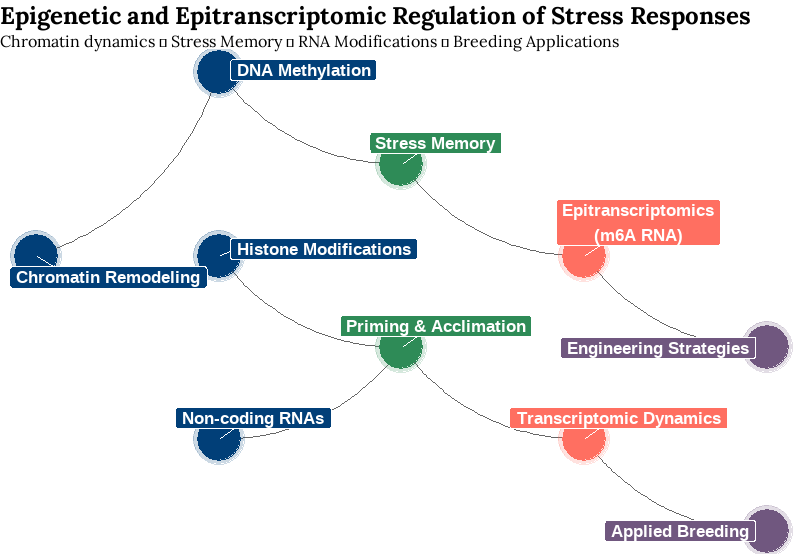
Figure 2. Epigenetic and Epitranscriptomic Mechanisms Underlying Plant Stress Responses. Multi-layer diagram showing chromatin-based regulation (DNA methylation, histone modifications, chromatin remodeling, non-coding RNAs), stress memory and priming, epitranscriptomic control (m6A RNA methylation, RNA-binding readers, transcriptomic reprogramming), and engineering/application strategies for crop improvement. Arrows indicate cross-talk and coordinated regulation driving adaptive plasticity and stress resilience.
4 PLANT MICROBIOME ENGINEERING AND BIOLOGICALS
4.1 Beneficial Microbes as Stress Mitigators
Plants coexist with diverse microbial communities: rhizosphere, endophytic, and phyllospheric, that profoundly influence growth and stress tolerance[32]. These plant growth-promoting rhizobacteria (PGPR) and arbuscular mycorrhizal fungi (AMF) modulate host physiology through multiple mechanisms: improving nutrient uptake (especially nitrogen and phosphorus), altering root system architecture, producing phytohormones (e.g., indole-3-acetic acid, cytokinins), and mitigating oxidative stress via antioxidant enzyme induction[33].
Under drought and salinity, PGPR such as Bacillus, Pseudomonas, and Azospirillum enhance osmotic balance and modulate ABA and ethylene signaling[34]. AMF improve water relations, while endophytes such as Piriformospora indica enhance ion homeostasis and antioxidant defense[35].
Microbial volatile organic compounds (VOCs) can induce systemic tolerance by upregulating ROS detoxification and stress-response genes[36,37]. Commercial inoculants containing Rhizophagus irregularis or Azospirillum brasilense have shown yield benefits under drought in cereals and legumes[38].
However, despite promising greenhouse and growth-chamber results, field performance is often inconsistent. This inconsistency arises from multiple interacting factors: (1) Soil heterogeneity affecting microbial survival and activity; (2) Competition with established native microbiota; (3) Environmental fluctuations (temperature, moisture, UV exposure) reducing inoculant viability; (4) Host genotype-dependent colonization efficiency; and (5) Temporal mismatch between microbial establishment and stress occurrence.
Additionally, many commercial products lack detailed mechanistic characterization or standardized formulation, complicating reproducibility and regulatory evaluation[39]. Thus, efficacy observed in simplified systems may not directly translate to complex agroecosystems.
4.2 Microbiome Engineering Strategies
Metagenomics and metabolomics have revealed enrichment of taxa such as Burkholderia, Bacillus, and Streptomyces in stress-tolerant genotypes[40,41], leading to the concept of microbiome breeding[42]. Synthetic microbial communities (SynComs) aim to improve reproducibility by assembling defined functional strains[43]. For instance, a four-strain SynCom enhanced drought tolerance in wheat under controlled conditions[44]. Despite promising results in controlled environments, synthetic microbial communities frequently show inconsistent performance in agricultural fields. Several mechanisms contribute to this translational gap. One major factor is ecological priority effects: native soil microbial communities are highly competitive and often outcompete introduced strains before they can establish stable associations with plant roots. In addition, formulation and delivery challenges can reduce microbial viability during storage, transport, or application, leading to reduced colonization efficiency after field inoculation. Host genotype also plays a critical role, as plants actively recruit specific microbiome members through root exudates; consequently, SynComs optimized for one cultivar may perform poorly when applied to genetically distinct varieties.
Environmental heterogeneity further complicates microbiome engineering, as soil chemistry, moisture regimes, temperature fluctuations, and nutrient availability all influence microbial survival and activity. These factors suggest that successful microbiome-based stress mitigation will require strategies that integrate host genotype selection, ecological compatibility with native microbial communities, and improved formulation technologies capable of maintaining microbial stability under field conditions.
Yet even SynComs frequently lose functional stability when introduced into non-sterile field soils, where stochastic ecological processes and priority effects reshape community composition.
Engineered microbial strains (e.g., modified Pseudomonas putida) offer targeted trait delivery[45,46] (Figure 3). However, ecological containment, horizontal gene transfer risk, and unintended ecosystem impacts must be carefully evaluated before widespread deployment.
|
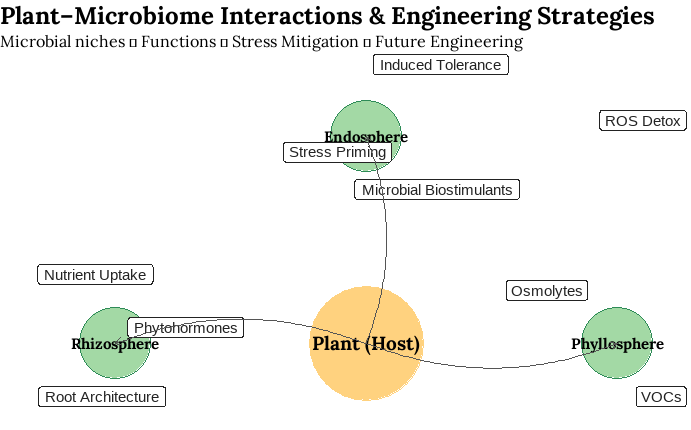
Figure 3. Plant-microbiome Interactions and Engineering Strategies. Schematic representation of microbial niches (rhizosphere, endosphere, phyllosphere), their functional roles (nutrient acquisition, osmolyte accumulation, ROS detoxification, induced systemic tolerance), and microbiome engineering approaches (synthetic communities, CRISPR-modified strains, AI-guided plant–microbe matching). Arrows depict functional interactions with the host plant, highlighting opportunities to enhance crop resilience under abiotic stress.
Major translational barriers include: (1) Context dependence: Performance varies by soil chemistry, microbiome composition, crop genotype, and management practice[47]. (2) Persistence and ecological fitness: Introduced strains often fail to establish durable populations due to niche competition and predation[48]. (3) Regulatory complexity: Engineered microbes may fall under GMO, biofertilizer, or pesticide regulations depending on jurisdiction, creating uncertainty and delays[49]. (4) Biosafety and ecological impact assessment: Long-term effects on native microbial networks, nutrient cycling, and non-target organisms remain insufficiently studied. (5) Manufacturing and formulation challenges: Shelf-life, carrier materials, and delivery systems strongly influence viability and field performance[50].
Future directions include co-selection of host and microbiome traits, ecological modeling of colonization dynamics, and AI-guided prediction of compatible plant-microbe partnerships[51]. Importantly, successful translation will require integrating ecological theory, regulatory science, and long-term multi-site field trials rather than relying solely on mechanistic laboratory studies.
5 PHENOTYPING, REMOTE SENSING, AND DIGITAL AGRICULTURE
5.1 High-Throughput Phenotyping
Phenotyping remains a bottleneck in linking genotype to phenotype under variable stress conditions. High-throughput phenotyping (HTP) platforms now bridge this gap by enabling non-destructive, quantitative measurement of physiological and morphological traits at scale[52]. UAV (unmanned aerial vehicle) systems equipped with multispectral, hyperspectral, or thermal sensors can capture canopy temperature, chlorophyll fluorescence, and spectral indices associated with water and nutrient status[53].
Ground-based robotics equipped with LiDAR or RGB cameras provide high-resolution measurements of growth dynamics and architecture[54]. Integrating these systems with automated data analytics allows real-time trait monitoring and stress detection. For example, hyperspectral reflectance indices have been correlated with photosynthetic efficiency and stomatal conductance, key indicators of drought response[55]. HTP also enhances genotype × environment modeling by enabling repeated, multi-environment trait assessment (Figure 4). Coupling HTP data with genomic prediction significantly improves selection accuracy for complex traits such as yield under stress[56]. Recent developments in proximal phenomics; combining thermal imaging, chlorophyll fluorescence, and gas exchange; provide comprehensive physiological profiling[57].
|
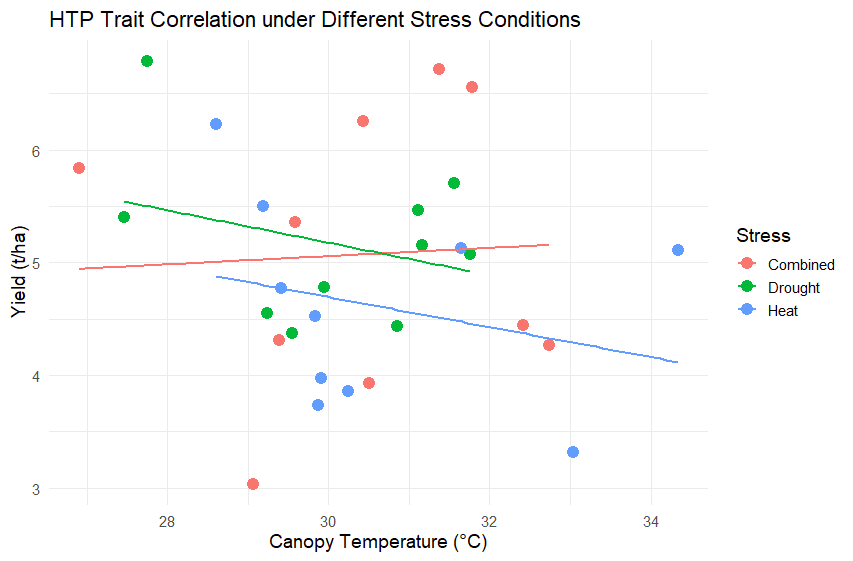
Figure 4. Relationship between Canopy Temperature and Yield under Different Stress Conditions. HTP data illustrate genotype responses under drought, heat, and combined stress conditions. Each point represents a genotype, and regression lines show the correlation trends between canopy temperature and yield. Lower canopy temperatures are generally associated with higher yield performance, highlighting differential thermotolerance and stress resilience among genotypes.
Despite rapid advances, challenges persist in sensor calibration, environmental noise correction, and standardization of trait ontologies[58]. Data volume and heterogeneity also demand robust data management pipelines and AI-based analytics.
5.2 From Lab to Field: Ecological Realism
Controlled-environment experiments often overestimate stress tolerance due to simplified or artificial conditions. Thus, field-level HTP under ecologically realistic stress regimes (dynamic droughts, fluctuating temperatures, soil heterogeneity) is critical to validate discoveries[59]. Platforms such as the Field Scanalyzer and PhenoField facilities enable automated phenotyping at field scale, linking molecular traits to agronomic performance[60].
Field phenotyping captures temporal stress responses, such as recovery after heat waves or diurnal water potential dynamics, offering a more holistic view of tolerance[61]. Integration of weather, soil, and imaging data helps quantify genotype performance under actual environmental variability. However, scaling field HTP globally requires affordable, modular, and open-access tools adaptable to smallholder systems[62]. Increasingly, high-throughput phenotyping platforms are being designed to evaluate plant performance under combined stress environments (Section 8).
5.3 Machine Learning for Phenotyping and Trait Discovery
The explosion of multi-omics and phenotypic data has propelled the use of machine learning (ML) and AI for stress-tolerance research. ML algorithms identify hidden patterns in large datasets, improving predictive models of complex traits[63]. Deep learning, particularly convolutional neural networks, extracts features from high-dimensional image data, enabling automated stress detection from leaf or canopy imagery[64].
For example, CNN-based models have achieved over 90% accuracy in classifying drought severity from UAV imagery[65]. Random forest and gradient boosting models integrate spectral, thermal, and environmental data to predict yield stability across environments[66]. Furthermore, multi-omics integration frameworks (e.g., MOFA, DeepOmix) use neural networks to correlate genomic, transcriptomic, and metabolomic signatures with phenotypes[67] (Figure 5).
|
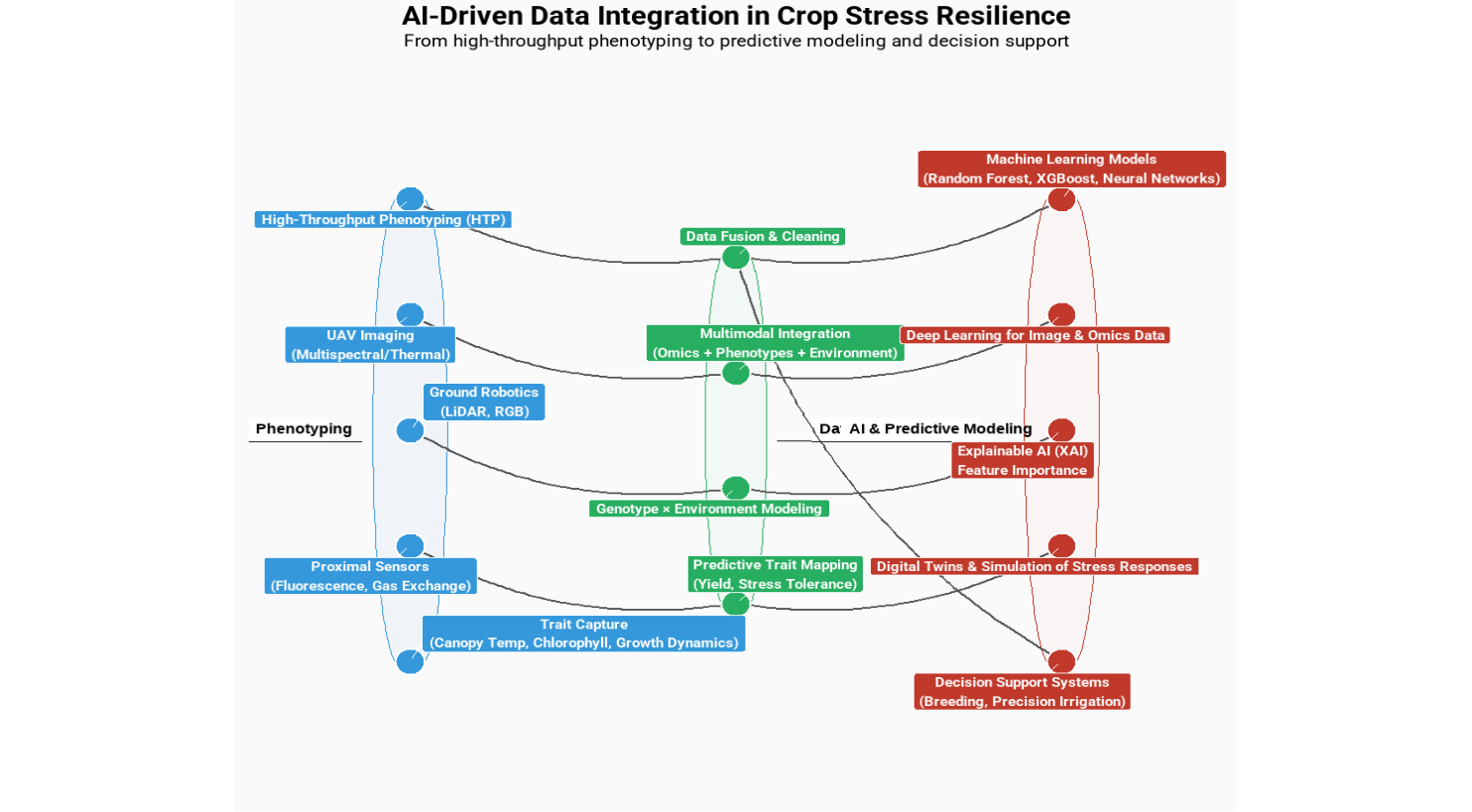
Figure 5. AI-driven Data Integration for Crop Stress Resilience. Layered schematic illustrating the integration of high-throughput phenotyping, multi-modal data processing, and AI-driven predictive modeling. Phenotyping technologies (left) capture plant traits under diverse stress conditions. Data integration pipelines (middle) combine environmental, omics, and phenotypic data for predictive trait mapping. AI and machine learning frameworks (right) perform stress detection, genotype prediction, and decision support, enabling data-driven breeding and precision agriculture. Directed arrows indicate the flow of information through interconnected layers.
However, limitations remain. Many models suffer from overfitting and poor generalization across locations and seasons[68]. Data imbalance and limited labeled datasets hinder supervised training. Efforts are now directed toward explainable AI algorithms providing interpretable trait-importance metrics; and domain adaptation methods that enable cross-environment transfer learning[69].
The integration of AI-assisted decision support systems (DSS) into breeding programs offers transformative potential: real-time stress forecasting, genotype recommendation, and precision irrigation management based on predictive analytics[70]. These digital innovations will play a pivotal role in translating laboratory genomics into field-scale adaptation strategies.
While machine learning approaches are widely used to analyze high-throughput phenotyping datasets, broader applications of artificial intelligence for multi-omics integration and predictive crop modeling are discussed in Section 6.
6 AI AND DATA INTEGRATION FOR SYSTEMS-LEVEL STRESS BIOLOGY
6.1 Multi-Omics Integration for Stress Tolerance
Recent years have witnessed an explosion of multi-omics datasets; genomics, transcriptomics, proteomics, metabolomics, ionomics, and phenomics, providing unprecedented resolution of plant responses to abiotic and biotic stresses[71]. Such integrative frameworks enable the identification of regulatory hubs and metabolic pathways associated with tolerance traits. Figure 6 illustrates the multi-omics landscape of stress-responsive pathways across molecular layers. However, stress tolerance is inherently polygenic, dynamic, and context-dependent, necessitating integrative frameworks that can decode molecular interactions across omic layers[72].
|
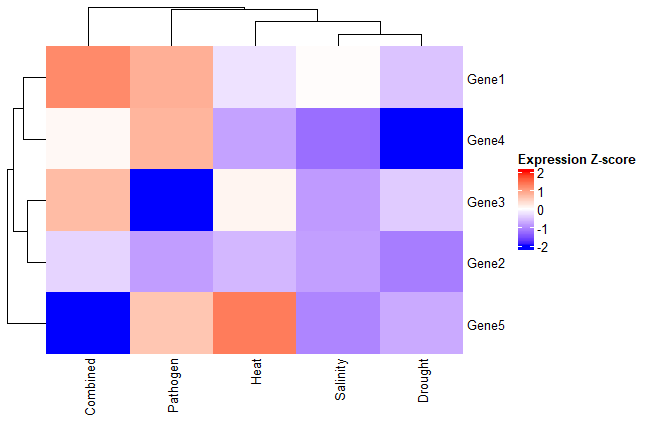
Figure 6. Multi-omics Integration Underlying Plant Stress Responses. Heatmap illustrating the coordinated responses of genomic, transcriptomic, proteomic, and metabolomic layers involved in plant adaptation to abiotic stress conditions such as drought, heat, and salinity. Rows represent stress-responsive pathways and regulatory components (e.g., transcription factors, antioxidant enzymes, osmolyte biosynthesis, hormone signaling), while columns represent different omics datasets. Color intensity reflects relative activity or enrichment of each pathway within a given molecular layer. The figure highlights the importance of integrating multi-omics datasets to identify regulatory hubs and key biological processes underlying crop stress resilience.
Integrative multi-omics enables the identification of causal networks linking genotype to phenotype. Transcriptome-proteome correlations, for example, reveal regulatory nodes in drought-induced pathways such as ABA signaling, ROS scavenging, and osmolyte biosynthesis[73]. Metabolome–transcriptome integration further elucidates metabolic plasticity during salt stress, including shifts in amino acid and sugar metabolism[74].
Systems biology tools such as Weighted Gene Co-expression Network Analysis, Bayesian network inference, and metabolic flux modeling, have been employed to identify hub genes (e.g., DREB2A, NAC, HSPs) that coordinate multi-stress responses[75]. For example, multi-omics integration in rice identified trehalose metabolism as a central drought-responsive hub subsequently validated through gene editing and field phenotyping[76-78]. Similarly, integrative analysis in maize revealed metabolite signatures associated with heat tolerance that were predictive of yield stability under field stress.
Despite these advances, challenges remain in data harmonization and ecological validation[79]. Most datasets derive from controlled environments, limiting predictive power under variable field conditions.
To enhance accessibility, Table 1 summarizes current operational applications versus emerging experimental tools in data-driven stress biology.
Table 1. Current vs Emerging Data-Driven Tools for Stress Resilience
Category |
Established/Operational Applications |
Emerging/Experimental Tools |
Multi-omics integration |
GWAS + transcriptomics for candidate gene discovery (rice, wheat) |
Cross-species knowledge graphs integrating environment × genotype |
Genomic prediction |
Genomic selection for drought tolerance in maize and wheat breeding programs |
Multi-omic genomic selection incorporating metabolomic priors |
Machine learning classifiers |
Stress status prediction using transcriptomics |
Reinforcement learning for genotype design |
Crop modeling integration |
ML-coupled DSSAT/APSIM yield forecasting |
Digital twins simulating genotype × environment × management |
Field phenomics + AI |
UAV-based canopy temperature prediction of drought stress |
Real-time molecular–environmental fusion modeling |
This distinction clarifies that while genomic prediction and AI-assisted phenotyping are already influencing breeding programs, digital twins and reinforcement-learning genotype design remain largely experimental.
6.2 AI-Driven Systems Biology and Predictive Modeling
AI and machine learning integrate multi-omics and phenomics into predictive models. Deep neural networks and graph-based algorithms uncover nonlinear biological interactions[80].
Deep learning models have predicted drought and heat stress in Arabidopsis and wheat[81]. Graph convolutional networks identified novel stress regulators in rice later validated experimentally[82]. In soybean, ML-based genomic selection models improved prediction accuracy for drought-related yield traits compared with traditional BLUP models, demonstrating tangible breeding relevance.
Explainable AI improves interpretability[83]. Reinforcement learning and digital twins represent frontier approaches[84,85]. However, these advanced frameworks are still in early validation stages, with limited demonstration across multiple field seasons or crop species.
Coupling ML root-growth models with DSSAT/APSIM has improved drought yield prediction in maize[86]. Yet overfitting, data bias, and limited training datasets constrain generalizability[87,88].
Importantly, most AI models are trained on well-studied crops (rice, wheat, maize), leaving orphan crops underrepresented. Expanding AI tools to sorghum, millet, and legumes is critical for climate resilience in vulnerable regions.
6.3 Digital and Systems-Integrated Crop Resilience
The convergence of multi-omics integration, phenomics, AI, and digital agricultureenables predictive stress resilience[89]. Emerging AI-assisted breeding frameworks combine genomic selection and environmental modeling[90,91]. For example, in wheat breeding programs, AI-integrated phenomics platforms have been used to select genotypes maintaining canopy cooling under drought, resulting in improved yield stability across multi-location trials. In rice, genomic prediction combined with environmental covariates has enhanced selection for submergence tolerance in flood-prone regions. Edge AI and IoT sensors support dynamic field monitoring[92]. While conceptually transformative, fully autonomous “self-optimizing” agricultural systems remain aspirational. Current practical deployment centers on decision-support systems rather than fully automated genotype redesign. Success depends on transparent AI, FAIR data, and equitable access[93].
7 AGRONOMIC AND NANO-BIOTECHNOLOGICAL INTERVENTIONS
7.1 Agronomic Strategies
Agronomic interventions provide immediate stress mitigation. Precision irrigation, grafting, and conservation agriculture improve resource efficiency[94]. In tomato production systems, deficit irrigation combined with stress-tolerant rootstocks has maintained yield under moderate drought in Mediterranean field trials. Similarly, conservation agriculture practices in wheat–maize rotations in South Asia have improved soil organic carbon and reduced yield variability under heat stress. Precision irrigation reduces oxidative stress[95,96]. Grafting enhances hydraulic conductivity[97,98], conservation agriculture improves soil buffering capacity[99,100]. These crop-specific examples illustrate that agronomic resilience strategies are already contributing measurable yield stability in real farming systems.
7.2 Nano-Biotechnology
Nanotechnology offers emerging tools for improving plant stress resilience via controlled release of agrochemicals, targeted delivery of biomolecules, and nanoscale sensing[101]. Engineered nanomaterials (ENMs) such as carbon nanotubes, metal oxide nanoparticles (ZnO, TiO₂, Fe₃O₄), and silica nanocarriers, interact at the cellular level to modulate nutrient uptake, ROS homeostasis, and stress signal transduction[102].
Mechanistically, nanoparticles (NPs) can act as antioxidants or catalysts that mitigate oxidative stress induced by drought, salinity, and heavy metals. For instance, ZnO and SiO₂ NPs have been shown to upregulate antioxidant enzymes (superoxide dismutase, catalase, and peroxidase) while stabilizing photosynthetic pigments under drought and salt stress[103]. In rice and wheat, foliar application of silica nanoparticles has improved drought tolerance under controlled and small-scale field trials; however, large multi-location validations remain limited. Nano-chelated fertilizers improve nutrient uptake efficiency by enhancing root absorption kinetics and maintaining ionic balance under osmotic stress conditions[104]. Moreover, nanocarriers for phytohormones and stress-protectants (e.g., ABA, salicylic acid, glycine betaine) offer controlled release and targeted delivery to specific plant tissues, leading to enhanced tolerance with minimal application rates[105]. Nano-enabled gene delivery systems, including DNA-functionalized gold nanoparticles and lipid nanovesicles, show promise for plant transformation and transient expression without the need for Agrobacterium or biolistic methods[106].
In parallel, nanosensors integrated with Internet of Things (IoT) networks enable real-time monitoring of plant health indicators (leaf turgor, nutrient concentration, volatile emissions) and microclimatic variables, supporting precision management under dynamic stress scenarios[107]. These innovations bridge the gap between molecular engineering and field agronomy, forming a convergence zone between biotechnology and digital agriculture.
Despite their potential, nanomaterial safety, persistence, and ecological fate require deeper investigation. Risk assessments must consider accumulation in soils, trophic transfer, and potential impacts on non-target soil biota[108]. Regulatory frameworks for agricultural nanoproducts remain in early development, underscoring the need for transparent safety evaluations.
8 STRESS COMBINATIONS: THE REAL FIELD CHALLENGE
In natural agricultural environments, plants rarely experience individual stresses in isolation. Instead, drought, heat, salinity, nutrient limitation, and pathogen pressure frequently occur simultaneously or sequentially. These stress combinations generate complex physiological and molecular responses that cannot be predicted from single-stress studies alone. Consequently, evaluating emerging technologies; including genome editing, microbiome engineering, phenomics, and AI-assisted breeding; through the lens of combined stress resilience is essential for realistic crop improvement under climate change[109,110].
Mechanistically, combined heat and drought stress induces unique transcriptomic and metabolic reprogramming, including altered expression of heat-shock proteins (HSPs), dehydrins, and cross-regulatory transcription factors such as DREB2A, HSFA6b, and NAC genes[111]. Metabolic studies reveal distinct accumulation patterns of compatible solutes (proline, trehalose, sucrose) and polyamines, which buffer osmotic and oxidative damage[112].
Signal integration plays a central role: cross-talk among ABA, ethylene, salicylic acid, and jasmonic acid pathways mediates prioritization between abiotic and biotic responses. Under combined stress, ABA often dominates, suppressing defense pathways to maintain water balance, though at a cost to pathogen resistance[113]. Conversely, some beneficial microbes can reprogram this hormonal hierarchy, improving tolerance under multiple stresses[114].
Recent multi-stress transcriptome meta-analyses demonstrate that approximately 20–30% of responsive genes are unique to combined stresses, underscoring the need for dedicated breeding targets rather than extrapolation from single-stress data[115]. Systems biology approaches integrating transcriptomics, metabolomics, and phenomics are now being used to map interaction-specific regulatory nodes[116].
From a breeding perspective, combined-stress phenotyping remains underdeveloped due to logistical challenges in simulating dynamic, interacting stresses under controlled and field conditions. High-throughput field phenotyping (e.g., UAV-based thermal and hyperspectral imaging) is helping capture these complex interactions in real time[117].
Ultimately, developing multi-stress-resilient cultivars requires integrating genetic, physiological, and agronomic resilience mechanisms, coupled with predictive modeling to understand trade-offs between stress types. This direction aligns with a broader call for “real-world stress biology”, bridging lab findings with field complexity[118] (Table 2).
Table 2. Agronomic and Nano-Biotechnological Strategies for Stress Mitigation and Adaptation
Category |
Strategy / Approach |
Mechanism or Function |
Key Benefits / Outcomes |
Representative Examples / Notes |
Agronomic interventions |
Precision irrigation (drip, subsurface, deficit, PRD) |
Synchronizes water supply with plant demand; induces root signaling via ABA; enhances water-use efficiency |
Reduces water loss, oxidative stress, and yield penalties under drought |
Deficit and partial root-zone drying promote drought adaptation and ABA-mediated signaling |
|
Rootstock selection & grafting |
Improves hydraulic conductivity, hormonal crosstalk (ABA, cytokinins), antioxidant activity, and nutrient uptake |
Enhances drought and salinity tolerance, microbiome recruitment |
Drought-tolerant tomato or salt-tolerant cucurbit rootstocks |
|
Conservation agriculture |
Minimal tillage, residue retention, crop diversification; stabilizes soil organic matter and microbiome structure |
Improves infiltration, nutrient cycling, and buffering of temperature extremes |
Enhances beneficial microbes for N-fixation and P-solubilization |
|
Controlled-environment & protected cultivation |
Optimizes microclimate variables and resource efficiency |
Reduces abiotic stress exposure, improves input efficiency |
Greenhouses, vertical farming systems |
Nano-biotechnological interventions |
ENMs |
Act as antioxidants or catalysts; modulate ROS and stress signaling pathways |
Mitigate oxidative damage from drought, salinity, and heavy metals |
ZnO, TiO₂, Fe₃O₄, and SiO₂ nanoparticles upregulate antioxidant enzymes |
|
Nano-chelated fertilizers |
Increase nutrient uptake kinetics, maintain ionic homeostasis |
Improve nutrient-use efficiency and stress resilience |
Nano-Zn, Nano-Fe fertilizers enhance uptake under salinity |
|
Nano-encapsulated phytohormones & protectants |
Controlled release and targeted delivery of bioactive compounds |
Enhanced stress tolerance at low doses, reduced chemical input |
Nanocarriers for ABA, SA, glycine betaine |
|
Nano-enabled gene delivery |
DNA-functionalized nanoparticles enable transformation without Agrobacterium |
Facilitates transient gene expression and genome editing |
Gold or lipid nanovesicle carriers |
|
Nanosensors & IoT integration |
Real-time monitoring of plant physiology and environmental parameters |
Enables precision irrigation and stress diagnostics |
Sensors for leaf turgor, volatile organic compounds, and nutrients |
Stress combinations: real-world complexity |
Simultaneous/sequential multi-stress exposure |
Interactions between drought, heat, salinity, or pathogens; cross-regulation of hormonal and molecular networks |
Reveals unique transcriptional and metabolic responses not predictable from single-stress models |
Combined heat-drought triggers HSPs, DREB2A, NAC factors; polyamine and sugar accumulation |
|
Hormonal cross-talk under combined stress |
ABA, JA, SA, and ethylene interactions reprogram tolerance vs. defense trade-offs |
Improves understanding of physiological prioritization |
ABA dominance can suppress biotic defenses; beneficial microbes may rebalance responses |
|
Systems biology and multi-omics approaches |
Integrates transcriptomics, metabolomics, phenomics to identify unique regulatory nodes |
Supports precision breeding for multi-stress resilience |
20–30% of genes are unique to combined stresses (meta-analyses) |
|
High-throughput field phenotyping |
UAV-based thermal and hyperspectral imaging for real-time stress detection |
Captures dynamic, multi-stress interactions in natural environments |
PhenoField, Field Scanalyzer, drone phenotyping platforms |
9 TRANSLATIONAL CASE STUDIES
9.1 Crop-Specific Case Studies
The translation of genome-editing technologies from lab to field marks a major step toward resilient agriculture. Edited lines of rice, wheat, maize, tomato, and soybean now demonstrate improved drought, salinity, and heat tolerance, often through fine-tuning of regulatory promoters, transcription factors, or signaling components[119].
For example, CRISPR-Cas9 edits of OsNAC14 and OsPYL9 in rice conferred improved drought tolerance via ABA signaling modulation and enhanced root system architecture[120]. In maize, promoter replacement of ARGOS8 using CRISPR-Cas9 yielded up to 5% higher productivity under water-deficit conditions[121]. These studies showcase the feasibility of precision engineering of regulatory sequences to optimize stress response intensity rather than binary on/off modifications.
Nonetheless, translational bottlenecks persist, including genotype-dependent transformation efficiencies, regulatory inconsistencies, and limited field validation across environments. Ongoing field trials supported by global consortia (e.g., CGIAR, C4 Rice, and PlantEditNet) aim to quantify yield stability, off-target safety, and gene-environment interactions for edited lines[122].
9.2 Commercial Microbiome Products
The commercialization of microbial biostimulants, especially those targeting drought, salinity, or nutrient stress has accelerated in the last five years. Products containing Bacillus, Pseudomonas, Trichoderma, and Azospirillum strains are marketed for abiotic-stress mitigation[123]. Mechanistically, these microbes improve plant performance via phytohormone modulation (IAA, gibberellins), ACC deaminase activity, and enhanced antioxidant defenses[124].
However, context dependency (soil type, climate, crop genotype) leads to variable efficacy. Advanced formulation science (microencapsulation, polymer-based carriers) is now improving microbial persistence and shelf-life under field conditions[125]. Regulatory harmonization across regions and performance standardization through multi-location trials remain critical next steps for scaling[126].
9.3 High-Throughput Phenotyping in Breeding Pipelines
HTP-enabled breeding programs demonstrate how UAV hyperspectral and thermal imaging, combined with GWAS or genomic prediction, can accelerate identification of stress-resilient genotypes[127]. For instance, UAV-based canopy temperature indices have been used to detect drought-tolerant wheat lines correlating with root depth and yield stability[128].
Integration of spectral trait loci with genomic data allows mapping of stress-adaptive physiological responses, effectively shortening the discovery-to-deployment timeline[129]. Machine learning algorithms now extract complex traits such as canopy water content, pigment status, and stress kinetics from hyperspectral data at population scales[130].
These translational successes exemplify the synergy between innovation domains; genome editing, microbiome management, phenomics, and AI culminating in holistic stress resilience strategies capable of transforming modern agriculture.
10 LIMITATIONS, PITFALLS, AND OPEN QUESTIONS
Abiotic and biotic stress tolerance traits are often highly polygenic, controlled by hundreds or thousands of loci, each contributing small effects to overall phenotypic variation[131]. This polygenic architecture complicates both genome editing and traditional breeding. For example, drought tolerance involves coordinated regulation of root architecture, stomatal conductance, osmolyte accumulation, ROS detoxification, hormonal crosstalk (ABA, cytokinin, ethylene), and photosynthetic efficiency[132]. Editing a single gene, even a hub transcription factor like DREB2A or NAC, may confer measurable laboratory phenotypes but often fails to deliver robust, yield-stable performance under field conditions where multiple stresses and G×E interactions prevail[133]. Polygenic adaptation also implies that breeding programs must account for allele combinations rather than single-locus effects. Advanced strategies such as genomic selection, multi-trait genomic prediction, and allele pyramiding can partially overcome this limitation, but accurate predictions require extensive multi-environment datasets and sophisticated computational frameworks[134].
The translation gap between controlled-environment discoveries and field outcomes remains a major bottleneck. Laboratory or greenhouse stress imposition often uses static, single-stress conditions, whereas field environments impose dynamic and interacting stresses (e.g., drought coinciding with heat and pathogen pressure)[135]. Phenotypic traits observed under simplified conditions, such as leaf rolling, chlorophyll fluorescence, or osmolyte accumulation, may not correlate strongly with yield stability, grain quality, or reproductive success in heterogeneous field conditions[136]. Bridging this gap requires multi-location field trials, dynamic stress modeling, and integration of high-throughput phenotyping with genomic prediction to capture G×E×M (management) interactions accurately[137].
Engineering stress-tolerant genotypes or deploying microbial inoculants can have unintended ecological consequences. Altered root exudates, rhizosphere composition, or physiological traits may disrupt soil microbial communities, nutrient cycling, and plant–pollinator interactions[138]. Long-term evolutionary dynamics are also critical. For instance, introducing stress-tolerant crops could impose selective pressures on pests, pathogens, or competing flora, potentially driving the evolution of virulent strains or altering local biodiversity[139]. Risk assessment frameworks that combine ecological modeling, field monitoring, and evolutionary simulations are therefore essential for responsible deployment[140].
Regulatory landscapes for genome editing vary widely. Countries such as the USA and Japan often adopt product-based regulation for non-transgenic edits, whereas the EU applies stringent process-based oversight[141]. This regulatory heterogeneity affects research translation, commercial release, and international seed trade. Public perception and market acceptance are additional constraints. Transparent communication regarding gene targets, editing methods, ecological safety, and socio-economic impacts is critical. Stakeholder engagement, from farmers to consumers, can facilitate responsible adoption, particularly for allele-replacement or base-editing approaches that do not introduce foreign DNA[142].
Integration of multi-omics, phenomics, and environmental datasets is impeded by the lack of standardized metadata, trait ontologies, and interoperable repositories[143]. Disparate formats, inconsistent annotations, and incomplete datasets hinder cross-study analyses and AI-driven modeling. FAIR data principles (Findable, Accessible, Interoperable, Reusable) are essential for accelerating discovery. Machine-readable ontologies for stress traits, environmental metadata, and microbial interactions will enable predictive modeling, systems-level understanding, and cross-species translation[144].
11 CONCLUSIONS AND FUTURE PROSPECTS
The convergence of genome editing, epigenetics, microbiome management, phenomics, AI, and agronomic technologies provides a powerful and increasingly integrated toolkit to enhance plant stress tolerance. Genome editing enables precise manipulation of regulatory and structural genes; epigenetic interventions offer regulatory plasticity and stress priming; and microbial consortia modulate hormonal, osmotic, and ROS pathways. High-throughput phenotyping and AI-driven multi-omics integration improve understanding of genotype × environment × management (G×E×M) interactions, informing both breeding and field-level interventions, while complementary agronomic and nano-enabled approaches translate molecular insights into applied strategies[145].
Despite substantial progress, translational impact remains uneven. Moving forward, priority should be given to five actionable directions: (1) Engineering and selecting polygenic, context-resilient traits through multi-gene editing and genomic selection explicitly incorporating G×E interactions. (2) Implementing multi-stress, multi-location field phenotyping platforms that simulate realistic stress combinations rather than single-factor experiments. (3) Conducting long-term ecological and evolutionary assessments of edited genotypes, microbial inoculants, and nano-enabled products under field conditions. (4) Strengthening data harmonization through interoperable repositories, standardized trait ontologies, and FAIR-compliant multi-environment datasets to support robust AI modeling. (5) Establishing transparent, harmonized regulatory and ethical frameworks to enable responsible deployment of genome-edited crops and engineered biologicals.
While emerging concepts such as digital twins, synthetic microbial consortia design, nano-enabled precision delivery, and explainable AI show strong promise, their large-scale validation and regulatory integration remain ongoing challenges rather than immediate solutions.
Ultimately, the most transformative progress will arise from tight integration between molecular innovation, ecological validation, predictive modeling, and agronomic implementation. By prioritizing scalable, field-tested, and ethically grounded approaches, plant stress biology can move from proof-of-concept advances toward durable, climate-resilient cropping systems capable of sustaining global food security under increasingly unpredictable environments. Future crop improvement strategies must prioritize resilience to combined stresses rather than single-stress tolerance.
Acknowledgements
Not applicable.
Conflicts of Interest
The author declared no conflict of interest.
Author Contribution
Khan N solely contributed to the manuscript and approved the final version.
Data Availability
Data sharing is not applicable to this review as no datasets were generated or analyzed during the current study.
Copyright Permissions
Copyright © 2026 The Author(s). Published by Innovation Forever Publishing Group Limited. This open-access article is licensed under a Creative Commons Attribution 4.0 International License (https://creativecommons.org/licenses/by/4.0), which permits unrestricted use, sharing, adaptation, distribution, and reproduction in any medium, provided the original work is properly cited.
Abbreviation List
AI, Artificial intelligence
AMF, Arbuscular mycorrhizal fungi
CRISPR, Clustered regularly interspaced short palindromic repeats
CRISPRa/i, CRISPR activation/interference
DSS, Decision support systems
ENMs, Engineered nanomaterials
G×E, Genotype × environment
G×E×M, Genotype × environment × management
GS, Genomic selection
GWAS, Genome-wide association studies
HTP, High-throughput phenotyping
IoT, Internet of things
ML, Machine learning
NPs, Nanoparticles
PGPR, Plant growth-promoting rhizobacteria
ROS, Reactive oxygen species
SynComs, Synthetic microbial communities
VOCs, Volatile organic compounds
References
[1] Mittler R. Abiotic stress, the field environment and stress combination. Trends Plant Sci, 2006; 11: 15-19.[DOI]
[2] Lesk C, Rowhani P, Ramankutty N. Influence of extreme weather disasters on global crop production. Nature, 2016; 529: 84-87.[DOI]
[3] Tester M, Langridge P. Breeding technologies to increase crop production in a changing world. Science, 2010; 327: 818-822.[DOI]
[4] Varshney RK, Bohra A, Yu J et al. Designing future crops: genomics-assisted breeding comes of age. Trends Plant Sci, 2021; 26: 631-649.[DOI]
[5] Aryendu A, Dikshit D, Ramamurthy S. Cross-talk and convergence of signaling pathways and metabolic networks in plant stress resilience. J Plant Nutr, 2026; 49: 970-981.[DOI]
[6] Xu Y, Li P, Zou C et al. Enhancing genetic gain in the era of molecular breeding. Plant J, 2020; 104: 7-20.[DOI]
[7] Wani S, Ridwan Q, Humaira et al. Plant Genome-Editing Approaches for Precision Breeding: A Review. In: Al-Khayri, JM, Yatoo AM, Jain SM, Penna S (eds). Handbook of Agricultural Technologies. Springer, Singapore. 2025: 1-22.[DOI]
[8] Jaganathan D, Ramasamy K, Sellamuthu G et al. CRISPR for crop improvement: an update review. Plant Physiol Biochem, 2018; 131: 12-21.[DOI]
[9] Li Y, Wu X, Zhang Y et al. CRISPR/Cas genome editing improves abiotic and biotic stress tolerance of crops. Front Genome Ed, 2022; 4: 987817.[DOI]
[10] Miao C, Xiao L, Hua K et al. Mutations in a histidine kinase gene OsRR22 enhance salt tolerance in rice. Nat Biotechnol, 2018; 36: 1096-1102.[DOI]
[11] Wang T, Zhang H, Zhu H. CRISPR/Cas9-mediated gene editing reveals the role of SlLBD40 in tomato drought tolerance. Plant Physiol Biochem, 2022; 181: 29-39.[DOI]
[12] Shi J, Habben JE, Archibald RL et al. ARGOS8 variants generated by CRISPR/Cas9 improve maize drought tolerance and yield under field conditions. Plant Biotechnol J, 2017; 15: 207-216.[DOI]
[13] Tang X, Lowder LG, Zhang T et al. A CRISPR–Cpf1 system for efficient genome editing and transcriptional repression in plants. Nat Plants, 2017; 3: 17103.[DOI]
[14] Mickelbart MV, Hasegawa PM, Bailey-Serres J. Genetic mechanisms of abiotic stress tolerance that translate to crop yield stability. Nat Rev Genet, 2015; 16: 237-251.[DOI]
[15] Malenica N, Dunić JA, Vukadinović L et al. Genetic Approaches to Enhance Multiple Stress Tolerance in Maize. Genes, 2021; 12: 1760.[DOI]
[16] Ashapkin VV, Kutueva LI, Aleksandrushkina NI et al. Epigenetic Mechanisms of Plant Adaptation to Biotic and Abiotic Stresses. Int J Mol Sci, 2020; 21: 7457.[DOI]
[17] Ma Y, Li Y. The research progress on genomic selection and breeding for drought resistance in wheat: From genetic analysis to smart breeding applications. Geogr Res Bull, 2024; 3: 625-646.[DOI]
[18] Crossa J, Pérez-Rodríguez P, Cuevas J et al. Genomic Selection in Plant Breeding: Methods, Models, and Perspectives. Trends Plant Sci, 2017; 22: 961-975.[DOI]
[19] Reynolds MP, Langridge P. Physiological breeding. Curr Opin Plant Biol, 2016; 31: 162-171.[DOI]
[20] Weckwerth W. Integration of metabolomics and proteomics in systems biology—Multi-omics data integration in plants. Plant J, 2021; 108: 1-18.[DOI]
[21] Springer NM, Schmitz RJ. Exploiting induced and natural epigenetic variation for crop improvement. Nat Rev Genet, 2017; 18: 563-575.[DOI]
[22] Sani E, Herzyk P, Perrella G et al. Transcriptional and epigenetic control of priming for abiotic stress tolerance in plants. Plant Cell Environ, 2013; 36: 1644-1656.[DOI]
[23] Khan N, Bano A. Exopolysaccharide producing rhizobacteria and their impact on growth and drought tolerance of wheat grown under rainfed conditions. PLoS One, 2019; 14: e0222302.[DOI]
[24] Secco D, Wang C, Shou H et al. Stress-induced gene expression drives transient DNA methylation changes at adjacent transposable elements in rice and maize. Genome Biol, 2015; 16: 1-12.[DOI]
[25] Miryeganeh M. Plant Epigenetic Mechanisms: from Natural Variation to Stress Adaptation and Crop Improvement. Genes, 2021; 12: 1106.[DOI]
[26] da Costa GS, Cerqueira AF, de Brito CR et al. Epigenetics Regulation in Responses to Abiotic Factors in Plant Species: A Systematic Review. Plants, 2024; 13: 2082.[DOI]
[27] Yue H, Nie X, Yan Z et al. RNA N6-Methyladenosine Methylation in Plants: Current Status, Challenges, and Perspectives. Plant Cell Physiol, 2019; 60: 2338-2348.[DOI]
[28] Hu J, Manduzio S, Kang H. Epitranscriptomic RNA Methylation in Plant Development and Abiotic Stress Responses. Front Plant Sci, 2019; 10: 500.[DOI]
[29] Arribas-Hernández L, Brodersen P. Occurrence and Functions of m6A and Other Covalent Modifications in Plant mRNA. Plant Physiol, 2020; 182: 79-96.[DOI]
[30] Sun T, Wu R, Ming L et al. Programmable RNA modification using CRISPR-based systems. Trends Biotechnol, 2023; 41: 302-316.[DOI]
[31] Huang W, Zhu W, Zhang Z et al. Integrated epigenomic and transcriptional profiling reveals genotype-specific adaptive reprogramming to drought stress in Brassica napus. BMC Plant Biol, 2026; 26: 625.[DOI]
[32] Khan N. Microbial modulation of plant metabolism: Mechanisms, impacts, and applications. In: Synergistic Plant Metabolomics and Plant Growth-Promoting Microorganisms in Addressing Abiotic Stress. Academic Press, 2026: 465-484.[DOI]
[33] Vurukonda SSKP, Vardharajula S, Shrivastava M et al. Enhancement of drought stress tolerance in crops by plant growth promoting rhizobacteria. Microbiol Res, 2016; 184: 13-24.[DOI]
[34] Niu X, Song L, Xiao Y et al. Drought-Tolerant Plant Growth-Promoting Rhizobacteria Associated with Foxtail Millet Roots. Front Microbiol, 2018; 9: 2589.[DOI]
[35] Qiang X, Weiss M, Kogel KH et al. Piriformospora indica—a mutualistic basidiomycete with an exceptionally large plant host range. Mol Plant Pathol, 2012; 13: 508-518.[DOI]
[36] Ryu CM, Farag MA, Hu CH et al. Bacterial volatiles promote growth in Arabidopsis. Proc Natl Acad Sci USA, 2003; 100: 4927-4932.[DOI]
[37] Lee B, Farag MA, Park HB et al. Induced Systemic Tolerance by Bacterial Volatiles via Jasmonate Signaling in Arabidopsis. Plant Physiol, 2012; 159: 1252-1267.[DOI]
[38] Rouphael Y, Colla G. Biostimulants in Agriculture. Front Plant Sci, 2020; 11: 40.[DOI]
[39] Timmusk S, Behers L, Muthoni J et al. Perspectives and Challenges of Microbial Application for Crop Improvement. Front Plant Sci, 2017; 8: 49.[DOI]
[40] Fitzpatrick CR, Salas-González I, Conway JM et al. The Plant Microbiome: From Ecology to Reductionism and Beyond. Annu Rev Microbiol, 2020; 74: 81-100.[DOI]
[41] Edwards JA, Santos-Medellín C, Liechty Z et al. Root-associated microbiomes of rice influence drought tolerance. Nat Microbiol, 2018; 3: 302-309.[DOI]
[42] Oyserman BO, Medema MH, Raaijmakers JM. Road MAPs to engineer host microbiomes. Curr Opin Microbiol, 2018; 43: 46-54.[DOI]
[43] Niu B, Paulson JN, Zheng X et al. Simplified and representative bacterial community of maize roots. Proc Natl Acad Sci USA, 2017; 114: E2450-E2459.[DOI]
[44] Xu L, Naylor D, Dong Z et al. Drought delays development of the sorghum root microbiome and enriches for monoderm bacteria. Proc Natl Acad Sci USA, 2018; 115: E4284-E4293.[DOI]
[45] Weller DM, Raaijmakers JM, Gardener BBM et al. Microbial Populations Responsible for Specific Soil Suppressiveness to Plant Pathogens. Annu Rev Phytopathol, 2002; 40: 309-348.[DOI]
[46] Zhang M, Yang L, Hao R et al. Drought-tolerant plant growth-promoting rhizobacteria isolated from jujube (Ziziphus jujuba) and their potential to enhance drought tolerance. Plant Soil, 2020; 452: 423-440.[DOI]
[47] Trivedi P, Leach JE, Tringe SG et al. Plant–microbiome interactions: from community assembly to plant health. Nat Rev Microbiol, 2020; 18: 607-621.[DOI]
[48] Compant S, Clément C, Sessitsch A. Plant growth-promoting bacteria in the rhizo- and endosphere of plants: Their role, colonization, mechanisms involved and prospects for utilization. Soil Biol Biochem, 2010; 42: 669-678.[DOI]
[49] Khan N. 2025. Decoding the long-term impacts of genetic modifications in hormone pathways on plant physiology and ecosystem stability. Environ Rev, 2025; 33: 1-20.[DOI]
[50] Bashan Y, de-Bashan LE, Prabhu SR et al. Advances in plant growth-promoting bacterial inoculant technology: formulations and practical perspectives (1998–2013). Plant Soil, 2014; 378: 1-33.[DOI]
[51] Busby PE, Soman C, Wagner MR et al. Research priorities for harnessing plant microbiomes in sustainable agriculture. PLoS Biol, 2017; 15: e2001793.[DOI]
[52] Araus JL, Cairns JE. Field high-throughput phenotyping: the new crop breeding frontier. Trends Plant Sci, 2014; 19: 52-61.[DOI]
[53] Shakoor N, Lee S, Mockler TC. High throughput phenotyping to accelerate crop breeding and monitoring of stress responses. Curr Opin Plant Biol, 2017; 38: 184-192.[DOI]
[54] Virlet N, Sabermanesh K, Sadeghi-Tehran P et al. Field Scanalyzer: An automated robotic field phenotyping platform for detailed crop monitoring. Funct Plant Biol, 2017; 44: 143-153.[DOI]
[55] Araus JL, Kefauver SC, Zaman-Allah M et al. Translating High-Throughput Phenotyping into Genetic Gain. Trends Plant Sci, 2018; 23: 451-466.[DOI]
[56] Atanda SA, Olsen M, Burgueño J et al. Maximizing efficiency of genomic selection in CIMMYT’s tropical maize breeding program. Theor Appl Genet, 2021; 134: 279-294.[DOI]
[57] Lawson T, Blatt MR. Stomatal Size, Speed, and Responsiveness Impact on Photosynthesis and Water Use Efficiency. Plant Physiol, 2014; 164: 1556-1570.[DOI]
[58] Fahlgren N, Gehan MA, Baxter I. Lights, camera, action: high-throughput plant phenotyping is ready for a close-up. Curr Opin Plant Biol, 2015; 24: 93-99.[DOI]
[59] Reynolds M, Langridge P. Physiological breeding for genetic gain: reflections and future directions. Crop Sci, 2020; 60: 1-19.[DOI]
[60] White JW, Andrade-Sanchez P, Gore MA et al. Field-based phenomics for plant genetics research. Field Crops Res, 2012; 133: 101-112.[DOI]
[61] Tardieu F, Simonneau T, Muller B. The Physiological Basis of Drought Tolerance in Crop Plants: A Scenario-Dependent Perspective. Annu Rev Plant Biol, 2018; 69: 733-759.[DOI]
[62] Crain J, Mondal S, Rutkoski J et al. Combining High-Throughput Phenotyping and Genomic Information to Increase Prediction and Selection Accuracy in Wheat Breeding. Plant Genome, 2018; 11: 170043.[DOI]
[63] Montesinos-López OA, Montesinos-López A, Gianola D et al. New Machine Learning Methods for Genomic Prediction. G3 Genes Genomes Genet, 2019; 9: 229-251.[DOI]
[64] Singh A, Ganapathysubramanian B, Singh AK et al. Machine Learning for High-Throughput Stress Phenotyping in Plants. Trends Plant Sci, 2016; 21: 110-124.[DOI]
[65] Ubbens JR, Stavness I. Deep Plant Phenomics: A Deep Learning Platform for Complex Plant Phenotyping Tasks. Front Plant Sci, 2017; 8: 1190.[DOI]
[66] Morales N, Rosas J, Aguilar R et al. Machine learning applied to predict drought tolerance in maize using UAV imagery. Remote Sens Environ, 2021; 259: 112367.[DOI]
[67] Ma C, Zhang HH, Wang X. Machine learning for Big Data analytics in plants. Trends Plant Sci, 2014; 19: 798-808.[DOI]
[68] Fernandez-Gallego JA, Kefauver SC, Vatter T et al. Image-based phenotyping for stress assessment in crops: challenges and opportunities. J Exp Bot, 2019; 70: 5529-5544.[DOI]
[69] Kamilaris A, Prenafeta-Boldú FX. Deep learning in agriculture: A survey. Comput Electron Agric, 2018; 147: 70-90.[DOI]
[70] van Evert FK, Jones JW, Boogaard H et al. Towards data-driven crop management: integrating AI, remote sensing, and crop modeling. Comput Electron Agric, 2023; 210: 107945.[DOI]
[71] Syeda A. Harnessing multi-omics and genome-editing technologies for climate-resilient agriculture: bridging AI-driven insights with sustainable crop improvement. Plant Mol Biol, 2025; 115: 120.[DOI]
[72] Zhang B, Horvath S. A General Framework for Weighted Gene Co-Expression Network Analysis. Stat Appl Genet Mol Biol, 2005; 4: Article17.[DOI]
[73] Shaik R, Ramakrishna W. Genes and Co-Expression Modules Common to Drought and Bacterial Stress Responses in Arabidopsis and Rice. PLoS One, 2013; 8: e77261.[DOI]
[74] Gupta A, Rico-Medina A, Caño-Delgado AI. The physiology of plant responses to drought. Science, 2020; 368: 266-269.[DOI]
[75] Suzuki N, Rivero RM, Shulaev V et al. Abiotic and Biotic Stress Combinations: A New Frontier in Plant Biology. Annu Rev Plant Biol, 2014; 65: 19-38.[DOI]
[76] Gahlaut V, Jaiswal V, Kumar A et al. Transcription factors involved in drought tolerance and their possible role in developing drought tolerant cultivars with emphasis on wheat (Triticum aestivum L.). Theor Appl Genet, 2016; 129: 2019-2042.[DOI]
[77] Zhang P, Foerster AM, Deshmukh R et al. The Plant Reactome: a resource for comparative pathway analysis and network discovery. Plant Cell, 2023; 35: 2573-2594.[DOI]
[78] Obayashi T, Kagaya Y, Aoki Y et al. ATTED-II: visualization and integration of coexpression networks across multiple species. Plant Cell Physiol, 2018; 59: e5.[DOI]
[79] Munns R, Tester M. Mechanisms of Salinity Tolerance. Annu Rev Plant Biol, 2008; 59: 651-681.[DOI]
[80] Greener JG, Kandathil SM, Moffat L et al. A guide to machine learning for biologists. Nat Rev Mol Cell Biol, 2022; 23: 40-55.[DOI]
[81] Khan A, Gilani SA, Rehman N et al. Integrative AI approaches for prediction of drought and salinity stress in crops using transcriptomic signatures. Plant J, 2024; 118: 256-273.[DOI]
[82] Zitnik M, Agrawal M, Leskovec J. Modeling polypharmacy side effects with graph convolutional networks. Bioinformatics, 2018; 34: i457-i466.[DOI]
[83] Gill M, Anderson R, Hu H et al. Machine learning models outperform deep learning models, provide interpretation and facilitate feature selection for soybean trait prediction. BMC Plant Biol, 2022; 22: 180.[DOI]
[84] Zhu XG, Long SP, Ort DR. Improving Photosynthetic Efficiency for Greater Yield. Annu Rev Plant Biol, 2010; 61: 235-261.[DOI]
[85] Wang L, Choudhury SD, Li J et al. Digital twin for plant systems: a perspective for precision agriculture. Trends Plant Sci, 2024; 29: 120-134.[DOI]
[86] Asseng S, Ewert F, Martre P et al. Rising temperatures reduce global wheat production. Nat Clim Change, 2015; 5: 143-147.[DOI]
[87] De Wolf J, Ghanem ME, Paleari L et al. Big data and machine learning in plant phenomics: progress, opportunities, and limitations. Plant Sci, 2022; 320: 111257.[DOI]
[88] Harper L, Campbell J, Cannon EK et al. AgBioData consortium recommendations for sustainable genomics and genetics databases for agriculture. Database, 2018; 2018: bay088.[DOI]
[89] Godfray HCJ, Aveyard P, Garnett T et al. The future of the global food system. Philos Trans R Soc B, 2020; 375: 20190376.[DOI]
[90] Xu Y, Liu X, Fu J et al. Enhancing Genetic Gain through Genomic Selection: From Theory to Practice in Plant Breeding. Mol Plant, 2021; 14: 1968-1984.[DOI]
[91] Siqueira JA, Zhang Y, Nunes-Nesi A et al. Beyond photorespiration: the significance of glycine and serine in leaf metabolism. Trends Plant Sci, 2023; 28: 1092-1094.[DOI]
[92] Jiménez-Bello MA, Ballester C, Castel JR et al. Development and validation of an automatic thermal imaging process for assessing plant water status. Agr Water Manag, 2011; 98: 1497-1504.[DOI]
[93] Kumar D. Ethical Considerations of AI and IoT in Farming. In: Agriculture 4.0. CRC Press, 2024: 319-333.[DOI]
[94] Hatfield JL, Prueger JH. Temperature extremes: Effect on plant growth and development. Weather Clim Extremes, 2015; 10: 4-10.[DOI]
[95] Fereres E, Soriano MA. Deficit irrigation for reducing agricultural water use. J Exp Bot, 2007; 58: 147-159.[DOI]
[96] Davies WJ, Zhang J. Root Signals and the Regulation of Growth and Development of Plants in Drying Soil. Annu Rev Plant Biol, 1991; 42: 55-76.[DOI]
[97] Toro G, Pastenes C, Salvatierra A et al. Trade-off between hydraulic sensitivity, root hydraulic conductivity and water use efficiency in grafted Prunus under water deficit. Agric Water Manag, 2023; 282: 108284.[DOI]
[98] Gautier AT, Chambaud C, Brocard L et al. The influence of rootstocks on scion microbiomes in grapevine. Environ Microbiol, 2023; 25: 2392-2405.[DOI]
[99] Kassam A, Friedrich T, Derpsch R. Global spread of conservation agriculture. Int J Environ Stud, 2019; 76: 29-51.[DOI]
[100] Foudyl-Bey S, Brais S, Drouin P. Litter heterogeneity modulates fungal activity, C mineralization and N retention in the boreal forest floor. Soil Biol Biochem, 2016; 100: 264-275.[DOI]
[101] Khan N, Bano A. Modulation of phytoremediation and plant growth by the treatment with PGPR, Ag nanoparticle and untreated municipal wastewater. Int J Phytoremediation, 2016; 18: 1258-1269.[DOI]
[102] Nair R, Varghese SH, Nair BG et al. Nanoparticulate material delivery to plants. Plant Sci, 2010; 179: 154-163.[DOI]
[103] Tripathi DK, Singh S, Singh VP et al. Silicon nanoparticles more efficiently alleviate arsenate toxicity than silicon in wheat cultivars. Plant Physiol Biochem, 2016; 104: 132-142.[DOI]
[104] Ali S, Mehmood A, Khan N. Uptake, Translocation, and Consequences of Nanomaterials on Plant Growth and Stress Adaptation. J Nanomater, 2021; (2): 1-17.[DOI]
[105] Wang P, Lombi E, Zhao FJ et al. Nanotechnology: A New Opportunity in Plant Sciences. Trends Plant Sci, 2016; 21: 699-712.[DOI]
[106] Demirer GS, Zhang H, Goh NS et al. Carbon nanotube-mediated DNA delivery without transgene integration in mature plants. Nat Nanotechnol, 2019; 14: 456-464.[DOI]
[107] Mahajan P, Dhoke SK, Khanna AS. Effect of Nano-ZnO on Growth of Vigna radiata and Its Accumulation in Plant. Appl Biochem Biotechnol, 2011; 164: 1389-1397.[DOI]
[108] Servin AD, White JC. Nanotechnology in Agriculture: Next Steps for Understanding Engineered Nanoparticle Exposure and Risk. Environ Sci Technol, 2016; 50: 8307-8322.[DOI]
[109] Pandey P, Irulappan V, Bagavathiannan MV et al. Impact of combined abiotic and biotic stresses on plant growth and avenues for crop improvement. Plant Sci, 2017; 262: 47-64.[DOI]
[110] Suzuki N, Mittler R. Reactive oxygen species-dependent wound responses in animals and plants. Free Radic Biol Med, 2012; 53: 2269-2276.[DOI]
[111] Akhter Z, Bi Z, Ali K et al. In Response to Abiotic Stress, DNA Methylation Confers EpiGenetic Changes in Plants. Plants, 2021;10: 1096.[DOI]
[112] Rivero RM, Mittler R, Blumwald E. Regulation of Abiotic Stress Tolerance by Reactive Oxygen Species and Hormone Signaling. Plant Physiol, 2022; 190: 1094-1105.[DOI]
[113] Verma V, Ravindran P, Kumar PP. Plant hormone-mediated regulation of stress responses. BMC Plant Biol, 2016; 16: 86.[DOI]
[114] Naylor D, Coleman-Derr D. Drought Stress and Root-Associated Bacterial Communities. Front Plant Sci, 2018; 8: 2223.[DOI]
[115] Rajpal VR, Rathore P, Mehta S et al. Epigenetic variation: A major player in facilitating plant fitness under changing environmental conditions. Front Cell Dev Biol, 2022; 10: 1020958.[DOI]
[116] Rizhsky L, Liang H, Mittler R. The Combined Effect of Drought Stress and Heat Shock on Gene Expression in Tobacco. Plant Physiol, 2002; 130: 1143-1151.[DOI]
[117] Ludovisi R, Tauro F, Salvati R et al. UAV-Based Thermal Imaging for High-Throughput Field Phenotyping of Black Poplar Response to Drought. Front Plant Sci, 2017; 8: 1681.[DOI]
[118] Mittler R, Blumwald E. The roles of ROS and ABA in systemic acquired acclimation. Trends Plant Sci, 2015; 20: 710-717.[DOI]
[119] Zafar SA, Zaidi SSEA, Gaba Y et al. Engineering abiotic stress tolerance via CRISPR/Cas-mediated genome editing. J Exp Bot, 2020; 71: 470-479.[DOI]
[120] Usman B, Nawaz G, Zhao N et al. CRISPR/Cas9-mediated editing of OsPYL9 confers enhanced drought tolerance in rice. Plant Mol Biol, 2021; 107: 223-238.[DOI]
[121] Shi J, Gao H, Wang H et al. ARGOS8 variants generated by CRISPR–Cas9 improve maize grain yield under field drought stress conditions. Plant Biotechnol J, 2017; 15: 207-216.[DOI]
[122] Malik A, Rejab NA, Aziz MA. CRISPR/Cas9 Genome Editing in Rice (Oryza sativa L.) for Multi-Stress Resilience and Prospects for Agricultural Sustainability. J Crop Health 2026; 78: 64.[DOI]
[123] Backer R, Rokem JS, Ilangumaran G et al. Plant Growth-Promoting Rhizobacteria: Mechanisms and Applications. Front Plant Sci, 2018; 9: 1473.[DOI]
[124] Talebi SM, Shariatzadeh-Bami S, Ghorbanpour M. Chapter 3 - Environmental abiotic stresses and their impacts on plants. In: Khan N, Tanveer M. Synergistic Plant Metabolomics and Plant Growth-Promoting Microorganisms in Addressing Abiotic Stress. Academic Press, Elsevier Inc. 2026: 63-80. [DOI]
[125] Ateeq M, Alam SM, Kaleem MM et al. Unlocking plant abiotic stress resilience through biostimulants and omics-driven innovations. J Integr Plant Biol, 2026; Online ahead of print.[DOI]
[126] Sessitsch A, Brader G, Pfaffenbichler N et al. The contribution of plant microbiota to economy and health of the planet. Microb Biotechnol, 2018; 11: 845-857.[DOI]
[127] Granier C, Aguirrezabal L, Chenu K et al. Phenotyping and beyond: modelling the relationships between traits. Curr Opin Plant Biol, 2006; 9: 353-358.[DOI]
[128] Crain J, Reynolds M, Poland J. Utilizing High-Throughput Phenotypic Data for Improved Phenotypic Selection of Stress-Adaptive Traits in Wheat. Crop Sci, 2017; 57: 648-659.[DOI]
[129] Sankaran S, Khot LR, Espinoza CZ et al. Low-altitude, high-resolution aerial imaging systems for row and field crop phenotyping: A review. Eur J Agron, 2015; 70: 112-123.[DOI]
[130] Lankada LB, Prasanna G, Wasudeo NG et al. High throughput phenotyping techniques in accelerated plant breeding. J Crop Sci Biotechnol, 2026; 29: 223-236.[DOI]
[131] Blum A. Plant Breeding for Water-Limited Environments. Springer: New York, USA. 2011.[DOI]
[132] Farooq M, Wahid A, Kobayashi N et al. Plant drought stress: effects, mechanisms and management. Agron Sustain Dev, 2009; 29: 185-212.[DOI]
[133] Passioura JB. Phenotyping for drought tolerance in grain crops: when is it useful to breeders? Funct Plant Biol, 2012; 39: 851-859.[DOI]
[134] Edriss V, Gao Y, Zhang X et al. Genomic Prediction in a Large African Maize Population. Crop Sci, 2017; 57: 2361-2371.[DOI]
[135] Tardieu F. Plant response to environmental conditions: assessing combined stresses. Plant Cell Environ, 2012; 35: 1761-1773.[DOI]
[136] Reynolds M, Furbank R, Condon A et al. Physiological breeding in wheat: integrating high-throughput phenotyping and genotyping. Funct Plant Biol, 2012; 39: 83-96.[DOI]
[137] Li D, Quan C, Song Z et al. High-Throughput Plant Phenotyping Platform (HT3P) as a Novel Tool for Estimating Agronomic Traits From the Lab to the Field. Front Bioeng Biotechnol, 2021; 8: 623705.[DOI]
[138] Dos Santos MS, Rodrigues SP, Hemerly AS et al. Harnessing Plant-Microorganism Interactions to Mitigate Biotic and Abiotic Stresses for Sustainable Crops. Plants, 2026; 15: 647.[DOI]
[139] Barrett LG, Thrall PH, Burdon JJ et al. Life history determines genetic structure and evolutionary potential of host–parasite interactions. Trends Ecol Evol, 2008; 23: 678-685.[DOI]
[140] Snow AA, Andow DA, Gepts P et al. Genetically engineered organisms and the environment: current status and recommendations. Ecol Appl, 2005; 15: 377-404.[DOI]
[141] Waltz E. With a free pass, CRISPR-edited crops reach market in record time. Nat Biotechnol, 2018; 36: 6-7.[DOI]
[142] Van Eenennaam AL, Young AE. Pre-market Risk Assessment of Genome-Edited Crops. Front Bioeng Biotechnol, 2019; 7: 164.[DOI]
[143] Pavlovic M, Becker A, De Smet B. Standardizing plant trait data for cross-study integration. Trends Plant Sci, 2021; 26: 126-139.[DOI]
[144] Wilkinson MD, Dumontier M, Aalbersberg IJ et al. The FAIR Guiding Principles for scientific data management and stewardship. Sci Data, 2016; 3: 160018.[DOI]
[145] Mittler R, Blumwald E. The roles of ROS and antioxidants in plant stress tolerance. Trends Plant Sci, 2015; 20: 570-574.[DOI]



 Copyright ©