
Global, Regional, and National Burden of Exposure to Environmental Heat and Cold Among Women of Reproductive Age, 1990-2021
Jiajun Deng1#, Wenjie Li1#, Xueer Cheng1, Sheng Li1, Yuwan Chang1, Shasha Tao1*, Haifeng Pan1*
1Department of Epidemiology and Biostatistics, School of Public Health, Anhui Medical University, Hefei, Anhui Province,China
#Both authors contributed equally to this manuscript.
*Correspondence to: Haifeng Pan, PhD, Professor, Department of Epidemiology and Biostatistics, School of Public Health, Anhui Medical University, No. 81 Meishan Road, Hefei, 230032, Anhui Province, China; Email: panhaifeng@ahmu.edu.cn
Shasha Tao, Department of Epidemiology and Biostatistics, School of Public Health, Anhui Medical University, No. 81 Meishan Road, Hefei, 230032, Anhui Province, China; Email: taoshasha@ahmu.edu.cn
DOI: 10.53964/cme.2026004
Abstract
Background: The health impacts of extreme temperature exposure on women of reproductive age remain unclear. This study assesses the global burden of extreme heat and cold exposure (EHCE)-related diseases among women aged 15–49 years from 1990 to 2021.
Methods: Using Global Burden of Disease Study 2021 data, we analyzed EHCE-related incidence, prevalence, mortality, and DALYs. Temporal trends were assessed using joinpoint regression analysis to estimate annual average percentage changes (AAPC), stratified by age, region, country, and socio-demographic index (SDI).
Results: Global EHCE-related burden declined overall from 1990–2021, with fluctuations. Younger women (15–19 years) had highest disease risk but smallest incidence reduction (AAPC=-1.00), while women aged 40–44 showed largest incidence decline (AAPC=-1.43) yet highest mortality. Higher SDI correlated with increased incidence and prevalence; high-SDI countries showed smallest declines (incidence AAPC=-0.34), whereas high-middle SDI countries had steepest reductions (incidence AAPC=-2.14). Regionally, Eastern Europe (AAPC=-2.44) and East Asia (AAPC=-1.85) had largest incidence declines, while high-income Asia-Pacific showed increasing prevalence (AAPC=0.20). Most countries decreased incidence, though France (AAPC=1.83) recorded increases.
Conclusion: Persistent disparities across age groups and SDI levels necessitate integrated climate adaptation strategies—including early warning systems and targeted healthcare—and inclusion of women's health in climate policy frameworks.
Keywords: extreme heat and cold exposure, disease burden, women of reproductive age, Global Burden of Disease Study, socio-demographic index
1 INTRODUCTION
In the 21st century, the health of populations worldwide is most critically endangered by the ongoing effects of climate and environmental change[1]. As global industrialisation accelerates, rising temperatures and the destruction of natural ecosystems are posing serious risks to human health, while the irreversible loss of biodiversity will lead to catastrophic health consequences that cannot be reversed[2]. Studies suggest that climate change threatens to erode the progress in public health made over the past half-century, erode the foundations of community health systems, and exacerbate health inequalities, leaving vulnerable groups to endure more prolonged and severe impacts. Among these, the impacts of extreme temperature events—including heatwaves and cold snaps—are particularly pronounced. According to World Health Organization (WHO) projections, climate change is projected to be directly responsible for close to 250,000 deaths each year during the period 2030-2050[3].
Environmental heat and cold exposure (EHCE) has become a critical yet underestimated health issue. As the frequency and extremity of extreme temperature events increase, the risks to households and livelihoods grow increasingly severe, and the vulnerability of women to these risks is especially pronounced in diverse social and cultural contexts[4]. Among them, women of reproductive age (15-49 years) face more complex health risks attributed to their dual vulnerability stemming from both physiological characteristics and social roles. Due to hormonal cycle fluctuations, additional metabolic demands during pregnancy, and increased outdoor exposure time resulting from family care responsibilities, the thermoregulatory systems of women of reproductive age are more susceptible to environmental temperature fluctuations, thereby increasing the risk of cardiovascular events, pregnancy complications, and exacerbation of chronic diseases[5]. Research has found that environmental hazards triggered by climate change, such as extreme temperature events, air pollution, and natural disasters, are significantly linked to adverse perinatal and maternal health outcomes across the United States[6,7]. A study found that exposure to cold environments is correlated with elevated blood pressure and increased prevalence of high-risk pregnancy hypertension (HDP) among most Chinese pregnant women[8]. Systematic reviews and meta-analyses have further established that exposure to high ambient temperature during pregnancy is associated with an increased risk of preterm birth, low birth weight, and stillbirth[9,10]. Therefore, the multifaceted harm caused by EHCE to reproductive age women in terms of physical, psychological, and cognitive aspects warrants high attention.
In addition, due to vulnerability to climate change, women face a higher health risk, especially in low- and middle-income countries[11]. This phenomenon represents a barrier to achieving a core aim of UN Sustainable Development Goal 3: “Ensure healthy lives and promote well-being for all at all ages”[12]. Both the Global Strategy for Women's, Children's and Adolescents' Health and the 2030 Countdown include women of reproductive age, highlighting the significance of monitoring their health[13]. Investing in women's health not only effectively addresses health inequalities caused by climate change, but also yields significant health, economic, social, and environmental benefits[14]. However, women's health has not yet been fully integrated into the mainstream agenda of climate policies and financing, and systematic analyses of the disease burden related to EHCE among women of reproductive age remain considerably lacking. The “invisibility” of this group in climate policies further exacerbates health inequalities on a global scale.
Therefore, this study utilized the 2021 Global Burden of Disease Study (GBD 2021) to comprehensively describe the disease burden associated with EHCE among women of reproductive age, including incidence, prevalence, mortality, and Disability-adjusted life-years (DALYs). The study analyzed the disease burden associated with EHCE among different groups by age and SDI, and further examined the temporal trends in the disease burden associated with EHCE among women of reproductive age at the global, regional, and national levels from 1990 to 2021.
2 METHODS
2.1 Global Burden of Disease Study
The GBD 2021 collected and analyzed data from 204 countries and regions to comprehensively assess global health status, including mortality rates and changes in various health conditions. Data were obtained from the GBD 2021 Data Resources[15]. The GBD 2021 cycle covers 371 diseases and injuries, 88 risk factors, and provides estimates from 1990 to 2021[16]. The data were accessed and downloaded on 24 October 2025. GBD 2021 provides detailed estimates of the health impacts of diseases, injuries, and risk factors by age and region. The Socio-Demographic Index (SDI) was used as an analytical tool. The SDI is a composite indicator based on per capita income, mean years of schooling, and the fertility rate among the population under 25 years of age, scaled from 0 to 1, where a higher score indicates a greater degree of regional development. The SDI data were obtained from the GBD 2021 SDI 1950-2021 dataset[17]. For the present analysis, we used the SDI estimates from 1990 to 2021.This study followed the STROBE reporting guidelines for strengthening observational epidemiological studies to ensure data accuracy and reliability. GBD data is de-identified and publicly available. Therefore, this study was exempt from institutional ethical review.
2.2 EHCE Definition
GBD 2021 defines EHCE as death or disability resulting from exposure to extreme heat or cold (excluding exposure to fire, heat, or hot substances). In the International Classification of Diseases, Ninth Revision (ICD-9), this cause corresponds to codes E900–E902.99 (excessive heat, excessive cold, and high or low air pressure), E926–E926.99 (radiation exposure, including infrared and ultraviolet sources), and E929.5 (late effects of accidents due to natural and environmental factors)[18]. Notably, the inclusion of E929.5 indicates that GBD captures not only the acute event (e.g., heatstroke or hypothermia) but also its late effects or sequelae.
2.3 Definition of Women of Reproductive Age
According to the WHO definition, women of reproductive age refer to females aged between 15 and 49 years, who are typically in their reproductive years and possess reproductive capacity[19]. Women of reproductive age are further subdivided into seven age subgroups: (1) 15-19 years; (2) 20-24 years; (3) 25-29 years; (4) 30-34 years; (5) 35–39 years; (6) 40-44 years; (7) 45-49 years[20].
2.4 Statistical Analysis
Incidence, prevalence, mortality, and DALYs are standard outputs of the GBD framework, and are expressed per 10,000 population per year, following the GBD convention. For annual estimates, rates per population are numerically equivalent to rates per person-years, since each individual contributes one year of person-time. Prevalence represents a point prevalence—the proportion of individuals currently experiencing an acute EHCE event or living with its sequelae at a given time point. It is a required intermediate for computing years lived with disability (YLD), because YLD=prevalence × disability weight[21]. GBD estimates incidence and prevalence jointly using the DisMod-MR 2.1 Bayesian meta-regression framework[22].
We utilized joinpoint regression analysis to assess the burden of EHCE among women of reproductive age, characterizing the temporal patterns of EHCE-related incidence, prevalence, mortality, and DALYs at the global, regional, and national levels. A joinpoint regression model was used to identify the years in which significant changes in trend occurred (joinpoints) and to estimate the segment-specific annual percentage change (APC) and its 95% confidence interval (CI), thereby evaluating the epidemiological trends across various segments. The average annual percentage change (AAPC) was used as a summary measure of the overall trend over a fixed period and was calculated as  , where bᵢ is the slope coefficient of the ith segment, wᵢ is the length of that segment (in years), and i indexes the segments within the specified period. Year was the independent variable, and the EHCE-related rate (on a logarithmic scale) was the dependent variable. Stratified analyses were then performed across age and SDI subgroups. The same approach was applied at the regional and national levels. Statistical analyses were conducted using the Joinpoint Regression Program (version 5.0.2; National Cancer Institute) and R (version 4.4.0). Statistical significance was defined as a two-sided P<0.05.
3 RESULTS
3.1 Global Trends
Globally, the incidence rate of EHCE among women of reproductive age has shown a sustained downward trend (AAPC: -1.38; 95%CI: -1.39 to -1.36; Table 1). The decline began in the 1990–1999 period (AAPC: -0.90; 95%CI: -0.94 to -0.86) and accelerated in the subsequent two decades: the AAPC for 2000–2009 decreased to -1.03 (95%CI: -1.07 to -1.01), and further accelerated to -2.07 (95%CI: -2.11 to -2.04) for 2010–2021 (Table 1). The prevalence of EHCE-related conditions among women of reproductive age also displayed a sustained downward trend (AAPC=-1.07; 95%CI: -1.08, -1.05; Table 1), with an accelerated decline observed across the three decades.
The mortality rate associated with EHCE-related diseases initially rose before subsequently decreasing. During the period from 1990 to 1999, the mortality rate for EHCE among women of reproductive age exhibited an upward trend (AAPC: 2.76; 95%CI: 1.50–4.49), and a declining trend (AAPC: -3.23; 95%CI: -4.15 to -2.05) for 2000–2009, as well as sharper decline trend (AAPC: -5.33; 95%CI: -6.26 to -4.49) for 2010–2021. DALYs associated with EHCE among women of reproductive age exhibited a similar trend to mortality rates, with an increase during 1990–1999 (AAPC: 1.02; 95%CI: 0.36–1.89) followed by a decline that accelerated from 2000–2009 (AAPC: -2.55; 95%CI: -3.02 to -1.94) to 2010–2021 (AAPC: -3.76; 95%CI: -4.24 to -3.28) (Table 1; Figure 1). During the period from 1990 to 2021, there were inflection points in the incidence rate of EHCE among women of reproductive age in 1994, 2002, 2008, 2011, 2015, and 2018 (Figure 1; Table S1).
Table 1. Global Average Annual Percentage Changes of EHCE Among Women of Reproductive Age
Period |
Incidence |
Prevalence |
Mortality |
DALYs |
||||
AAPC (95%CI ) |
P Value |
AAPC (95%CI ) |
P Value |
AAPC (95%CI ) |
P Value |
AAPC (95%CI ) |
P Value |
|
1990-1999 |
−0.90 (-0.94 to -0.86) |
<0.001 |
-0.66 (-0.69 to -0.62) |
<0.001 |
2.76 (1.50 to 4.49) |
<0.001 |
1.02 (0.36 to 1.89) |
0.006 |
2000-2009 |
-1.03 (-1.07 to -1.01) |
<0.001 |
-0.71 (-0.74 to -0.68) |
<0.001 |
-3.23 (-4.15 to -2.05) |
<0.001 |
-2.55 (-3.02 to -1.94) |
<0.001 |
2010-2021 |
-2.07 (-2.11 to -2.04) |
<0.001 |
-1.72 (-1.76 to -1.69) |
<0.001 |
-5.33 (-6.26 to -4.49) |
<0.001 |
-3.76 (-4.24 to -3.28) |
<0.001 |
1990-2021 |
-1.38 (-1.39 to -1.36) |
<0.001 |
-1.07 (-1.08 to -1.05) |
<0.001 |
-2.15 (-2.57 to -1.72) |
<0.001 |
-1.87 (-2.09 to -1.65) |
<0.001 |
|
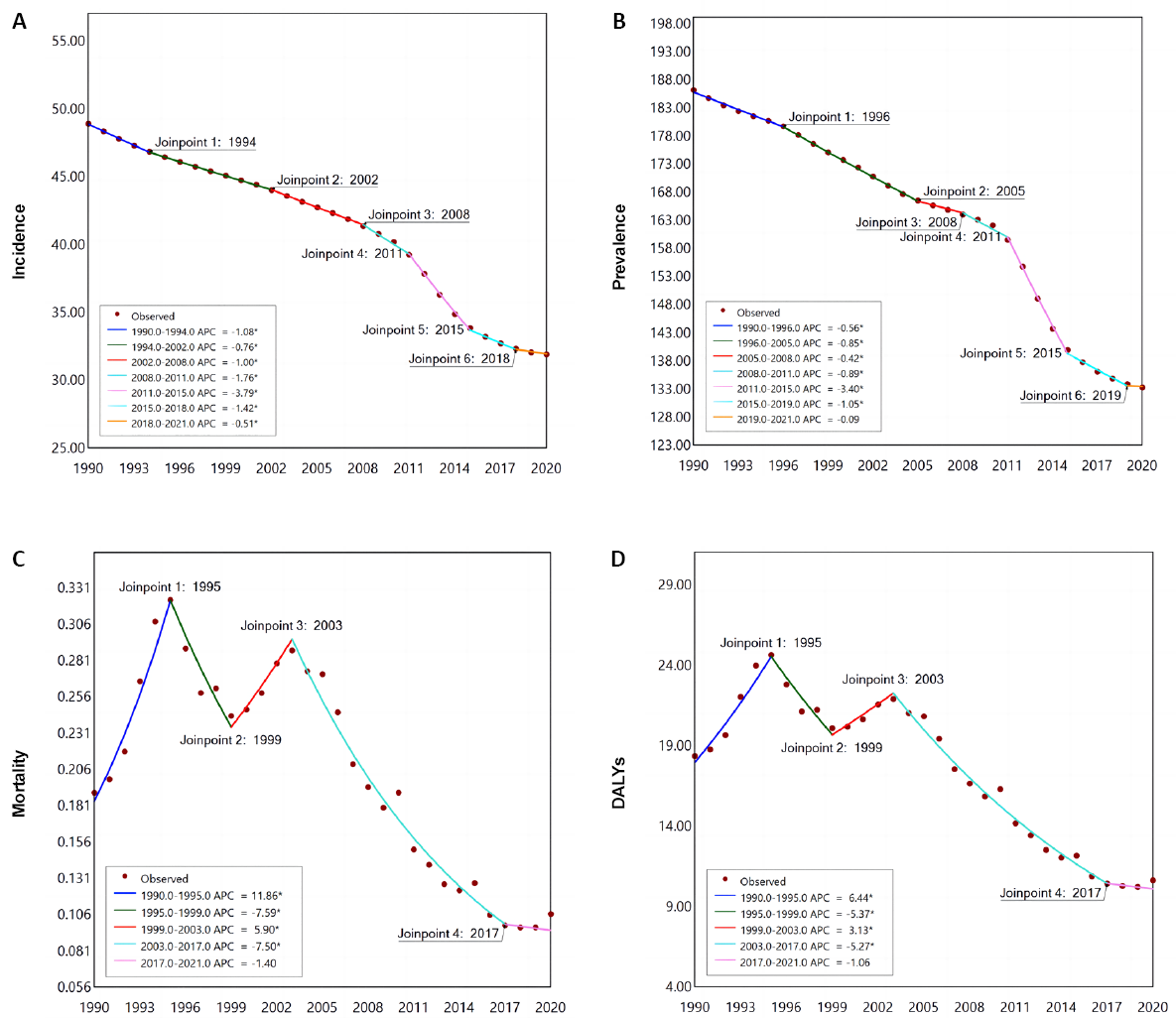
Figure 1. Global EHCE Burden in Women of Reproductive Age: 1990-2021 Joinpoint Analysis. (A) The annual percentage changes of global EHCE-related incidence; (B) The annual percentage changes of global EHCE-related prevalence; (C) The annual percentage changes of global EHCE-related mortality; (D) The annual percentage changes of global EHCE-related DALYs. Notes: APC indicates annual percentage changes; * denotes statistical significance (P<0.05).
3.2 Grouped by Age
Globally, the incidence rate of EHCE among women of reproductive age showed an overall downward trend from 1990 to 2021, particularly among women aged 40–44 years (AAPC: -1.43; 95%CI: -1.46 to -1.40), with the most significant decline (Table 2). In contrast, the incidence risk of EHCE was highest among women aged 15–19, with the smallest decline (AAPC: -1.00; 95%CI: -1.02 to -0.98). The prevalence of EHCE also showed a decreasing trend, with the largest decrease observed among women aged 30–34 years (AAPC: -1.25; 95%CI: -1.27 to -1.22; Table 3). The mortality rate and DALYs related to EHCE both exhibited a downward trend. The most pronounced decline in mortality was observed among women aged 25–29 years (AAPC: -3.66; 95%CI: -4.05 to -3.27; Table 4), while the greatest reduction in DALYs occurred in those aged 35–39 (AAPC: -2.46; 95%CI: -2.68 to -2.24; Table 5). In contrast, the slowest decreases were seen in women aged 15–19, both in terms of mortality (AAPC: -1.74; 95%CI: -1.97 to -1.45; Table 4) and DALYs (AAPC: -1.59; 95%CI: -1.82 to -1.40; Table 5).Additionally, the data showed that the prevalence of EHCE among women of reproductive age increased with age in both 1990 and 2021 (Table 3), and this trend was also reflected in the changes in mortality rates and DALYs (Tables 4 and 5).The results of the joinpoint regression analyses of the incidence, prevalence, mortality, and DALYs due to EHCE at the global level from 1990 to 2021 according to the age among women of reproductive age are shown in Table S2.
Table 2. Incidence of EHCE and Their AAPC from 1990 to 2021 Among Women of Reproductive Age at the Global Level, Stratified by Age, and SDI
Characteristic |
1990 |
2021 |
AAPC,1990-2021, (95%CI) |
P Value |
||
Case, No. (95%CI) |
Rate (per 10,000) (95%CI) |
Case, No. (95%CI) |
Rate (per 10,000) (95%CI) |
|||
Global |
653937.62 (434624.27–962202.4) |
48.90 (32.5–71.95) |
620061.12 (421873.25–904845.97) |
31.82 (21.65–46.43) |
-1.38 (-1.39 to -1.36) |
<0.001 |
Age, years |
|
|
|
|
|
|
15-19 |
187949.27 (88847.19–351468.61) |
73.55 (34.77–137.54) |
163978.74 (77829.99–306894.37) |
54 (25.63–101.07) |
-1.00 (-1.02 to -0.98) |
<0.001 |
20-24 |
153490.2 (73650.11–287658.45) |
62.87 (30.17–117.83) |
133068.53 (62919.38–248859.52) |
45.3 (21.42–84.72) |
-1.05 (-1.06 to -1.04) |
<0.001 |
25-29 |
112584.68 (55475.29–192953.2) |
51.15 (25.2–87.67) |
102552.9 (50221.28–177938.07) |
35.24 (17.26–61.15) |
-1.18 (-1.20 to -1.17) |
<0.001 |
30-34 |
76569.07 (42196.88–128339.35) |
40.28 (22.2–67.51) |
78699.74 (42783.15–133357.7) |
26.33 (14.31–44.61) |
-1.37 (-1.39 to -1.35) |
<0.001 |
35-39 |
54595.01 (28932.16–91764.73) |
31.48 (16.68–52.9) |
57458.27 (29203.27–96132.82) |
20.68 (10.51–34.6) |
-1.33 (-1.36 to -1.30) |
<0.001 |
40-44 |
39919.36 (20461.43–70001.82) |
28.47 (14.59–49.92) |
45535.53 (23591.76–78372.37) |
18.35 (9.51–31.59) |
-1.43 (-1.46 to -1.40) |
<0.001 |
45-49 |
28830.02 (15031.2–50782.15) |
25.33 (13.21–44.62) |
38767.42 (20518.72–67049.56) |
16.45 (8.71–28.45) |
-1.37 (-1.41 to -1.32) |
<0.001 |
SDI |
|
|
|
|
|
|
High |
157802.66 (106068.07–234619.65) |
69.61 (46.79–103.49) |
152686.96 (107451.96–217766.25) |
62.79 (44.19–89.56) |
-0.34 (-0.35 to -0.33) |
<0.001 |
High-Middle |
187609.99 (135041.88–260778.48) |
67.55 (48.62–93.89) |
105643.74 (75929.49–145419.78) |
34.62 (24.88–47.66) |
-2.14 (-2.18 to -2.11) |
<0.001 |
Middle |
183661.6 (114887–290116.8) |
41.08 (25.7–64.89) |
170184.76 (111397.12–260753.57) |
27.52 (18.01–42.16) |
-1.28 (-1.30 to -1.26) |
<0.001 |
Low-Middle |
94214.04 (60426.59–146117.62) |
34.52 (22.14–53.54) |
133152.74 (87219.13–201902.25) |
26.3 (17.23–39.88) |
-0.87 (-0.91 to -0.85) |
<0.001 |
Low |
30052.36 (19494.98–46505.71) |
26.91 (17.46–41.64) |
57816.42 (36730.34–89133) |
21.08 (13.39–32.49) |
-0.79 (-0.81 to -0.77) |
<0.001 |
Table 3. Prevalence of EHCE and Their AAPC from 1990 to 2021 Among Women of Reproductive Age at the Global Level, Stratified by Age, and SDI
Characteristic |
1990 |
2021 |
AAPC, 1990-2021, (95%CI) |
P Value |
||
Case, No. (95%CI) |
Rate (per 10,000) (95%CI) |
Case, No. (95%CI) |
Rate (per 10,000) (95%CI) |
|||
Global |
2489402.54 (2114146.25–2985811.87) |
186.14 (158.08–223.26) |
2599002.91 (2208332.58–3124470.24) |
133.36 (113.31–160.32) |
-1.07 (-1.08 to -1.05) |
<0.001 |
Age, years |
|
|
|
|
|
|
15-19 |
331069.62 (266539.67–410908.14) |
129.56 (104.3–160.8) |
269425.45 (216417.84–338012.83) |
88.73 (71.27–111.32) |
-1.22 (-1.23 to -1.20) |
<0.001 |
20-24 |
367902.6 (301303.83–455234.69) |
150.7 (123.42–186.47) |
308342.14 (252230.62–383826.84) |
104.97 (85.87–130.66) |
-1.16 (-1.18 to -1.15) |
<0.001 |
25-29 |
387092.38 (322440.02–469064.93) |
175.87 (146.5 to213.11) |
352764.54 (292704.86–433209.37) |
121.23 (100.59–148.88) |
-1.19 (-1.22 to -1.16) |
<0.001 |
30-34 |
389113.88 (328934.57–472862) |
204.68 (173.02–248.73) |
415255.31 (349663.38–506763.14) |
138.91 (116.97–169.53) |
-1.25 (-1.27 to -1.22) |
<0.001 |
35-39 |
383753.19 (323603.73–459523.89) |
221.24 (186.57–264.93) |
423681.83 (357864.9–509615.6) |
152.51 (128.82–183.45) |
-1.19 (-1.22 to -1.17) |
<0.001 |
40-44 |
339189.31 (287061.13–402512.61) |
241.89 (204.71–287.05) |
412888.5 (349236.41–490943.36) |
166.43 (140.77–197.89) |
-1.22 (-1.24 to -1.20) |
<0.001 |
45-49 |
291281.57 (250205.18–341612.35) |
255.96 (219.86–300.18) |
416645.14 (358581.63–492984.54) |
176.81 (152.17–209.21) |
-1.2 (-1.23 to -1.17) |
<0.001 |
SDI |
|
|
|
|
|
|
High |
464613.1 (393878.34–561320.81) |
204.94 (173.74–247.6) |
457365.33 (387705.31–549761.19) |
188.09 (159.45–226.09) |
-0.28 (-0.30 to -0.26) |
<0.001 |
High-Middle |
668469.53 (573402.21–798919.07) |
240.67 (206.44–287.64) |
460883.87 (392660.38–554315.04) |
151.05 (128.69–181.67) |
-1.49 (-1.52 to -1.46) |
<0.001 |
Middle |
818945.44 (687448.78–990209.55) |
183.18 (153.77–221.49) |
833247.77 (700699.31–1010817.5) |
134.73 (113.3–163.44) |
-0.98 (-1.01 to -0.96) |
<0.001 |
Low-Middle |
403512.81 (341247.62–489120.55) |
147.85 (125.04–179.22) |
595869.57 (504016.44–723558.65) |
117.7 (99.55–142.92) |
-0.74 (-0.76 to -0.72) |
<0.001 |
Low |
131106.01 (110447.51–158701) |
117.39 (98.89–142.1) |
248642.44 (210290.35–302762.27) |
90.64 (76.66–110.37) |
-0.83 (-0.85 to -0.81) |
<0.001 |
Table 4. Mortality of EHCE and Their AAPC from 1990 to 2021 Among Women of Reproductive Age at the Global Level, Stratified by Age, and SDI
Characteristic |
1990 |
2021 |
AAPC, 1990-2021, (95%CI) |
P Value |
||
Case, No. (95%CI) |
Rate (per 10,000) (95%CI) |
Case, No. (95%CI) |
Rate (per 10,000) (95%CI) |
|||
Global |
2537.42 (1918.74–2989.39) |
0.19 (0.14–0.22) |
1678.98 (1103.76–1952.84) |
0.09 (0.06–0.1) |
-2.15 (-2.57 to -1.72) |
<0.001 |
Age, years |
|
|
|
|
|
|
15-19 |
209.69 (130.9–254.57) |
0.08 (0.05–0.1) |
145.27 (52.18–209.25) |
0.05 (0.02–0.07) |
-1.74 (-1.97 to -1.45) |
<0.001 |
20-24 |
195.67 (131.54–231.53) |
0.08 (0.05–0.09) |
98.09 (44.49–135.2) |
0.03 (0.02–0.05) |
-2.59 (-3.01 to -2.16) |
<0.001 |
25-29 |
251.94 (186.95–296.42) |
0.11 (0.08–0.13) |
115.39 (64.79–145.56) |
0.04 (0.02–0.05) |
-3.66 (-4.05 to -3.27) |
<0.001 |
30-34 |
360.79 (276.9–432.93) |
0.19 (0.15–0.23) |
209.59 (132.36–259.36) |
0.07 (0.04–0.09) |
-3.15 (-3.49 to -2.72) |
<0.001 |
35-39 |
481.25 (367.64–571.85) |
0.28 (0.21–0.33) |
280.69 (198.35–327.17) |
0.1 (0.07–0.12) |
-3.09 (-3.39 to -2.78) |
<0.001 |
40-44 |
519.89 (404.96–606.29) |
0.37 (0.29–0.43) |
370.01 (264.75–431.61) |
0.15 (0.11–0.17) |
-2.56 (-2.93 to -2.16) |
<0.001 |
45-49 |
518.19 (408.54–620.36) |
0.46 (0.36–0.55) |
459.94 (332.83–526.8) |
0.2 (0.14–0.22) |
-2.02 (-2.55 to -1.44) |
<0.001 |
SDI |
|
|
|
|
|
|
High |
195.57 (182.91–235.15) |
0.09 (0.08–0.1) |
171.18 (159.68–178.92) |
0.07 (0.07–0.07) |
-0.12 (-1.03 to 0.82) |
0.776 |
High-Middle |
1618.23 (1473.54–1838.31) |
0.58 (0.53–0.66) |
805.09 (715.67–890.57) |
0.26 (0.23–0.29) |
-2.47 (-2.91 to -2.03) |
<0.001 |
Middle |
400.24 (152.72–545.57) |
0.09 (0.03–0.12) |
230.38 (89.64–305.12) |
0.04 (0.01–0.05) |
-2.90 (-3.23 to -2.65) |
<0.001 |
Low-Middle |
217.77 (65.18–298.2) |
0.08 (0.02–0.11) |
298.37 (51.17–434.01) |
0.06 (0.01–0.09) |
-0.45 (-1.41 to 0.45) |
0.318 |
Low |
104.44 (38.79–146.9) |
0.09 (0.03–0.13) |
173.13 (41.59–255.59) |
0.06 (0.02–0.09) |
-1.06 (-1.64 to -0.53) |
0.006 |
Table 5. DALYs of EHCE and Their AAPC from 1990 to 2021 Among Women of Reproductive Age at the Global Level, Stratified by Age, and SDI
Characteristic |
1990 |
2021 |
AAPC, 1990-2021, (95%CI) |
P Value |
||
Case, No. (95%CI) |
Rate (per 10,000) (95%CI) |
Case, No.(95%CI) |
Rate (per 10,000) (95%CI) |
|||
Global |
245392.29 (196475.66–296699.81) |
18.35 (14.69–22.19) |
187575.24 (141853.73–229324.21) |
9.62 (7.28–11.77) |
-1.87 (-2.09 to -1.65) |
<0.001 |
Age, years |
|
|
|
|
|
|
15-19 |
31750.43 (23608.41–39080.46) |
12.42 (9.24–15.29) |
22384.93 (14173.04–29510.08) |
7.37 (4.67–9.72) |
-1.59 (-1.82 to -1.40) |
<0.001 |
20-24 |
30685.57 (23915.83–38164.47) |
12.57 (9.8–15.63) |
19529.33 (13793.35–25505.45) |
6.65 (4.7–8.68) |
-1.96 (-2.12 to -1.78) |
<0.001 |
25-29 |
32994.39 (26430.17–41114.74) |
14.99 (12.01–18.68) |
21141.44 (15688.23–27388.19) |
7.27 (5.39–9.41) |
-2.19 (-2.38 to -1.98) |
<0.001 |
30-34 |
37012.64 (30102.1–44790.13) |
19.47 (15.83–23.56) |
27429.83 (20665.67–34452.92) |
9.18 (6.91–11.53) |
-2.28 (-2.47 to -2.06) |
<0.001 |
35-39 |
40941.52 (33405.82–49049.14) |
23.6 (19.26–28.28) |
30102.46 (23462.65–36840.22) |
10.84 (8.45–13.26) |
-2.46 (-2.68 to -2.24) |
<0.001 |
40-44 |
38405.05 (31232.8–45483.35) |
27.39 (22.27–32.44) |
32487.78 (25305.11–38975.34) |
13.1 (10.2–15.71) |
-2.17 (-2.42 to -1.89) |
<0.001 |
45-49 |
33602.7 (27552.36–40072.71) |
29.53 (24.21–35.21) |
34499.48 (27127.46–41551.89) |
14.64 (11.51–17.63) |
-1.77 (-2.16 to -1.36) |
<0.001 |
SDI |
|
|
|
|
|
|
High |
25567.94 (20113.29–33103.81) |
11.28 (8.87–14.6) |
23370.36 (18262.03–29765.52) |
9.61 (7.51–12.24) |
0.29 (-0.64 to 1.09) |
0.385 |
High-Middle |
112873.33 (101111.27–129936.38) |
40.64 (36.4–46.78) |
55437.77 (49187.29–62227.04) |
18.17 (16.12–20.39) |
-2.52 (-2.86 to -2.16) |
<0.001 |
Middle |
61129.12 (42778.93–79263.46) |
13.67 (9.57–17.73) |
43398.7 (31174.32–56724.37) |
7.02 (5.04–9.17) |
-2.25 (-2.37 to -2.14) |
<0.001 |
Low-Middle |
32406.08 (21215.13–41660.48) |
11.87 (7.77–15.26) |
42310.57 (25290.29–55871.52) |
8.36 (5–11.04) |
-0.89 (-1.31 to -0.44) |
0.004 |
Low |
13234.02 (8663.15–17086.95) |
11.85 (7.76–15.3) |
22893.22 (13668.53–30536.91) |
8.35 (4.98–11.13) |
-1.02 (-1.23 to -0.79) |
<0.001 |
3.3 Grouped by SDI
Overall, the incidence rate of EHCE has been decreasing across countries at different SDI levels, with the smallest decline observed in high-SDI countries (AAPC: -0.34; 95%CI: -0.35 to -0.33; Table 2). In contrast, the decline of incidence rates was greatest in high-middle SDI countries (AAPC: -2.14; 95%CI: -2.18 to -2.11; Table 2). The prevalence and mortality rates associated with EHCE also showed trends similar to incidence rates, with the smallest declines observed in high - SDI countries (AAPC: -0.28; 95%CI: -0.30 to -0.26; Table 3), while the decline was greatest in high-middle SDI countries (AAPC: -1.49; 95%CI: -1.52 to -1.46; Table 3). Additionally, mortality rates for EHCE-related diseases decreased most significantly in middle-SDI countries (AAPC: -2.90; 95%CI: -3.23 to -2.65; Table 4), while the smallest decreases were observed in low-SDI countries (AAPC: -1.06; 95%CI: -1.64 to -0.53; Table 4). The nodal analyses of EHCE incidence, prevalence, mortality, and DALYs globally, stratified by SDI among reproductive-aged women, are in Table S3.
3.4 Regional Trends
From a regional perspective, between 1990 and 2021, the incidence rates associated with EHCE decreased across all regions, with the greatest decreases observed in Eastern Europe (AAPC: -2.44; 95%CI: -2.49 to -2.40; Table S4) and East Asia (AAPC: -1.85; 95%CI: -1.89 to -1.82; Table S4). The prevalence of EHCE-related conditions decreased in all regions, except for a slight increase in the high-income Asia-Pacific region (AAPC: 0.20; 95%CI: 0.19–0.21; Table S4). Among all the declining regions, the Eastern Europe region experienced the largest decrease in prevalence (AAPC: -1.87; 95%CI: -1.92 to -1.83; Table S4). The trends in EHCE-related mortality rates varied across regions, with the largest decreases observed in East Asia (AAPC: -3.60; 95%CI: -3.73 to -3.45; Table S4) and the largest increases in the high-income Asia-Pacific region (AAPC: 2.91; 95%CI: 2.20–3.63; Table S4). EHCE-related DALYs followed the same trend as mortality rates, with the largest decreases and increases observed in East Asia and high-income Asia-Pacific regions, respectively (Table S4). The results of the connecting point regression analysis of EHCE incidence, prevalence, mortality rates, and DALYs among women of reproductive age in 21 regions are presented in Table S5.
3.5 National Trends
Among 204 countries, 196 (96.08%) showed a declining trend in EHCE-related incidence rates from 1990 to 2021, with the largest decline observed in Armenia (AAPC: -3.14; 95%CI: -3.19 to -3.10; Figure 2; Table S6). Among the remaining 5 countries with increasing incidence rates, France had the largest ascent (AAPC: 1.83; 95%CI: 1.77–1.88; Figure 2; Table S6). Among the 204 countries, 189 (92.65%) showed a decreasing trend in EHCE-related prevalence, while 12 (5.88%) showed an increasing trend. The countries with the largest decreases and increases were Poland (AAPC: -2.39; 95%CI: -2.55 to -2.30; Figure 2; Table S6) and France (AAPC: 1.47; 95%CI: 1.42–1.52), respectively. Between 1990 and 2021, among 204 countries, 119 (58.33%) showed a decreasing trend in EHCE-related mortality rates, while 58 (28.43%) showed an increasing trend. Afghanistan (AAPC: -7.29; 95%CI: -12.73 to -4.63; Figure 2; Table S6) showed the most significant decline among all countries with a decreasing trend, whereas Turkmenistan (AAPC: 6.44; 95%CI: 5.56–7.30; Figure 2; Table S6) exhibited a significant increasing trend. EHCE-related DALYs exhibited the same trend as mortality rates, with Turkmenistan and Afghanistan still showing the largest increases and decreases, respectively. The results of the joinpoint regression for national EHCE are presented in Table S7.
|
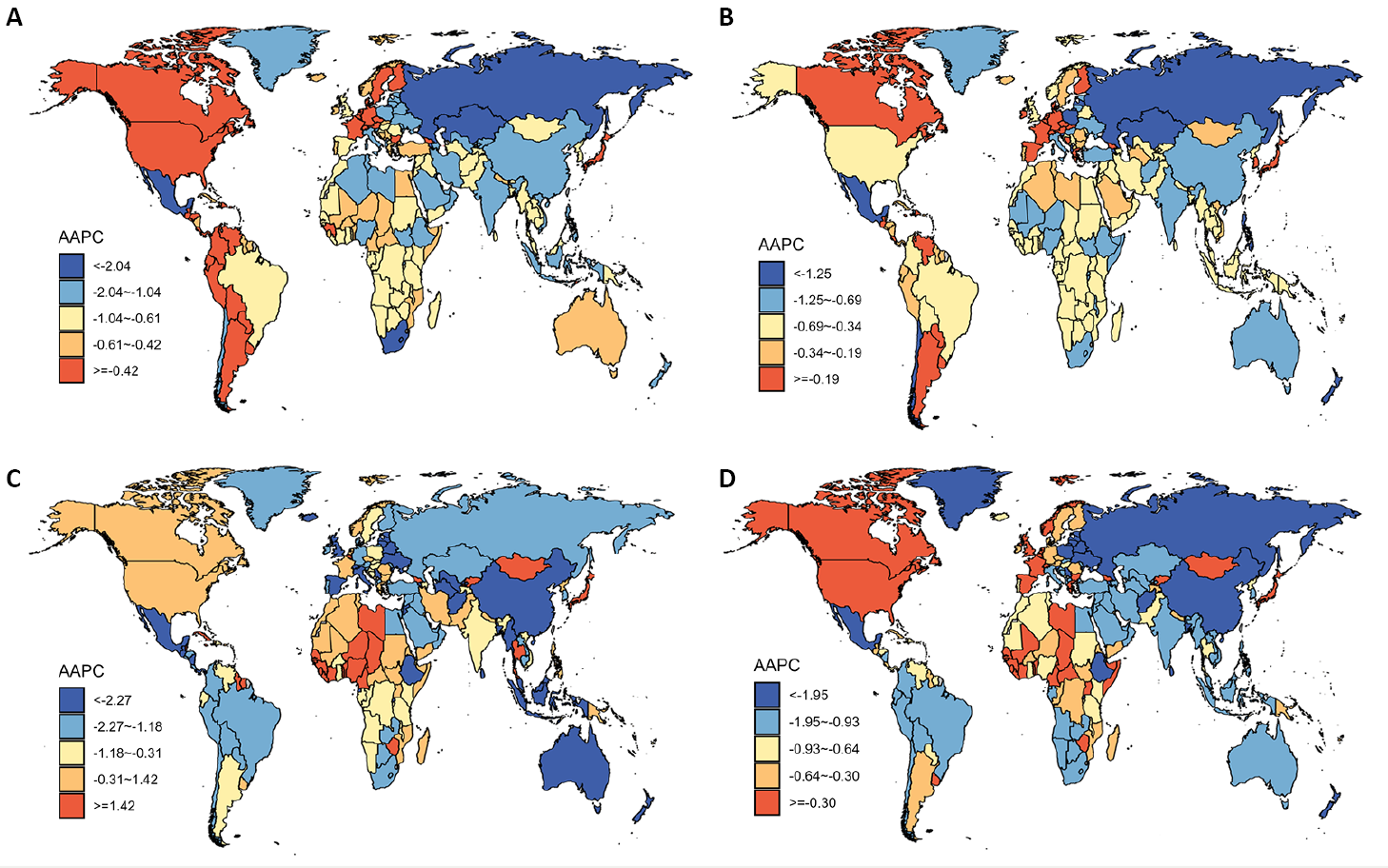
Figure 2. National AAPCs in EHCE Burden Among Women of Reproductive Age, 1990-2021. (A) The map of national AAPCs in EHCE-related incidence; (B) The map of national AAPCs in EHCE-related prevalence; (C) The map of national AAPCs in EHCE-related mortality; (D) The map of national AAPCs in EHCE-related DALYs; AAPC indicates average annual percentage change.
4 DISCUSSION
The research offers an exhaustive description of the trends in the burden of EHCE among women of reproductive age at the global, regional, and national levels from 1990 to 2021. A downward trend has been observed in the global burden of EHCE-related diseases among women of reproductive age. However, this downward trend exhibits significant variations across different age groups and among countries with varying levels of SDI. Additionally, certain regions and countries still exhibit significant upward trends in incidence and prevalence rates. These results indicate that the future burden of EHCE-related diseases among women of reproductive age may remain substantial. This underscores the urgent need to develop targeted prevention and control strategies for this population.
Between 1990 and 2011, the incidence rate of EHCE among women of reproductive age worldwide showed a critical downward trend, a phenomenon closely linked to the growing international attention on the issue of global climate change. The first scientific assessment report by the Intergovernmental Panel on Climate Change was published in 1990, offering conclusive proof of global warming and generating considerable public interest[23,24]. Subsequently, the formal initiation of global collaborative efforts to tackle climate change was signified by the 1992 establishment of the United Nations Framework Convention on Climate Change[25,26]. The next significant decline in incidence rates occurred between 2011 and 2015, a period that coincided with the end of the main commitment period (2008–2012) of the Kyoto Protocol, which required developed countries to reduce greenhouse gas emissions by 5.2% below 1990 levels during the 2008–2012 period[27]. Subsequently, while the incidence of EHCE continued to decline during the 2015–2018 and 2018–2021 periods, the rate of decline slowed. Although the implementation of the 2016 Paris Agreement has contributed to a certain extent to the reduction of global greenhouse gas emissions, the effectiveness of mitigating climate change remains insufficient[28]. Therefore, urgent collective and collaborative action is needed to mitigate greenhouse gas emissions and integrating the well-being of reproductive-age women into worldwide climate initiatives can help accelerate progress toward the UN Sustainable Development Goals.
Between 1990 and 2021, EHCE-related diseases exhibited a global downward trend in incidence rates for all age demographics, with women in the 40–44 age group experiencing the most pronounced reduction. Notably, females aged 15–19 had the highest incidence rate of EHCE-related diseases and the lowest decline rate, which may be related to the physiological vulnerability of younger females. The hypothalamic temperature regulation centre does not fully mature until late adolescence (around 20 years of age), resulting in delayed physiological stress responses to extreme temperatures in females aged 15–19[29]. Additionally, this study found that the highest incidence and mortality rates for EHCE-related conditions were among older reproductive-age women (45-49 years old). This phenomenon may be related to the gradual decline in sweat gland function and skin blood flow regulation capacity with age. This ‘subclinical’ level of physiological decline may make individuals more susceptible to heat stress in extreme high-temperature environments[30]. In light of these findings, it is important to note that while we focus on older reproductive-age women, we should not overlook the harm caused by EHCE-related diseases to younger reproductive-age women.
During the period from 1990 to 2021, the incidence, prevalence, and mortality rates of EHCE-related diseases showed the lowest decline in high-SDI countries. Additionally, in 2021, the incidence and prevalence rates in regions with higher SDI levels (middle-SDI and above) were higher than those in regions with lower SDI levels (below middle-SDI). This may be attributed to the following factors: on the one hand, high-SDI regions usually have higher levels of urbanization, and the urban heat island effect exacerbates the duration and intensity of high-temperature exposure, particularly affecting outdoor activity populations, thereby intensifying the occurrence of extreme high-temperature events during summer[31]. Secondly, women in high-SDI regions have long relied on air conditioning to regulate temperatures, resulting in poorer tolerance to temperature fluctuations, while women in low-SDI regions may be more engaged in agricultural or physical labour, giving them stronger adaptability to natural environments[32].
From 1990 to 2021, the greatest decline in incidence rates due to EHCE was observed in Eastern Europe and East Asia. In East Asia (e.g., China, North Korea) and Eastern Europe (e.g., Russia, Ukraine), the urbanization process has seen significant advances in centralized heating, air conditioning, and building energy efficiency upgrades, which have significantly reduced the risks of EHCE[33,34]. In 2007, the European Union implemented the Energy Action Plan, which established rigorous objectives for energy and climate change mitigation, such as cutting greenhouse gas emissions by 20% before 2020[35]. In high-income Asia-Pacific countries (e.g., Japan, South Korea, and Singapore), there has been an upward trend in mortality rates and DALYs among women of reproductive age. This may be partly due to the increasing proportion of older women of reproductive age, as the proportion of older pregnant women among women of reproductive age in Japan and South Korea has been steadily rising. Complications associated with advanced maternal age (e.g., gestational hypertension) may exacerbate the physiological burden of exposure to extreme temperature[36]. Notably, high ambient temperature during pregnancy has been consistently associated with an increased risk of adverse pregnancy outcomes, including preterm birth, low birth weight, and stillbirth[9], which may further contribute to the elevated burden observed among women of reproductive age in these regions. In addition, due to economic transformation and changes in work patterns, women of reproductive age in these countries face greater social and economic pressures, which may amplify the risk of thermal metabolic disorders through activation of the hypothalamic-pituitary-adrenal axis (HPA axis)[37,38].
From 1990 to 2021, most nations worldwide experienced a notable decline in both occurrence and frequency of EHCE-related disorders in women within reproductive age groups. However, this study found that France exhibited an upward trend in both incidence and prevalence, with the largest increase among all countries. While the exact reasons for this trend warrant further investigation, several environmental and climatic factors may provide potential explanations. A study published in The Lancet reported that, among European countries affected by heatwaves, Parisians face the highest risk of heatwave-related deaths[39]. This elevated risk may be partially attributable to Paris's large urban scale and population density, which could amplify the impact of heatwaves. Furthermore, the 'Climate and Health National Profile - 2015 France' notes that climate change in France is projected to increase annual average temperatures, as well as the intensity and frequency of heatwaves, potentially exposing more people to the risk of heat-related health conditions[40]. These factors might partially contribute to the observed upward trend in EHCE burden in France; however, further studies are needed to establish a direct causal link. Additionally, between 1990 and 2021, most countries saw a decline in EHCE-related DALYs and mortality rates, with Afghanistan experiencing the fastest decline. In contrast, Turkmenistan showed a significant upward trend. This might be because of Turkmenistan's unique geographical location and climate conditions, which result in extremely hot summers and bitterly cold winters, with frequent extreme temperature events. Furthermore, weak public health systems and shortages of medical resources may also be important contributing factors to this phenomenon[41]. These findings deepen our understanding of regional and national differences in the burden of EHCE and provide important insights into priority areas for resource allocation.
This study indicates that the overall burden of EHCE among women of reproductive age worldwide has decreased, but there is significant heterogeneity across different age groups and countries with varying SDI levels. On the one hand, younger women of reproductive age have a higher risk of developing the condition and experience the smallest reduction in risk. On the other hand, older women of reproductive age face higher risks of both morbidity and mortality. While older women of reproductive age show greater cost-effectiveness in managing and preventing heat-related illnesses, the health vulnerability transfer across generations in younger populations remains a critical concern. Additionally, contrary to traditional perceptions, countries with higher SDI levels exhibit relatively higher incidence risks and smaller reductions in risk, revealing the complex relationship between economic development levels and specific environmental health risks. This necessitates a re-evaluation of the effectiveness of public health strategies in controlling climate-sensitive diseases. Furthermore, there is significant heterogeneity in the incidence risk of EHCE-related diseases across different countries and regions. Compared to the high income Asia-Pacific region, the success of Eastern European and East Asian countries in governing and preventing EHCE-related diseases provides a model for global reference. These strategies include actively promoting carbon reduction actions to align with international agreement requirements and establishing robust extreme weather warning systems. By implementing these strategies, not only can the health threats posed by EHCE-related diseases to vulnerable groups such as women of reproductive age be significantly mitigated, but other health issues triggered by extreme weather events—such as floods, droughts, and wildfires—can also be effectively addressed to mitigate their potential hazards to public health.
An important consideration in interpreting our mortality and DALY findings is the phenomenon of "harvesting" or short-term mortality displacement. In temperature–mortality epidemiology, extreme heat or cold can advance deaths by days to weeks among highly vulnerable individuals, producing a transient mortality peak followed by a deficit, rather than necessarily adding to the total number of deaths over a longer time scale[42]. Heat-related mortality in particular is subject to substantial displacement, whereas cold-related effects tend to be more prolonged[43,44]. This has implications for the interpretation of our results. Because the GBD estimates used here are aggregated at the annual level, they cannot directly capture short-term mortality displacement or distinguish deaths that were advanced from deaths that were added. Consequently, the annual mortality and DALY burden reported here may understate the full acute health impact of extreme temperature events, particularly among older reproductive-aged women and those with pre-existing conditions. Integrating daily-resolution temperature–mortality data with GBD-based burden estimates represents an important direction for future work to better separate displaced from added deaths.
This research pioneers the application of the AAPC model in evaluating the EHCE-related disease burden across global, regional, and country-specific scales for reproductive-aged women, offering crucial insights for both epidemiological studies and health policy formulation. However, this study also has some limitations. First, the data used in this study are primarily based on the GBD database up to the most recently available year (excluding the latest 2023 data). It should be noted that the time period covered by this study (1990–2021) already exhibits clear long-term trends, which effectively reflect the effects of past policy interventions and the development trajectory of the disease burden. While incorporating 2023 data could provide updated information points, given that this study focuses on medium- to long-term dynamic patterns (a core strength of AAPC analysis), its impact on overall trend assessments and core conclusions is expected to be relatively limited. Secondly, data gaps in some countries and regions, or inconsistent data quality across regions, may significantly impact the accuracy of the study results, particularly for low-income countries, where incomplete data may introduce biases in related conclusions. In addition, the study did not fully account for the combined effects of multiple complex factors during the analysis process. For example, the synergistic effects between air pollution and extreme temperatures may pose cumulative health risks; as reliance on temperature control systems increases, populations' adaptability to extreme weather may diminish; and the escalating frequency and intensity of extreme weather events could exacerbate health impacts. Finally, the GBD public documentation does not provide a cause-specific description of the duration assumption or the sequelae structure used to model prevalence for EHCE. The prevalence estimates should therefore be interpreted as GBD-derived point prevalence rather than as a measure of chronic morbidity, and the incidence, mortality, and DALY estimates should be regarded as the primary measures of burden. These factors were not thoroughly explored in this study, limiting the comprehensiveness and precision of its conclusions. Future research should utilize more detailed and comprehensive real-world data to expand the scope and depth of analysis, thereby further validating and refining the conclusions of this study.
5 CONCLUSION
This study reveals an overall decline in the burden of environmental heat- and cold-related disease among women of reproductive age globally, but with significant age and regional heterogeneity: high morbidity and limited improvement in younger age groups, and a greater burden of mortality in older age groups; and higher risk and less improvement in regions with high levels of socioeconomic development. The results highlight the complex relationship between economic development and climate health risks, challenging conventional wisdom. Successful prevention and control models in Eastern Europe and East Asia provide global examples, while the rising trend in mortality in high-income Asia and the Pacific requires urgent vigilance. The study highlights the need to deeply integrate climate change and reproductive health into the global sustainable development agenda and calls for concerted global action to reassess and develop more targeted prevention and control strategies for climate-sensitive diseases.
Acknowledgements
This study was funded by grants from the National Natural Science Foundation of China (NO.82504495, NO.82273710, NO.82404354), Research Funds of Center for Big Data and Population Health of IHM (NO.JKS2022017), Research Innovation Team Project of School of Public Health, Anhui Medical University (NO.kctd200402).
Ethical Statement
The data used in this study were obtained from the GBD 2021 Data Resources. Therefore, no ethics committee approval was required for this study.
Conflicts of Interest
The authors declared no conflict of interest.
Data Availability
These data were derived from the following resources available in Global Burden of Disease Study 2021 (GBD 2021) Data Resources (https://ghdx.healthdata.org/gbd-2021). All data generated or analyzed during this study are included in this published article and its supplementary information files.
Copyright Permissions
Copyright © 2026 The Author(s). Published by Innovation Forever Publishing Group Limited. This open-access article is licensed under a Creative Commons Attribution 4.0 International License (https://creativecommons.org/licenses/by/4.0), which permits unrestricted use, sharing, adaptation, distribution, and reproduction in any medium, provided the original work is properly cited.
Author Contribution
Pan H contributed to study conceptualization and manuscript review. Deng J was responsible for drafting the original manuscript. Li W performed data analysis and interpretation, and participated in literature review and data acquisition. Cheng X, Li S, and Chang Y contributed to figure development and language editing. Tao S participated in validation and critical review of the manuscript. All authors reviewed and approved the final version of the manuscript and agree to be accountable for all aspects of the work.
Abbreviation List
AAPC, Annual average percentage changes
APC, Annual percentage change
CI, Confidence interval
DALYs, Disability-adjusted life-years
EHCE, Extreme heat and cold exposure
HDP, High-risk pregnancy hypertension
SDI, Socio-demographic index
WHO, World Health Organization
YLD, Years lived with disability
References
[1] IPCC. Climate Change 2023: Synthesis Report. Contribution of Working Groups I, II and III to the Sixth Assessment Report of the Intergovernmental Panel on Climate Change. Lee H, Romero J (eds). IPCC: Geneva, Switzerland. 2023: 38-42.[DOI]
[2] IPBES. Global assessment report on biodiversity and ecosystem services of the Intergovernmental Science-Policy Platform on Biodiversity and Ecosystem Services, Version 1. IPBES Secretariat: Bonn, Germany. 2019: 132-134.[DOI]
[3] Hales S, Kovats S, Lloyd S et al (eds). Quantitative risk assessment of the effects of climate change on selected causes of death, 2030s and 2050s. World Health Organization: Geneva, Switzerland. 2014: 128. Available at:[Web]
[4] Watts N, Amann M, Arnell N et al. The 2019 report of The Lancet Countdown on health and climate change: ensuring that the health of a child born today is not defined by a changing climate. Lancet, 2019; 394: 1836-1878.[DOI]
[5] Chalupka SM, Latter A, Trombley J. Climate and Environmental Change: A Generation at Risk. MCN Am J Matern Child Nurs, 2023; 48: 181-187.[DOI]
[6] Veenema RJ, Hoepner LA, Geer LA. Climate Change-Related Environmental Exposures and Perinatal and Maternal Health Outcomes in the U.S. Int J Environ Res Public Health, 2023; 20: 1662.[DOI]
[7] Sun Y, Zhang M, Chen S et al. Potential impact of ambient temperature on maternal blood pressure and hypertensive disorders of pregnancy: A nationwide multicenter study based on the China birth cohort. Environ Res, 2023; 227: 115733.[DOI]
[8] Bekkar B, Pacheco S, Basu R et al. Association of Air Pollution and Heat Exposure With Preterm Birth, Low Birth Weight, and Stillbirth in the US: A Systematic Review. JAMA Netw Open, 2020; 3: e208243.[DOI]
[9] Chersich MF, Pham MD, Areal A et al. Associations between high temperatures in pregnancy and risk of preterm birth, low birth weight, and stillbirths: systematic review and meta-analysis. BMJ, 2020; 371: m3811.[DOI]
[10] Zhang Y, Yu C, Wang L. Temperature exposure during pregnancy and birth outcomes: An updated systematic review of epidemiological evidence. Environ Pollut, 2017; 225: 700-712.[DOI]
[11] Desai Z, Zhang Y. Climate Change and Women's Health: A Scoping Review. GeoHealth, 2021; 5: e2021GH000386.[DOI]
[12] United Nations. Sustainable Development Goal 3: Ensure healthy lives and promote well-being for all at all ages. 2015. Accessed 24 October 2025. Available at:[Web]
[13] Countdown to 2030 Collaboration. Countdown to 2030: tracking progress towards universal coverage for reproductive, maternal, newborn, and child health. Lancet, 2018; 391: 1538-1548.[DOI]
[14] Conry J, Robson S. Climate change and women's health: Turning leadership into action. Int J Gynaecol Obstet, 2023; 160: 400-404.[DOI]
[15] Global Burden of Disease Collaborative Network. Global Burden of Disease Study 2021 (GBD 2021) Data Resources. 2024. Accessed 24 October 2025. Available at:[Web]
[16] GBD 2021 Causes of Death Collaborators. Global burden of 288 causes of death and life expectancy decomposition in 204 countries and territories and 811 subnational locations, 1990-2021: a systematic analysis for the Global Burden of Disease Study 2021. Lancet, 2024; 403: 2100-2132.[DOI]
[17] Global Burden of Disease Collaborative Network. Global Burden of Disease Study 2021 (GBD 2021) Socio-Demographic Index (SDI) 1950-2021. 2024. Accessed 24 October 2025. Available at:[Web]
[18] He YS, Cao F, Hu X et al. Time Trends in the Burden of Environmental Heat and Cold Exposure Among Children and Adolescents. JAMA Pediatr, 2025; 179: 55-64.[DOI]
[19] World Health Organization. Reproductive health indicators: guidelines for their generation, interpretation and analysis for global monitoring. World Health Organization: Geneva, Switzerland. 2006: 63. Available at:[Web]
[20] Huang D, Lai H, Shi X et al. Global temporal trends and projections of acute hepatitis E incidence among women of childbearing age: Age-period-cohort analysis 2021. J Infect, 2024; 89: 106250.[DOI]
[21] Salomon JA, Haagsma JA, Davis A et al. Disability weights for the Global Burden of Disease 2013 study. Lancet Glob Health, 2015; 3: e712-e723.[DOI]
[22] Flaxman AD, Vos T, Murray CJL (eds). An Integrative Metaregression Framework for Descriptive Epidemiology. University of Washington Press: Seattle, WA, USA. 2015: 250.Available at:[Web]
[23] Intergovernmental Panel on Climate Change. Climate change: The 1990 and 1992 IPCC assessments. IPCC First Assessment Report, Overview and Policymaker Summaries and 1992 IPCC Supplement. WMO: UNEP, Geneva, Switzerland. 1992: 168.Available at:[Web]
[24] Agrawala S. Context and Early Origins of the Intergovernmental Panel on Climate Change. Clim Change, 1998; 39: 605-620.[DOI]
[25] United Nations. United Nations Framework Convention on Climate Change. United Nations: New York, USA. 1992: 24. Available at:[Web]
[26] Gupta J. A history of international climate change policy. WIREs Clim Change, 2010; 1: 636-653.[DOI]
[27] Kuh KF. The Law of Climate Change Mitigation: An Overview. In: Dellasala DA, Goldstein MI (eds). Encyclopedia of the Anthropocene. Elsevier: Oxford, UK. 2018: 505-510.[DOI]
[28] The Lancet Planetary Health. Can the Paris Agreement save us from a climate catastrophe? Lancet Planet Health, 2018; 2: e140.[DOI]
[29] Sisk CL, Foster DL. The neural basis of puberty and adolescence. Nat Neurosci, 2004; 7: 1040-1047.[DOI]
[30] Kenney MJ, Ganta CK. Autonomic nervous system and immune system interactions. Compr Physiol, 2014; 4: 1177-1200.[DOI]
[31] Gronlund CJ. Racial and socioeconomic disparities in heat-related health effects and their mechanisms: a review. Curr Epidemiol Rep, 2014; 1: 165-173.[DOI]
[32] Deglon M, Africa C, Soepnel LM et al. Heat Adaptation Benefits for Vulnerable groups In Africa (HABVIA): a study protocol for a controlled clinical heat adaptation trial. BMC Public Health, 2025; 25: 1725.[DOI]
[33] Chen R, Yin P, Wang L et al. Association between ambient temperature and mortality risk and burden: time series study in 272 main Chinese cities. BMJ, 2018; 363: k4306.[DOI]
[34] Gasparrini A, Guo Y, Hashizume M et al. Mortality risk attributable to high and low ambient temperature: a multicountry observational study. Lancet, 2015; 386: 369-375.[DOI]
[35] European Environment Agency. Renewables, electrification and flexibility for a competitive EU energy system transformation by 2030. Publications Office of the European Union: Luxembourg. 2025: 133.[DOI]
[36] Kuehn L, McCormick S. Heat Exposure and Maternal Health in the Face of Climate Change. Int J Environ Res Public Health, 2017; 14: 853.[DOI]
[37] Lundgren K, Kuklane K, Gao C et al. Effects of heat stress on working populations when facing climate change. Ind Health, 2013; 51: 3-15.[DOI]
[38] Cheshire WP Jr. Thermoregulatory disorders and illness related to heat and cold stress. Auton Neurosci, 2016; 196: 91-104.[DOI]
[39] Romanello M, Walawender M, Hsu SC et al. The 2024 report of the Lancet Countdown on health and climate change: facing record-breaking threats from delayed action. Lancet, 2024; 404: 1847-1896.[DOI]
[40] World Health Organization. Health and climate change: country profile 2015: France. 2015. Accessed November 17, 2025. Available at:[Web]
[41] The Lancet. State of Turkmenistan's health system. Lancet, 2010; 375: 1408.[DOI]
[42] Hajat S, Armstrong BG, Gouveia N et al. Mortality displacement of heat-related deaths: a comparison of Delhi, São Paulo, and London. Epidemiology, 2005; 16: 613-620.[DOI]
[43] Gasparrini A, Armstrong B. The impact of heat waves on mortality. Epidemiology, 2011; 22: 68-73.[DOI]
[44] Guo Y, Gasparrini A, Armstrong B et al. Global variation in the effects of ambient temperature on mortality: a systematic evaluation. Epidemiology, 2014; 25: 781-789.[DOI]



 Copyright ©